Ballroom culture struts its stuff in Cape Town with the city’s first major ball of 2026
The Love Pride Ball is the first major ball from Cape Town’s Legacy organization.
 Mark
Mark
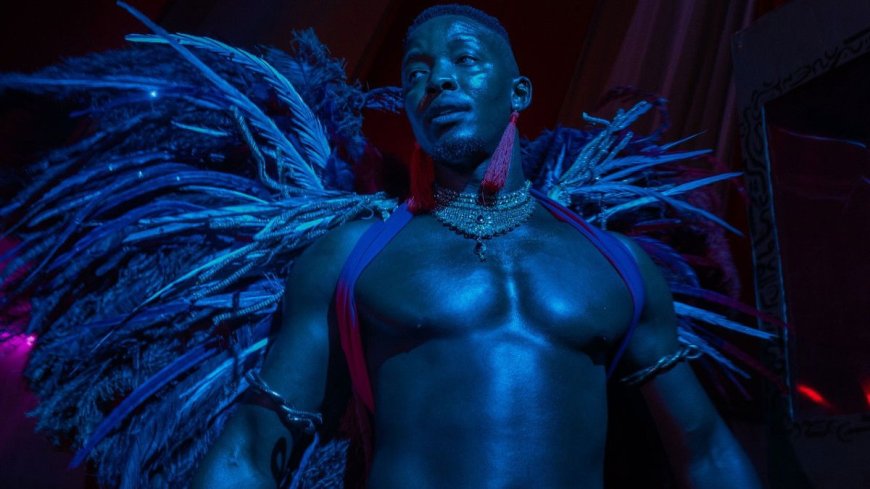

Although ballroom culture emerged primarily in New York City in the late 1960s and early 1970s, its influence has since spread globally.
The seminal 1990 documentary Paris Is Burning was the first to alert queer communities worldwide to what was unfolding in NYC’s underground ballrooms. Released the same year as Madonna’s “Vogue”—a song directly inspired by the dance moves ballroom participants were innovating—it helped propel ballroom culture into the global consciousness.
More recently, shows such as Pose and Legendary have introduced new generations to the power, beauty, and radical inclusivity of ballroom.
One place where this culture has taken deep root is South Africa.
Pack your bags, we’re going on an adventure
Subscribe to our weekly newsletter for the best LGBTQ+ travel guides, stories, and more.
Subscribe to our Newsletter today

Queer rights in South Africa
Widely considered the most progressive country on the African continent when it comes to LGBTQ+ rights, it acts as a magnet for queer people fleeing hostility and repression elsewhere. Major cities such as Cape Town, Johannesburg, and Durban boast established queer neighborhoods, Pride celebrations, nightlife, advocacy groups, and media. Cape Town, in particular, is often dubbed the “gay capital of Africa.”

That said, the reality is complex. Visibility and safety can vary sharply depending on location, class, race, and gender identity. While urban, middle-class spaces can be affirming, queer people—especially trans women and lesbians in some townships—continue to face bigotry and discrimination.

As elsewhere, ballroom “Houses”—chosen families that compete together—provide a vital survival system for those who have been excluded or marginalized, offering mentorship, protection, and belonging.

The Love Pride Ball
The Love Pride Ball comes to Cape Town on Saturday, February 7, 2026. It marks the first ball of the year from local promoters Legacy, an organization now entering its fourth year. It now has more than 25 productions already under its belt.
“Legacy’s audience is beautifully diverse, reflecting the wide range of people who make up our community,” the organizers told GayCities. “At its core, Legacy is held and shaped by the queer community in Cape Town, with many members of the Johannesburg queer community even flying in specifically to attend.”

It has also attracted tourists and celebrities. It continues the work of the late Kirvan Fortuin (Mother Kirvan Le Cap), a visionary activist and artist who established the first Ballroom house (The House of Le Cap) in the country, and whose influence remains the blueprint for the local scene.
“Legacy has always been and will remain an open invitation to everyone. We have a big crowd of allies supporting too,” says the organizers. “What started as an underground space has evolved into one of Cape Town’s must-attend events. The queer community, the straight community, seasoned partygoers, newcomers, families, aunts, uncles, brothers, sisters, cousins, people from all walks of life come to Legacy to be a part of the experience.”
How does it work?

The Legacy team say that South Africa’s ballroom scene is not a replica of the American model, but a distinct evolution shaped by local realities. Still, it borrows elements of the traditional framework, including Houses and themed competitive categories. For the next Ball, these include Best Dressed, Realness (Couples), Vogue Femme, and Runway (All Shades of Red), among others.
Those walking the floor before the judges will include:
- Mainstream Houses — Established, legacy-driven families with formal leadership structures, competing for long-term reputation and house honour.
- The Kiki Scene — A youth-centered wing of ballroom that serves as a training ground for the next generation.
- The 007s — Independent competitors who participate without House affiliation. In ballroom terms, a “007” is a free agent, often a skilled walker building an individual name or transitioning between Houses.

Judged but also celebrated
Rori Bingham and Léa Debbah co-founded Legacy. Debbah is the founder of Cape Town-based events company Edition Events. As she explained: “Ballroom is about resilience and chosen family, and that energy creates something truly special here in South Africa. We’re not trying to overcomplicate it—we simply want to give this community the platform it deserves.
“The floor is intense. Yes, it’s where you’re judged, but it’s also where you’re celebrated. My role is to ensure the production matches the talent. When a walker steps out—the lighting, the sound, the atmosphere—it all has to be perfect. It’s our way of saying: we see you, we respect you, and this space is yours.”

How does Rori think the US and South African ballroom scene differ?
“We think one of the biggest differences between ballroom in the US and ballroom here in South Africa is the stage of development that our scenes are in,” he replied. “Because our ballroom community is still young and relatively small, we intentionally place equal emphasis on both the Kiki and the mainstream scenes, whether we’re at a Kiki function or a Main function.”
“We make a conscious effort to create space for houses and to acknowledge them, because part of our work right now is educating the broader Cape Town/South African audience about what houses are, what ballroom represents, and why this culture matters. We’re in a phase of building, teaching, and laying the foundation for future generations.

Music
“Another major difference is the influence of South African music and movement within our balls,” Rori continued. “Many of the DJs we work with are significant figures in the South African music and entertainment industries, so our sound naturally carries the pulse of our local culture. That ultimately shapes the way our balls feel both in the Kiki scene and the Main scene.
“While we remain committed to honoring the global rules and structure of ballroom, a big part of our identity comes from the way we move and the sounds we move to.”

“Extraordinary talent”
In the US, ballroom culture developed in part because Black and Latinx drag queens and trans people were excluded from mainstream drag pageants.
Rori sees similarities with the South African scene.
“Cape Town has a long, layered, and deeply diverse history,” he replied. “Many of our communities, especially those that have been historically marginalised or impoverished, have always expressed themselves in powerful, creative ways. A large part of this comes from our origins: many of these communities were formed under slavery, when people were forcibly removed from their homelands and stripped of their identities, languages, and lineages.
“What they carried with them, pieces of memory, fragments of culture, whatever they could hold onto, became the foundation of new, unique identities here in Cape Town. And that history of creating culture out of displacement is still present today.
“Cape Town is a city built on expression,” Rori continued. “That vibrancy is especially visible within the queer community, where creativity, innovation, and resilience are part of everyday life. In many of our working-class and poorer communities, you’ll find extraordinary talent, artists, dancers, athletes, thinkers, people who have always found ways to express themselves despite limited resources or recognition.”
The Love Pride Ball takes place from 9pm to 2am on Saturday, February 7, 2026. The venue is Hearty / The Old Biscuit Mill, 375 Albert Road, Woodstock. Tickets are available online via Quicket and at the door.

Related
Queer Cape Town: Pink jeeps by day, 5-star dining & nightlife when the sun sets
Explore Cape Town’s LGBTQ+ scene featuring Jeep adventures, queer-owned boutique hotels, and oceanfront dining before the city hosts WorldPride 2028.
Join the GayCities newsletter for weekly updates on the best LGBTQ+ destinations and events—nearby and around the world.







![[PHOTOS] Palm Springs Pride 2025 gets loud and proud](https://lgbtprime.com/uploads/images/202511/image_430x256_69151f9d342fd.jpg)