Supreme Court arguments show skepticism about letting trans girls and women play in women’s sports
In more than three hours of oral argument on Jan. 13, the Supreme Court considered cases from Idaho and West Virginia in which federal courts of appeals had ruled against enforcement of state laws effectively banning transgender girls or women from competing on female scholastic sports teams. These two states are among 27 states that … Read More
 Mark
Mark
0
49
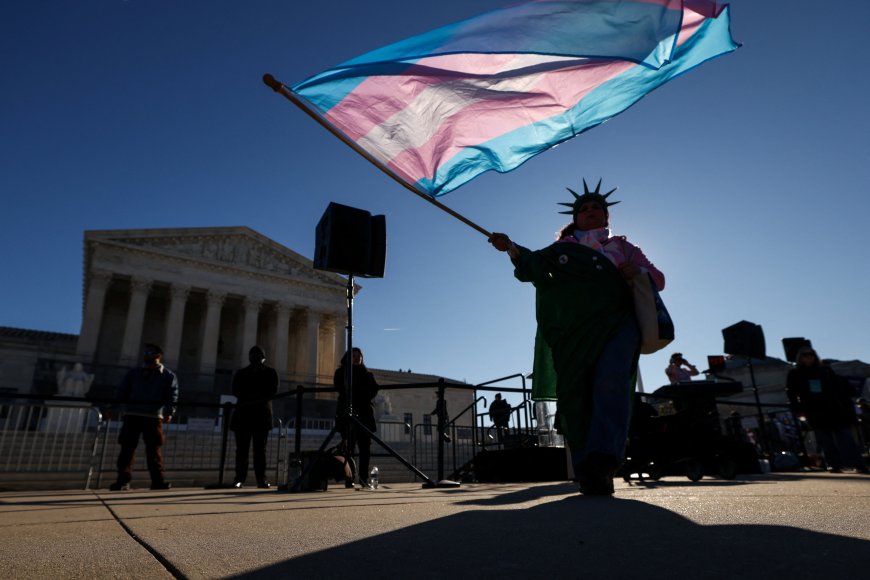
In more than three hours of oral argument on Jan. 13, the Supreme Court considered cases from Idaho and West Virginia in which federal courts of appeals had ruled against enforcement of state laws effectively banning transgender girls or women from competing on female scholastic sports teams. These two states are among 27 states that have adopted such laws in recent years. Their legislatures have stated that the purposes of the laws are to provide safety for cisgender female athletes, to preserve competitive fairness, and to prevent scholastic women’s sports from being dominated by so-called “biological men” competing as transgender women, to the detriment of cisgender women.
In each case, a transgender plaintiff challenged the state law, arguing that it violated their constitutional right to equal protection of the laws. The Idaho plaintiff, Lindsay Hecox, decided last fall that she would drop her case, because she wanted to concentrate on finishing up her university degree program and to avoid the pressure and distraction of being caught up in the case. The trial judge denied her motion to drop the case, which the state had opposed. The Supreme Court responded to her motion by stating it would decide whether the case was moot after hearing arguments.
The West Virginia plaintiff, Becky Pepper-Jackson, added a statutory claim under Title IX of the Education Amendments Act to her constitutional claim, and the Fourth Circuit Court of Appeals, reversing the trial judge, ruled for her on the Title IX theory that the state’s ban violated the statutory prohibition on discrimination in educational institutions on the basis of sex.
[caption id="attachment_60951" align="aligncenter" width="700"] Becky Pepper-Jackson, 15, who competes in shot put and discus on her high school team, stands with her mother Heather Jackson outside the U.S. Supreme Court, after they brought in West Virginia challenge concerning efforts to enforce Republican-backed state laws banning transgender athletes from female sports teams at public schools, in Washington, D.C., U.S., January 13, 2026.REUTERS/Tyrone Siu[/caption]
Alan Hurst, the solicitor general of Idaho, and Michael Williams, the solicitor general of West Virginia, represented their states before the court. Kathleen Hartnett, of Cooley LLP, San Francisco, argued on behalf of Hecox. Joshua Block, an ACLU Attorney from New York, argued on behalf of Pepper-Jackson. The Trump administration was represented in both cases by Principal Deputy Solicitor General Hashim Moopan of the U.S. Justice Department, arguing in support of the two states.
President Trump issued an executive order last fall directing that any educational institution that allows “biological men” to compete in women’s sports should be denied federal funding. There are so few transgender women who want to compete in scholastic sports, however, that this policy was unlikely to affect many schools. When they filed their lawsuits, Hecox and Pepper-Jackson were the only trans women in their states who were seeking to compete in women’s sports.
Since the plaintiffs conceded that under legal precedents their schools (university in the case of Hecox, public secondary schools in the case of Pepper-Jackson) under Title IX regulations were entitled to have separate sports programs for boys and girls, the main argument revolved in part around definitions. How should “sex” be defined under Title IX, and how should the concept of discrimination because of sex be defined under the Equal Protection Clause? Neither of those legal sources mention transgender status or gender identity, and the Equal Protection Clause does not even mention sex, rather stating that no state may “deny to any person within its jurisdiction the equal protection of the laws.” The Supreme Court did not interpret this to forbid discrimination by the government because of sex until the latter part of the 20th century, in litigation spearheaded by then-attorney Ruth Bader Ginsburg before she was appointed to the Supreme Court by President Clinton. Thus, the contours of the constitutional sex discrimination doctrine have been constructed by the courts over the past half century as an interpretation of “equal protection of the laws.”
In 2020, the Supreme Court ruled in Bostock v. Clayton County that an employer who discriminates against an employee because of their “transgender status” has necessarily discriminated because of their sex in violation of Title VII of the Civil Rights Act of 1964, but the Supreme Court has yet to decide whether the same analysis should apply to Title IX, which is really implicated in both the Hecox and Pepper-Jackson cases because they are attending schools subject to Title IX. The U.S. Department of Education issued regulations under Title IX in the 1970s providing that educational institutions can have separate sports programs for boys and girls, so long as there was equal opportunity for sports participation by both sexes. The court has also yet to decide whether the reasoning of the Bostock decision should carry over to constitutional equal protection.
On the constitutional front, the issue for the parties and justices was whether the state policies discriminate based on sex — which could be covered by the court’s precedents — since in both cases the state laws, without mentioning transgender status or gender identity, provide that a person’s “biological sex” as identified at birth would determine whether they could play on a girls’ or women’s team. To the plaintiffs, this looked like sex discrimination, but the conservative majority of the court seemed skeptical of the argument. Even so, under the court’s precedents, discrimination because of sex is subjected to “heightened scrutiny,” which means the law survives judicial review if it advances an important state interest. The plaintiffs contended that they were not attacking the establishment of separate teams for boys and girls but rather were arguing that it was not necessary to effectively bar all trans girls or women in order to meet the state’s goals of safety and fair competition.
[caption id="attachment_60952" align="aligncenter" width="700"]
Becky Pepper-Jackson, 15, who competes in shot put and discus on her high school team, stands with her mother Heather Jackson outside the U.S. Supreme Court, after they brought in West Virginia challenge concerning efforts to enforce Republican-backed state laws banning transgender athletes from female sports teams at public schools, in Washington, D.C., U.S., January 13, 2026.REUTERS/Tyrone Siu[/caption]
Alan Hurst, the solicitor general of Idaho, and Michael Williams, the solicitor general of West Virginia, represented their states before the court. Kathleen Hartnett, of Cooley LLP, San Francisco, argued on behalf of Hecox. Joshua Block, an ACLU Attorney from New York, argued on behalf of Pepper-Jackson. The Trump administration was represented in both cases by Principal Deputy Solicitor General Hashim Moopan of the U.S. Justice Department, arguing in support of the two states.
President Trump issued an executive order last fall directing that any educational institution that allows “biological men” to compete in women’s sports should be denied federal funding. There are so few transgender women who want to compete in scholastic sports, however, that this policy was unlikely to affect many schools. When they filed their lawsuits, Hecox and Pepper-Jackson were the only trans women in their states who were seeking to compete in women’s sports.
Since the plaintiffs conceded that under legal precedents their schools (university in the case of Hecox, public secondary schools in the case of Pepper-Jackson) under Title IX regulations were entitled to have separate sports programs for boys and girls, the main argument revolved in part around definitions. How should “sex” be defined under Title IX, and how should the concept of discrimination because of sex be defined under the Equal Protection Clause? Neither of those legal sources mention transgender status or gender identity, and the Equal Protection Clause does not even mention sex, rather stating that no state may “deny to any person within its jurisdiction the equal protection of the laws.” The Supreme Court did not interpret this to forbid discrimination by the government because of sex until the latter part of the 20th century, in litigation spearheaded by then-attorney Ruth Bader Ginsburg before she was appointed to the Supreme Court by President Clinton. Thus, the contours of the constitutional sex discrimination doctrine have been constructed by the courts over the past half century as an interpretation of “equal protection of the laws.”
In 2020, the Supreme Court ruled in Bostock v. Clayton County that an employer who discriminates against an employee because of their “transgender status” has necessarily discriminated because of their sex in violation of Title VII of the Civil Rights Act of 1964, but the Supreme Court has yet to decide whether the same analysis should apply to Title IX, which is really implicated in both the Hecox and Pepper-Jackson cases because they are attending schools subject to Title IX. The U.S. Department of Education issued regulations under Title IX in the 1970s providing that educational institutions can have separate sports programs for boys and girls, so long as there was equal opportunity for sports participation by both sexes. The court has also yet to decide whether the reasoning of the Bostock decision should carry over to constitutional equal protection.
On the constitutional front, the issue for the parties and justices was whether the state policies discriminate based on sex — which could be covered by the court’s precedents — since in both cases the state laws, without mentioning transgender status or gender identity, provide that a person’s “biological sex” as identified at birth would determine whether they could play on a girls’ or women’s team. To the plaintiffs, this looked like sex discrimination, but the conservative majority of the court seemed skeptical of the argument. Even so, under the court’s precedents, discrimination because of sex is subjected to “heightened scrutiny,” which means the law survives judicial review if it advances an important state interest. The plaintiffs contended that they were not attacking the establishment of separate teams for boys and girls but rather were arguing that it was not necessary to effectively bar all trans girls or women in order to meet the state’s goals of safety and fair competition.
[caption id="attachment_60952" align="aligncenter" width="700"]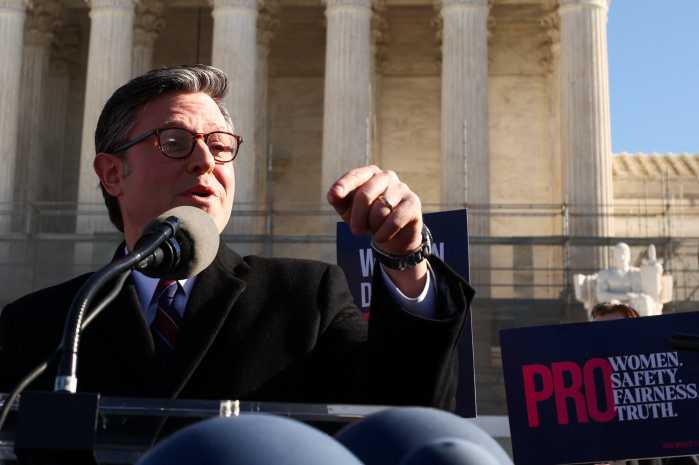 U.S. House Speaker Mike Johnson (R-LA) speaks outside the U.S. Supreme Court as justices heard oral arguments in two cases concerning efforts to enforce Republican-backed state laws banning transgender athletes from female sports teams at public schools, in Washington, D.C., U.S., January 13, 2026.REUTERS/Kevin Lamarque[/caption]
This argument comes down to the question of whether medical transition eliminates the admitted advantages that “biological men” have, on average, in terms of strength, size, and endurance, which is a much-contested subject. Transition that includes puberty blockers and cross-sex hormones was contended by the plaintiffs to mitigate unfairness, but the argument was met with some skepticism.
In terms of Title IX, if the word “sex” is taken to mean biological sex, as the states argued, pointing to the time when the law was passed and the general understanding of that term before there was much of an organized movement for trans rights, and the regulations allow schools to effectively exclude individuals identified male at birth from women’s sports teams, what argument could persuade the court that trans girls and women should be allowed on those teams? The attorneys argued that where the reason for the exclusion did not apply as a matter of fact because medical transition had eliminated the differences, the trans plaintiffs should be able to claim that it would violate their equal rights to exclude them.
The three more liberal justices all seemed to appreciate these arguments and advance them in their questions and comments, but there were few signs that the six conservatives were persuaded, although there is still some question of exactly how they will justify a result in favor of upholding the state laws. This listener had the sense that there might be several separate opinions adding up to a majority, some quite narrow, others much broader.
There is also the possibility that the Court will agree that the Hecox case is moot, leaving the question whether it decides to vacate the 9th Circuit’s decision in her favor. She did not announce her decision to stop seeking to participate in women’s sports until after winning a ruling from the 9th Circuit Court of Appeals. But if the Court rules in favor of West Virginia’s law, that would make a nationwide precedent that could render the 9th Circuit’s decision irrelevant.
Joshua Block of the ACLU made a strong argument that the court should not decide the ultimate merits of the case based on the limited record that was before the court at this time, but instead should send it back to the trial court to compile a full record of data and expert testimony on which to base a judgment about whether concerns for safety and fairness were warranted.
The court’s decision will probably be issued late in its term, most likely in June.
U.S. House Speaker Mike Johnson (R-LA) speaks outside the U.S. Supreme Court as justices heard oral arguments in two cases concerning efforts to enforce Republican-backed state laws banning transgender athletes from female sports teams at public schools, in Washington, D.C., U.S., January 13, 2026.REUTERS/Kevin Lamarque[/caption]
This argument comes down to the question of whether medical transition eliminates the admitted advantages that “biological men” have, on average, in terms of strength, size, and endurance, which is a much-contested subject. Transition that includes puberty blockers and cross-sex hormones was contended by the plaintiffs to mitigate unfairness, but the argument was met with some skepticism.
In terms of Title IX, if the word “sex” is taken to mean biological sex, as the states argued, pointing to the time when the law was passed and the general understanding of that term before there was much of an organized movement for trans rights, and the regulations allow schools to effectively exclude individuals identified male at birth from women’s sports teams, what argument could persuade the court that trans girls and women should be allowed on those teams? The attorneys argued that where the reason for the exclusion did not apply as a matter of fact because medical transition had eliminated the differences, the trans plaintiffs should be able to claim that it would violate their equal rights to exclude them.
The three more liberal justices all seemed to appreciate these arguments and advance them in their questions and comments, but there were few signs that the six conservatives were persuaded, although there is still some question of exactly how they will justify a result in favor of upholding the state laws. This listener had the sense that there might be several separate opinions adding up to a majority, some quite narrow, others much broader.
There is also the possibility that the Court will agree that the Hecox case is moot, leaving the question whether it decides to vacate the 9th Circuit’s decision in her favor. She did not announce her decision to stop seeking to participate in women’s sports until after winning a ruling from the 9th Circuit Court of Appeals. But if the Court rules in favor of West Virginia’s law, that would make a nationwide precedent that could render the 9th Circuit’s decision irrelevant.
Joshua Block of the ACLU made a strong argument that the court should not decide the ultimate merits of the case based on the limited record that was before the court at this time, but instead should send it back to the trial court to compile a full record of data and expert testimony on which to base a judgment about whether concerns for safety and fairness were warranted.
The court’s decision will probably be issued late in its term, most likely in June.
Becky Pepper-Jackson, 15, who competes in shot put and discus on her high school team, stands with her mother Heather Jackson outside the U.S. Supreme Court, after they brought in West Virginia challenge concerning efforts to enforce Republican-backed state laws banning transgender athletes from female sports teams at public schools, in Washington, D.C., U.S., January 13, 2026.REUTERS/Tyrone Siu[/caption]
Alan Hurst, the solicitor general of Idaho, and Michael Williams, the solicitor general of West Virginia, represented their states before the court. Kathleen Hartnett, of Cooley LLP, San Francisco, argued on behalf of Hecox. Joshua Block, an ACLU Attorney from New York, argued on behalf of Pepper-Jackson. The Trump administration was represented in both cases by Principal Deputy Solicitor General Hashim Moopan of the U.S. Justice Department, arguing in support of the two states.
President Trump issued an executive order last fall directing that any educational institution that allows “biological men” to compete in women’s sports should be denied federal funding. There are so few transgender women who want to compete in scholastic sports, however, that this policy was unlikely to affect many schools. When they filed their lawsuits, Hecox and Pepper-Jackson were the only trans women in their states who were seeking to compete in women’s sports.
Since the plaintiffs conceded that under legal precedents their schools (university in the case of Hecox, public secondary schools in the case of Pepper-Jackson) under Title IX regulations were entitled to have separate sports programs for boys and girls, the main argument revolved in part around definitions. How should “sex” be defined under Title IX, and how should the concept of discrimination because of sex be defined under the Equal Protection Clause? Neither of those legal sources mention transgender status or gender identity, and the Equal Protection Clause does not even mention sex, rather stating that no state may “deny to any person within its jurisdiction the equal protection of the laws.” The Supreme Court did not interpret this to forbid discrimination by the government because of sex until the latter part of the 20th century, in litigation spearheaded by then-attorney Ruth Bader Ginsburg before she was appointed to the Supreme Court by President Clinton. Thus, the contours of the constitutional sex discrimination doctrine have been constructed by the courts over the past half century as an interpretation of “equal protection of the laws.”
In 2020, the Supreme Court ruled in Bostock v. Clayton County that an employer who discriminates against an employee because of their “transgender status” has necessarily discriminated because of their sex in violation of Title VII of the Civil Rights Act of 1964, but the Supreme Court has yet to decide whether the same analysis should apply to Title IX, which is really implicated in both the Hecox and Pepper-Jackson cases because they are attending schools subject to Title IX. The U.S. Department of Education issued regulations under Title IX in the 1970s providing that educational institutions can have separate sports programs for boys and girls, so long as there was equal opportunity for sports participation by both sexes. The court has also yet to decide whether the reasoning of the Bostock decision should carry over to constitutional equal protection.
On the constitutional front, the issue for the parties and justices was whether the state policies discriminate based on sex — which could be covered by the court’s precedents — since in both cases the state laws, without mentioning transgender status or gender identity, provide that a person’s “biological sex” as identified at birth would determine whether they could play on a girls’ or women’s team. To the plaintiffs, this looked like sex discrimination, but the conservative majority of the court seemed skeptical of the argument. Even so, under the court’s precedents, discrimination because of sex is subjected to “heightened scrutiny,” which means the law survives judicial review if it advances an important state interest. The plaintiffs contended that they were not attacking the establishment of separate teams for boys and girls but rather were arguing that it was not necessary to effectively bar all trans girls or women in order to meet the state’s goals of safety and fair competition.
[caption id="attachment_60952" align="aligncenter" width="700"] U.S. House Speaker Mike Johnson (R-LA) speaks outside the U.S. Supreme Court as justices heard oral arguments in two cases concerning efforts to enforce Republican-backed state laws banning transgender athletes from female sports teams at public schools, in Washington, D.C., U.S., January 13, 2026.REUTERS/Kevin Lamarque[/caption]
This argument comes down to the question of whether medical transition eliminates the admitted advantages that “biological men” have, on average, in terms of strength, size, and endurance, which is a much-contested subject. Transition that includes puberty blockers and cross-sex hormones was contended by the plaintiffs to mitigate unfairness, but the argument was met with some skepticism.
In terms of Title IX, if the word “sex” is taken to mean biological sex, as the states argued, pointing to the time when the law was passed and the general understanding of that term before there was much of an organized movement for trans rights, and the regulations allow schools to effectively exclude individuals identified male at birth from women’s sports teams, what argument could persuade the court that trans girls and women should be allowed on those teams? The attorneys argued that where the reason for the exclusion did not apply as a matter of fact because medical transition had eliminated the differences, the trans plaintiffs should be able to claim that it would violate their equal rights to exclude them.
The three more liberal justices all seemed to appreciate these arguments and advance them in their questions and comments, but there were few signs that the six conservatives were persuaded, although there is still some question of exactly how they will justify a result in favor of upholding the state laws. This listener had the sense that there might be several separate opinions adding up to a majority, some quite narrow, others much broader.
There is also the possibility that the Court will agree that the Hecox case is moot, leaving the question whether it decides to vacate the 9th Circuit’s decision in her favor. She did not announce her decision to stop seeking to participate in women’s sports until after winning a ruling from the 9th Circuit Court of Appeals. But if the Court rules in favor of West Virginia’s law, that would make a nationwide precedent that could render the 9th Circuit’s decision irrelevant.
Joshua Block of the ACLU made a strong argument that the court should not decide the ultimate merits of the case based on the limited record that was before the court at this time, but instead should send it back to the trial court to compile a full record of data and expert testimony on which to base a judgment about whether concerns for safety and fairness were warranted.
The court’s decision will probably be issued late in its term, most likely in June.