What Does LGBTQIA+ Stand For? The Meaning of Every Letter
LGBTQIA+ means lesbian, gay, bisexual, transgender, queer or questioning, intersex and asexual, plus more. Why the A isn’t ally, and what 2S and the plus sign add.
 Mark
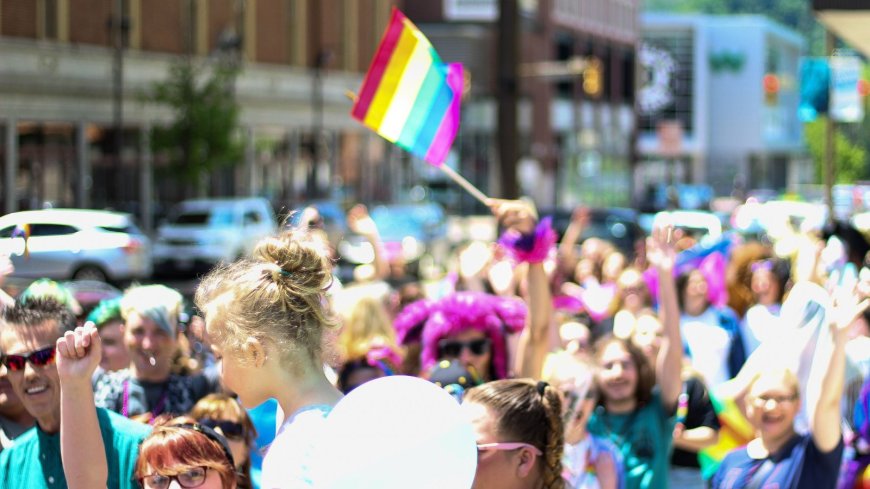
LGBTQIA stands for lesbian, gay, bisexual, transgender, queer or questioning, intersex and asexual. Merriam-Webster’s entry for LGBTQIA reads the A more broadly, as “asexual/aromantic/agender.”
The plus sign is shorthand for every identity the letters miss. Advocacy groups and dictionaries don’t all spell the acronym the same way, and GLAAD says that’s fine. “Both are acceptable, as are other versions of this acronym,” its glossary says of LGBT and LGBTQ+. LGBTQIA Meaning, Letter by Letter LetterStands forShort versionLLesbianWomen attracted to womenGGayPeople attracted to the same genderBBisexualAttraction to more than one genderTTransgenderGender differs from the sex assigned at birthQQueer or questioningA reclaimed umbrella term, or someone still exploringIIntersexBorn with sex traits outside typical male or female categoriesAAsexual, aromantic, agenderLittle or no sexual attraction, little or no romantic attraction, or no gender+Everyone elsePansexual, nonbinary, Two-Spirit and many other identities
Each of these is a self-description. “Ask people how they describe themselves before labeling their sexual orientation,” GLAAD tells journalists. Lesbian, Gay and Bisexual: The L, G and B
The L comes first. GLAAD defines a lesbian as “a woman whose enduring physical, romantic, and/or emotional attraction is to other women.”
Gay is broader than it sounds. The Human Rights Campaign’s glossary describes a gay person as someone “emotionally, romantically or sexually attracted to members of the same gender,” and adds, “Men, women and non-binary people may use this term to describe themselves.”
Bisexual means attraction to more than one gender. GLAAD is blunt about one common mistake. “Do not write or imply that bi means being attracted to men and women,” it says. “That is not an accurate definition of the word.”
GLAAD puts pansexual in the same family. “This is one of several terms under the bi+ umbrella,” its pansexual entry says, and Gayety’s pansexual meaning guide covers how the two labels overlap. The T in LGBTQIA: Transgender
Transgender describes gender identity. HRC calls it “an umbrella term for people whose gender identity and/or expression is different from cultural expectations based on the sex they were assigned at birth.”
That’s why trans people can sit under any of the other letters too. “Being transgender does not imply any specific sexual orientation,” HRC says.
Gayety’s history of the word transgender traces where the term itself came from. Does the Q Mean Queer or Questioning?
Usually queer. “The Q generally stands for queer when LGBTQ organizations, leaders, and media use the acronym,” GLAAD says. “In settings offering support for youth, it can also stand for questioning.”
Queer has a complicated past. HRC notes that the word “was previously used as a slur, but has been reclaimed by many parts of the LGBTQ+ movement.”
Not everyone likes it. GLAAD warns that queer “is not a universally accepted term even within the LGBTQ community,” so it’s best used when someone calls themselves that.
Questioning describes a process. HRC defines it as “a term used to describe people who are in the process of exploring their sexual orientation or gender identity.” Intersex: What the I Means
The I is about bodies. GLAAD defines intersex as describing “a person with one or more innate sex characteristics, including genitals, internal reproductive organs, and chromosomes, that fall outside of traditional conceptions of male or female bodies.”
It’s a separate thing from being trans. “Do not confuse having an intersex trait with being transgender,” GLAAD says.
Variation is wide. HRC says intersex people “are born with a variety of differences in their sex traits and reproductive anatomy.” Does the A in LGBTQIA Stand for Ally?
Some people assume the A stands for ally. “The A in LGBTQIA+ is for Ace, not Ally” is the headline the U.K. charity Galop put on its explainer, which says that assumption adds to ace erasure.
Ace is the umbrella. “Ace is an umbrella term covering a range of asexual and aromantic identities,” Galop says. It warns that “ace erasure is common” and that “ace people can feel excluded from the LGBT+ community as a result.”
Asexual people “may experience little or no sexual attraction,” the Trevor Project says. That’s different from celibacy, a choice not to have sex. On asexuality versus celibacy, the Trevor Project puts it this way: “the difference lies in attraction versus behavior.”
Aromantic is about romance instead. GLAAD defines it as “a person who does not experience romantic attraction.” Gayety has guides to the asexual flag and the aromantic flag.
Agender is a gender identity. UC Davis’ LGBTQIA Resource Center defines it as “an identity under the non-binary and trans+ umbrella,” and adds, “Some agender people feel that they have no gender identity, while others feel that agender is itself a gender identity.”
Allies matter, but they’re described separately. GLAAD’s entry describes an ally as “a straight and/or cisgender person who supports and advocates for LGBTQ people.” What the Plus in LGBTQIA+ Covers
The plus is an open door. HRC says the + recognizes “the limitless sexual orientations and gender identities used by members of our community.”
GLAAD frames it the same way. The + is “added in recognition of all non-straight, non-cisgender identities,” its glossary says.
That includes nonbinary people. GLAAD defines nonbinary as describing people who experience their gender “as falling outside the binary gender categories of man and woman.”
UC Davis explains why it spells out the longer version. “Our center uses LGBTQIA to intentionally include and raise awareness of Queer, Intersex and Asexual communities,” the center says. LGBTQIA2S+ and 2SLGBTQI+: Where Two-Spirit Fits
Some versions add 2S, for Two-Spirit. GLAAD describes Two-Spirit as “an adjective used by some Indigenous and First Nations people as an umbrella term to describe people who are not straight and/or cisgender.”
It isn’t a label for everyone. “This term should not be used to describe people who are not Indigenous,” GLAAD says.
Canada’s federal government puts it at the front. Its 2SLGBTQI+ glossary says the 2S “recognizes Two-Spirit people as the first 2SLGBTQI+ communities.”
Another common spelling, LGBTQIA2S+, moves the 2S to the end. Canada’s own version leaves off the A, and its glossary lists asexual as a separate entry: “A person who lacks sexual attraction or interest in sexual expression.” How LGBT Grew Into LGBTQIA+
The acronym kept growing. National Geographic’s Erin Blakemore traced the change, including the widespread adoption of the LGB acronym in the 1990s, and wrote that “transgender” was “widespread by the 2000s” within the LGBT rights movement.
The newest letters arrived later. “More recently, Q has been added to the acronym,” she wrote, and “the initials I (‘intersex’) and A (‘asexual’) are sometimes added after LGBTQ.”
No version satisfies everybody. A 2020 committee report from the National Academies of Sciences, Engineering and Medicine, quoted in the same article, put it plainly: “No term is perfect or perfectly inclusive.” Which Version of the Acronym Should You Use?
Any common version works, according to GLAAD. What it asks writers to drop is one older phrase. “The term ‘gay community’ should be avoided, as it does not accurately reflect the diversity of the community,” the glossary says.
Its replacement is simple. “Rather, LGBTQ community or LGBTQ+ community are recommended,” GLAAD says.
For a person, use their words. “Always ask people what words they use to describe themselves,” GLAAD’s nonbinary entry says. LGBTQIA+ FAQ
What does LGBTQIA+ stand for? Lesbian, gay, bisexual, transgender, queer or questioning, intersex and asexual, plus other identities. Merriam-Webster lists the A as asexual, aromantic or agender.
Does the A in LGBTQIA stand for ally? No. Merriam-Webster, Galop and the UC Davis center all list asexual for the A, and GLAAD defines allies as straight or cisgender supporters.
What does the I in LGBTQIA mean? Intersex, meaning people born with sex characteristics that don’t fit typical male or female categories, per GLAAD and HRC.
What does 2S mean in LGBTQIA2S+? Two-Spirit, a term some Indigenous people use. GLAAD says it shouldn’t be used for people who aren’t Indigenous.
Is LGBTQ+ the same as LGBTQIA+? They describe the same community. GLAAD treats LGBTQ+ and other versions of the acronym as acceptable.