2 trans athletes sparred with opponents, and it was a compelling debate
Grace McKenzie faced a considerable challenge at the “Play The Game” conference in Finland, where she shared her experience in women’s rugby. The post 2 trans athletes sparred with opponents, and it was a compelling debate appeared first on Outsports.
 Mark
Mark
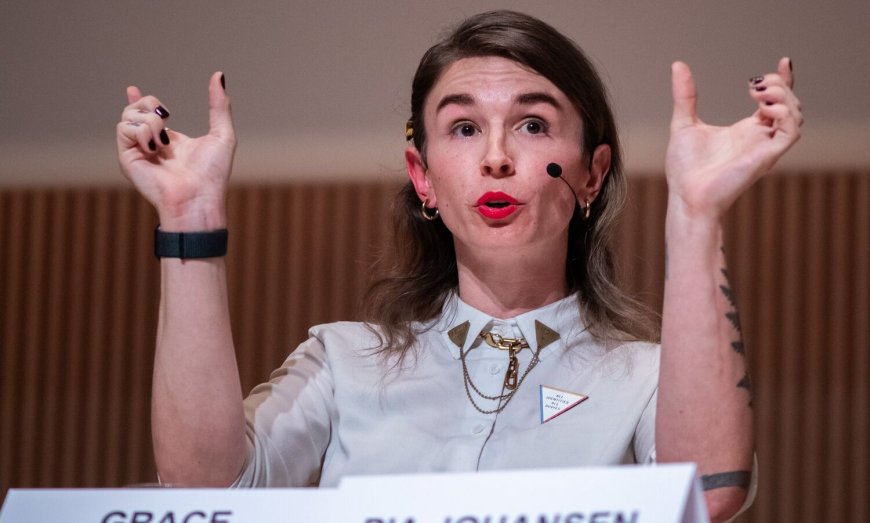

For nearly 30 years, the “Play The Game” conferences have provided a forum to dissect the most pressing and complex issues in sports. This year, it’s tackled the issue of trans athletes.
The PTG initiative, based in Denmark, brings together academics, administrators, athletes and other interested parties in a spirit of democracy and transparency.
Trans inclusion has been on the agenda at previous conferences, but this year, in Tampere, Finland, organizers who were tasked with “driving dialogue” faced their toughest assignment yet.
Introducing the day’s headline debate, PTG head Stanis Elsborg said it had been “by far the most challenging session to arrange for this year’s conference.”
Titled “Who has the right to compete? Exploring the inclusion of transgender athletes in sport,” the roundtable was streamed live and would have been compelling viewing for anyone interested in the topic.
Get off the sidelines and into the game
Our weekly playbook is packed with everything from locker room chatter to pressing LGBTQ sports issues.
Subscribe to our Newsletter today
The first speaker was Grace McKenzie, one of the leading figures in the “Rugby For All” movement.
A trans woman, she was recruited by a grassroots women’s team in San Francisco two years before World Rugby enacted a trans ban at the elite level in 2020. Later, many national associations announced their own blanket bans on trans women playing women’s rugby.
Related
England player explains why trans ban in women’s rugby left her ‘disappointed’
Poppy Cleall, who was part of two World Cup tournaments with the Red Roses, discussed allyship and LGBTQ representation on a panel at a ‘Rugby Pride’ event.
McKenzie now lives in the Netherlands and is an advisory council member for the Sport & Rights Alliance. She told the audience: “I played women’s rugby for seven years without issues from teammates, competitors, referees or any of my coaches.
“That’s something that can never be taken away from me. It is my lived experience versus philosophical conjecture in this debate, and I’m proud to have played alongside the sisters that I made.”
Opposing the arguments for trans women to compete in women’s sports was Jon Pike, Professor of Philosophy at the UK’s Open University.
Pike’s long-held position is that “any male advantage, no matter how small, is unfair in female sport” and that categorization by sex must therefore be an absolute.
The other speakers were European Aquatics bureau member Pia Johansen; sports governance analyst Roger Pielke, professor emeritus at University of Colorado Boulder; and Joanna Marie Harper, the renowned researcher and scientist who specializes in studies of trans athletes.

The ensuing discussion was well moderated by Elsborg, with questions posed relating to ethics, politics and science. Responses were prickly at times, and there were occasionally jeers of disagreement from the audience. Ultimately, a respectful mood prevailed.
Harper laid out where she fundamentally disagreed with Pike, arguing that significant factors such as the loss of muscle strength and drop in haemoglobin levels for trans women athletes should, in some sports, allow for a case-by-case assessment.
“The changes with hormone therapy change the advantages that trans women have from category advantages to competition advantages,” she said.
“While Jon may think that that’s impossible to go from one of those categories to another, I do not.”

Pielke insisted it was essential to hold a more nuanced view.
“It’s more than sports specific, it’s discipline specific,” he said, making the differentiation between men and women competing in gymnastics, and then also in the balance beam.
The members of the panel were largely in agreement that political forces continue to distort the picture. For Pike, the rights of athletes to compete are fundamentally about ethics, and the female category should be “protected” and an open category offered, though that can result in a male category in all but name.
McKenzie countered by saying: “I do believe that if I undergo hormone replacement therapy, why should I not have the right to compete with athletes who are closer to — if not equivalent to, if not greater than — myself in terms of athletic performance?
“If you say I do not have that right, am I required then to compete against athletes who do inherently have a proven advantage over me, in the male category, for example? If your answer is no, that means your goal is actually to remove me from sports entirely.”
She surmized: “This is the political motivation behind these arguments that we are “protecting” or “saving” women’s sports.”
The roundtable is available to watch in full on the “Play The Game” website and on LinkedIn.
Subscribe to the Outsports newsletter to keep up with your favorite out athletes, inspiring LGBTQ sports stories, and more.
The post 2 trans athletes sparred with opponents, and it was a compelling debate appeared first on Outsports.