Q&A: Filmmakers Dennis Cooper and Zac Farley on house haunt drama ‘Room Temperature’
Dennis Cooper and Zac Farley have been making films together for almost a decade. Their intriguing new feature, “Room Temperature,” is deadpan drama about a family constructing a home haunt on Halloween. When Paul (Chris Nelson) a janitor comes to assist with setting up the house, the father (John Williams) lays out his ambitions — … Read More
 Mark
0
2
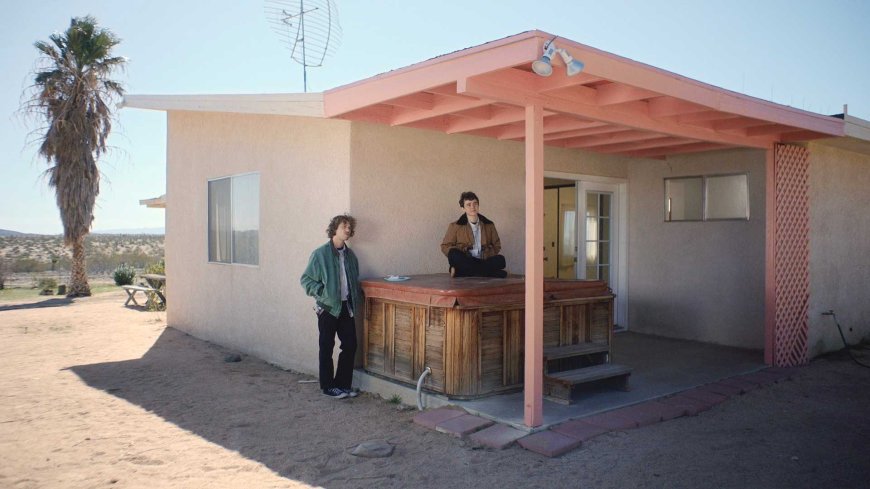
Dennis Cooper and Zac Farley have been making films together for almost a decade. Their intriguing new feature, “Room Temperature,” is deadpan drama about a family constructing a home haunt on Halloween. When Paul (Chris Nelson) a janitor comes to assist with setting up the house, the father (John Williams) lays out his ambitions — which are altered when it comes to executing his ideas. He debates about killing his son Andre (trans actor Charlie Nelson Jacbs), who is involved with Extra (Ange Dargent), a French teen who lives with the family, which includes Andre’s mother (Stanya Kahn) and younger sister (Virginia Adams).
The filmmakers spoke with Gay City News about making the house haunt film, “Room Temperature.”
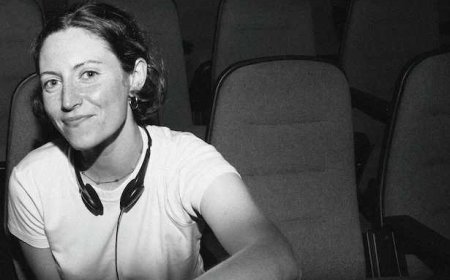
[caption id="attachment_65938" align="aligncenter" width="700"] Dennis Cooper and Zac Farley.Christopher Ho[/caption]
Dennis, I’m curious about your transition from being a writer to a filmmaker and how and Zac collaborate?
Dennis Cooper: I have really been into film, especially experimental films, since I was a teenager. I took filmmaking classes in college and realized I had zero talent as a filmmaker, so I gave up that dream. Later on, I got this idea that I’d make a porn film. I wrote a porn script, but it was too controversial and not sexy enough. A producer heard I had this script and offered to make it. I asked Zac if he wanted to do this. We de-porned it and made this non-porn porn film, “Like Cattle Towards Glow” [in 2015]. We went in blind but had fun and did it and people liked it, so we just started making film ever since.
Zac Farley: I was always interested in films and thought about going to film school, but it would have been more technical than I wanted, so I went to art school. When Dennis and I met and started talking about working on projects together, a film became something I wanted to do together. It was really addictive, so we kept going.
What inspired this story and these characters?
Zac Farley: Dennis and I are both big obsessives with home haunts, which is when people turn their houses into haunted houses for Halloween. We go to as many of them as we can. It’s a form we’re excited by. We consider it to be outsider art. They are amateurish, but they strive to be more than they can achieve and sometimes accidentally succeed. They have sculpture and performance and costumes, and music and are very immersive. It is form that is ripe for us.
Dennis Cooper: I used to make haunts as a kid in my parent’s basement. We are really intrigued by who makes them. Why dedicate so much time and money to this—they don’t get rich. Let’s make a film about a family that makes a home haunt and make them a little more fucked up to make it more interesting. We could make a home haunt inside the film, and in a way, the film is like a home haunt too. And because we don’t work with real actors. they are all real in a slightly artificial way.
The tone of the film is very deliberate, and very deadpan. Can you talk about creating the atmosphere?
Dennis Cooper: We want the viewers to be with the characters. We wanted the tone to be funny but also have this melancholy and sadness in it. The characters are very withdrawn. They are performing through their humor, but you can see the sadness. There are times when it is funny or tragic for Andre and Extra. We found this tone where we could do both and go back and forth or be sad and funny at the same time.
I’m also curious about your decisions with sound, which include the family making the sounds for the haunted house. There are also long stretches without dialogue, especially in the end of the film.
Zac Farley: We are extremely attentive to the sound of the film. We started making films with this conceit that we only using direct sounds and only diegetic music, though we break that rule all the time. We had the chance to work Puce Mary [aka Frederikke Hoffmeier], who is a noise musician, and she worked with home haunt sounds that were made to sound as if the family in the film made them. Were we shooting in the high desert and there was an extreme windstorm, so a lot of performances are guided by the lull in the wind.
Dennis Cooper: We like to have a lot of quiet time where you are just listening, because it’s very beautiful, but we also try to train viewer to pay close attention to the film. They may not want to. If you have a lot quiet and sound, when the character speak, you pay more attention to what they say. When someone talks, it is very important what they say; they are not telling you what you should think or feel or what is going to happen. There is a long sequence after the haunted house when it is very quiet and then Andre delivers a line you’re not expecting, so to hear a voice at that point is very jarring.
Andre is played by a trans actor and his relationship with Extra is presented without much issue. Can you discuss queering the film?
Dennis Cooper: Something important in our films is that no one has a problem with anyone else’s identity. They are weird people, but they accept one another. For Andre, one of our producers, who is trans, asked if we wanted to see this trans boy [Charlie Nelson Jacobs] and he was remarkable. We like that you don’t know anything about the people playing the characters. If people recognize that Andre is played by a trans guy, it doesn’t change anything in the entire film. The queerness is there. It creeps into the film. There is a very strong thing between Andre and Extra. It doesn’t need to be pointed out. You feel Andre’s pain and his love.
Andre really does not want to be killed by his father. There is a moral undercurrent there, but death is very much a part of the film. What can you say about the theme of death in “Room Temperature.”
Dennis Cooper: I think were both interested in death and the death of young people is very powerful. I had young people die when I was young and it really impacted me. It’s Halloween and seemed appropriate.
Zac Farley: One challenge in making the film was having a central character whose presence was as powerful when he was alive and when he was dead — to have someone who was as important when he wasn’t there as when he wasn’t there. You had to feel this character’s really powerful presence carry through the whole film.
There is violence presented in the film, the story is really about fear. What scares you?
Zac Farley: I’m afraid of spiders. That is the best I can come up with. It’s not that I don’t experience fear. When we go through home haunts, we are never scared. It’s a superpower and a curse. We don’t have access to the register of fear, so we look at them as artwork through an analytical frame and are attentive to details.
Dennis Cooper: The screaming girls tell us what is scary. I don’t get scared by horror movies. I’m scared of obvious things like running out of money, and I have a terrible fear of spacewalks and heights to some degree. If there’s a spacewalk in a film, I literally cannot take it. But I am not afraid of ghosts or monsters.
What decisions did you make about the features of the haunted house?
Zac Farley: We wanted to construct the home, but the film starts with the dad walking through the house describing what he wants, which is both highly specific and extremely vague. The character imagines this thing, and the audience participates in the making of it. The actual building elements are the most amusing and unsuccessful features of home haunts. We had to work with what the house we were shooting in allowed and level of ambition of the set designers.
Dennis Cooper: Almost everything is film is the most standard thing you find in every home haunt. You crawl through a thing, and there is a greasy hallway, and a maze. The only unique thing in our haunt house is the swamp. We try to signify what was scary. The score is not scary music; it is hinting at being scary music. Most horror haunts play black metal. At beginning of the film, you think the haunt is going to be amazing, but the ambition taken way down.
Can you talk about blurring the lines between ambition and reality in “Room Temperature”?
Zac Farley: Seeing somebody’s ambition and failed execution gives you access to the entirety of the ambition. The constraints can outpace the dream. You build something out of cardboard because you don’t have access to better material. But you can also have the space in between we which is a room for you to project. What added material do you get from the space between the ambition and its failed execution?
Do you feel that your film lies between ambition and reality?
Zac Farley: The most exciting part of the work making the film is come up with ideas and projects and score that will guide everyone, but if at the end of the shooting day something hasn’t surprised us, then we’ve failed. A whole lot of the work is making sure that everyone can be given the room to augment what we are doing and there is enough room to allow for things to be derailed and for things to become something we had hoped for but had not anticipated. In that sense the film, is, for me, a complete success.
Dennis Cooper: We have really high ambitions writing it, but actually shooting it, we realize we can’t do this, so we adjust. It’s about how far we want it to go. We had all these ambitions for a ghost that we couldn’t possibly do. I am happy with how the film succeeds and fails.
“Room Temperature” | Directed by Dennis Cooper and Zac Farley | Available November 24 on demand | Distributed by Altered Innocence
Dennis Cooper and Zac Farley.Christopher Ho[/caption]
Dennis, I’m curious about your transition from being a writer to a filmmaker and how and Zac collaborate?
Dennis Cooper: I have really been into film, especially experimental films, since I was a teenager. I took filmmaking classes in college and realized I had zero talent as a filmmaker, so I gave up that dream. Later on, I got this idea that I’d make a porn film. I wrote a porn script, but it was too controversial and not sexy enough. A producer heard I had this script and offered to make it. I asked Zac if he wanted to do this. We de-porned it and made this non-porn porn film, “Like Cattle Towards Glow” [in 2015]. We went in blind but had fun and did it and people liked it, so we just started making film ever since.
Zac Farley: I was always interested in films and thought about going to film school, but it would have been more technical than I wanted, so I went to art school. When Dennis and I met and started talking about working on projects together, a film became something I wanted to do together. It was really addictive, so we kept going.
What inspired this story and these characters?
Zac Farley: Dennis and I are both big obsessives with home haunts, which is when people turn their houses into haunted houses for Halloween. We go to as many of them as we can. It’s a form we’re excited by. We consider it to be outsider art. They are amateurish, but they strive to be more than they can achieve and sometimes accidentally succeed. They have sculpture and performance and costumes, and music and are very immersive. It is form that is ripe for us.
Dennis Cooper: I used to make haunts as a kid in my parent’s basement. We are really intrigued by who makes them. Why dedicate so much time and money to this—they don’t get rich. Let’s make a film about a family that makes a home haunt and make them a little more fucked up to make it more interesting. We could make a home haunt inside the film, and in a way, the film is like a home haunt too. And because we don’t work with real actors. they are all real in a slightly artificial way.
The tone of the film is very deliberate, and very deadpan. Can you talk about creating the atmosphere?
Dennis Cooper: We want the viewers to be with the characters. We wanted the tone to be funny but also have this melancholy and sadness in it. The characters are very withdrawn. They are performing through their humor, but you can see the sadness. There are times when it is funny or tragic for Andre and Extra. We found this tone where we could do both and go back and forth or be sad and funny at the same time.
I’m also curious about your decisions with sound, which include the family making the sounds for the haunted house. There are also long stretches without dialogue, especially in the end of the film.
Zac Farley: We are extremely attentive to the sound of the film. We started making films with this conceit that we only using direct sounds and only diegetic music, though we break that rule all the time. We had the chance to work Puce Mary [aka Frederikke Hoffmeier], who is a noise musician, and she worked with home haunt sounds that were made to sound as if the family in the film made them. Were we shooting in the high desert and there was an extreme windstorm, so a lot of performances are guided by the lull in the wind.
Dennis Cooper: We like to have a lot of quiet time where you are just listening, because it’s very beautiful, but we also try to train viewer to pay close attention to the film. They may not want to. If you have a lot quiet and sound, when the character speak, you pay more attention to what they say. When someone talks, it is very important what they say; they are not telling you what you should think or feel or what is going to happen. There is a long sequence after the haunted house when it is very quiet and then Andre delivers a line you’re not expecting, so to hear a voice at that point is very jarring.
Andre is played by a trans actor and his relationship with Extra is presented without much issue. Can you discuss queering the film?
Dennis Cooper: Something important in our films is that no one has a problem with anyone else’s identity. They are weird people, but they accept one another. For Andre, one of our producers, who is trans, asked if we wanted to see this trans boy [Charlie Nelson Jacobs] and he was remarkable. We like that you don’t know anything about the people playing the characters. If people recognize that Andre is played by a trans guy, it doesn’t change anything in the entire film. The queerness is there. It creeps into the film. There is a very strong thing between Andre and Extra. It doesn’t need to be pointed out. You feel Andre’s pain and his love.
Andre really does not want to be killed by his father. There is a moral undercurrent there, but death is very much a part of the film. What can you say about the theme of death in “Room Temperature.”
Dennis Cooper: I think were both interested in death and the death of young people is very powerful. I had young people die when I was young and it really impacted me. It’s Halloween and seemed appropriate.
Zac Farley: One challenge in making the film was having a central character whose presence was as powerful when he was alive and when he was dead — to have someone who was as important when he wasn’t there as when he wasn’t there. You had to feel this character’s really powerful presence carry through the whole film.
There is violence presented in the film, the story is really about fear. What scares you?
Zac Farley: I’m afraid of spiders. That is the best I can come up with. It’s not that I don’t experience fear. When we go through home haunts, we are never scared. It’s a superpower and a curse. We don’t have access to the register of fear, so we look at them as artwork through an analytical frame and are attentive to details.
Dennis Cooper: The screaming girls tell us what is scary. I don’t get scared by horror movies. I’m scared of obvious things like running out of money, and I have a terrible fear of spacewalks and heights to some degree. If there’s a spacewalk in a film, I literally cannot take it. But I am not afraid of ghosts or monsters.
What decisions did you make about the features of the haunted house?
Zac Farley: We wanted to construct the home, but the film starts with the dad walking through the house describing what he wants, which is both highly specific and extremely vague. The character imagines this thing, and the audience participates in the making of it. The actual building elements are the most amusing and unsuccessful features of home haunts. We had to work with what the house we were shooting in allowed and level of ambition of the set designers.
Dennis Cooper: Almost everything is film is the most standard thing you find in every home haunt. You crawl through a thing, and there is a greasy hallway, and a maze. The only unique thing in our haunt house is the swamp. We try to signify what was scary. The score is not scary music; it is hinting at being scary music. Most horror haunts play black metal. At beginning of the film, you think the haunt is going to be amazing, but the ambition taken way down.
Can you talk about blurring the lines between ambition and reality in “Room Temperature”?
Zac Farley: Seeing somebody’s ambition and failed execution gives you access to the entirety of the ambition. The constraints can outpace the dream. You build something out of cardboard because you don’t have access to better material. But you can also have the space in between we which is a room for you to project. What added material do you get from the space between the ambition and its failed execution?
Do you feel that your film lies between ambition and reality?
Zac Farley: The most exciting part of the work making the film is come up with ideas and projects and score that will guide everyone, but if at the end of the shooting day something hasn’t surprised us, then we’ve failed. A whole lot of the work is making sure that everyone can be given the room to augment what we are doing and there is enough room to allow for things to be derailed and for things to become something we had hoped for but had not anticipated. In that sense the film, is, for me, a complete success.
Dennis Cooper: We have really high ambitions writing it, but actually shooting it, we realize we can’t do this, so we adjust. It’s about how far we want it to go. We had all these ambitions for a ghost that we couldn’t possibly do. I am happy with how the film succeeds and fails.
“Room Temperature” | Directed by Dennis Cooper and Zac Farley | Available November 24 on demand | Distributed by Altered Innocence