Q&A: Filmmaker Brydie O’Connor on the making of ‘Barbara Forever’
Director Brydie O’Connor recently chatted with Gay City News about the making of her documentary, “Barbara Forever,” which is a warm and celebratory film about the groundbreaking lesbian avant-garde filmmaker, Barbara Hammer, who passed away in 2019. Hammer is first seen in O’Connor’s film posing naked and flexing. It’s an apt metaphor for her life … Read More
 Mark
Mark
0
28
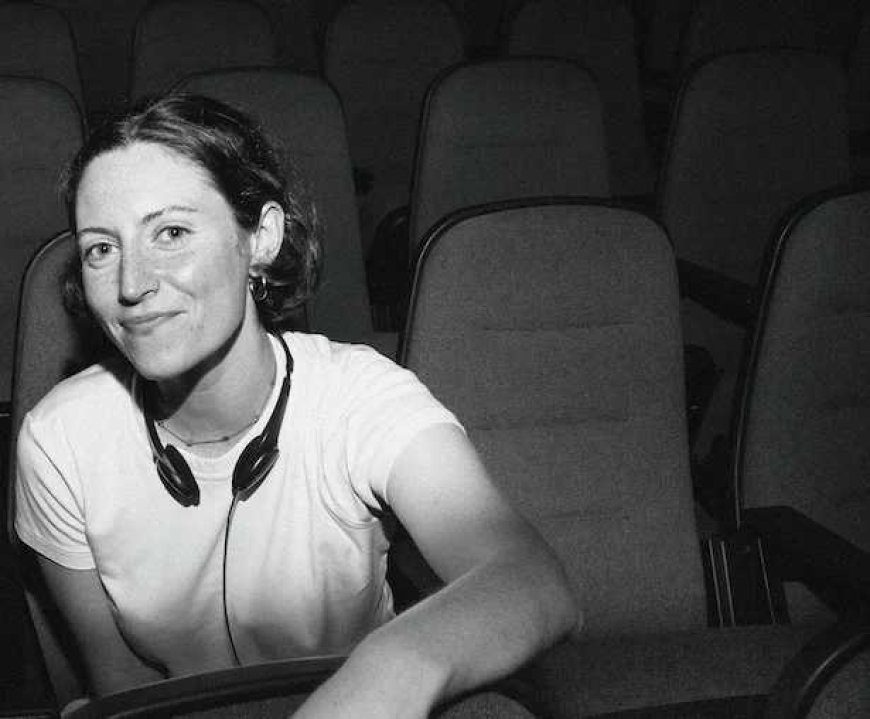
Director Brydie O’Connor recently chatted with Gay City News about the making of her documentary, “Barbara Forever,” which is a warm and celebratory film about the groundbreaking lesbian avant-garde filmmaker, Barbara Hammer, who passed away in 2019.
Hammer is first seen in O’Connor’s film posing naked and flexing. It’s an apt metaphor for her life and work; she documented herself and her lovers in her films, and “opened a space for queerness,” as there was little to no visibility for lesbians in cinema. Her shorts, such as “Dyketactics,” were invitations to explore female bodies and pleasure. Hammer’s significant body of work has been sold to the Beinecke at Yale, and “Barbara Forever” shows her partner Florrie Burke managing that undertaking.
The documentary also recounts Hammer’s claim that she “was born” when she became a lesbian. She lived and worked in San Francisco and New York City creating films that were as experimental as lesbian and queer lives. She had a breakthrough with her first feature film, “Nitrate Kisses,” in 1992 (which played Sundance back in the day), and continued to make shorts right up until her death from cancer. Hammer talks with candor about trying to find a work/life balance, and it is engaging watching her negotiate with a lover about filming her or meditating on horses and dying. “Barbara Forever” is an illuminating portrait of the pioneering filmmaker.
O'Connor's conversation with Gay City News is below.
What was the first Barbara Hammer film you saw and what do you remember about it?
“Dyketactics” on a compilation DVD that Barbara sent me. I remember thinking, this is Barbara Hammer. I am seeing her. She is in front of and behind the camera and she is putting her life and her experimental way of figuring out how to be a lesbian, and a woman in the world at the time. She was trying things, and exploring herself and her form, and she genuinely inspired me to make my own films.
What access did you have to her archive and how did you come to make “Barbara Forever”?
[After Barbara’s death] I met Florrie for coffee, and suggested we collaborate on a short film together, “Love, Barbara” (2022). In the process of making the short, I found over 35 hours of audio recordings of Barbara talking about her life. “Barbara Forever” grew organically from that — that she could narrate her own documentary posthumously from the audio recordings.
Can you talk about how you assembled the film?
I knew from the beginning that it would not be a cradle-to-grave biography. We would be using primarily Barbara’s images. We structured the film through this idea of a living a lesbian life, and what it means to live a lesbian life from birth to death. We originally started working with the archival chapters of her film which use her image and voice and weaving in contemporary scenes. I was playing with both her absence and presence in her work by threading in the contemporary scenes.
There were over 400 hours of footage, so everything we cut was to the idea — why did Barbara turn the camera on herself and use her life, her body, relationships, community, and direct surroundings as an alternative method of history-making and then translate that experience through experimental cinema?
Can you talk about her work/life balance?
I’ve been saying that for Barbara, the personal was not only political but historical. It’s quite special and rare to have a collection that shows a lesbian life in such depth since the late 1960s. I wanted Barbara to come across as she did in the world when she was alive. She had such a huge personality and was ambitious and pushy, but she was tender and very self-reflective and self-aware. There were elements of her personality that allowed her to continue working over the course of six decades and in periods where she wasn’t getting the recognition she thinks she deserved. I was interested in what was it about the way she kept pushing forward with a mentality of how to become a lesbian icon when the world doesn’t necessarily want a lesbian icon.