New York court says business violated state law by refusing to sell wedding outfit to out-of-state lesbian customer
The New York State Appellate Division, First Department, ruled on Oct. 22 that a New York business that refused to sell an advertised wedding outfit to an out-of-state woman seeking to buy it for her fiancé had violated New York’s Human Rights Law. The business cited religious objections to same-sex marriage, claiming protection under the … Read More
 Mark
0
4
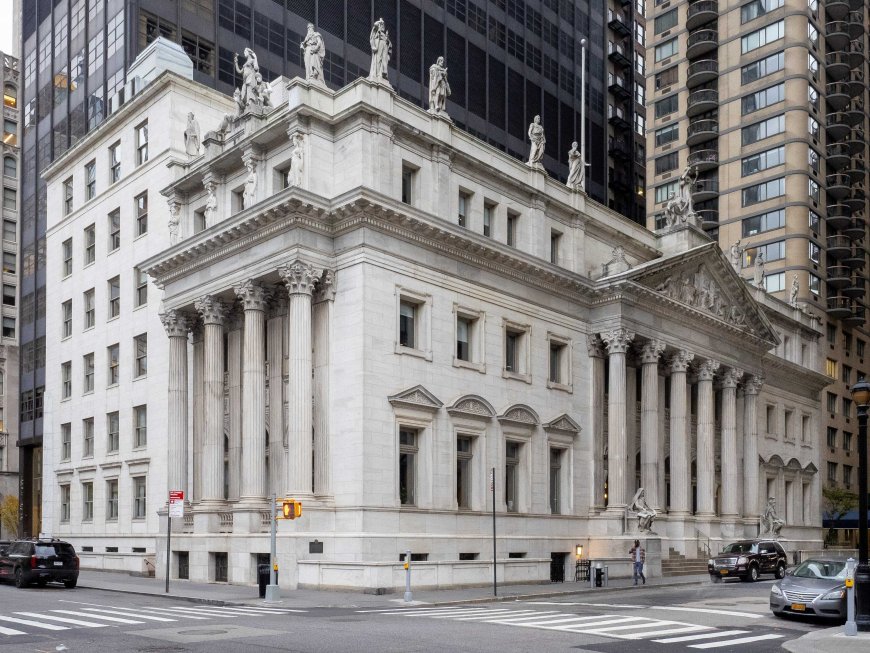
The New York State Appellate Division, First Department, ruled on Oct. 22 that a New York business that refused to sell an advertised wedding outfit to an out-of-state woman seeking to buy it for her fiancé had violated New York’s Human Rights Law. The business cited religious objections to same-sex marriage, claiming protection under the First Amendment’s Free Exercise of Religion Clause. The court ruling approved an award by the State Division of Human Rights of $5,000 in damages and a $20,000 fine. The communication between the consumer and the business was an exchange of emails.
The consumer, a Missouri lesbian who is not named in the court’s opinion, saw an advertisement on a social media page by D. Auxilly NYC LLC, a New York business, for a “wedding bridal jumpsuit.” She showed the advertisement to her fiancé, who had “fallen in love” with it. Then she contacted D. Auxilly, expressing an interest in buying it, asking about payment options, and commenting that she wanted to buy it for the upcoming wedding with her fiancé. Responding to the email, D. Auxilly’s owner and operator, Dominque Galbraith, advised as to payment requirements but, according to the court, stated that “she would not be able to make the garment for a same-sex wedding because it would go against her religious beliefs” and “she also urged the [consumer] and her fiancé to reconsider getting married.”
The consumer filed a complaint with the New York State Division of Human Rights, which enforces the state’s ban on sexual orientation discrimination by businesses that sell goods or services to the public. The agency’s administrative law judge found that D. Auxilly had violated the ban, recommending that the Division award damages and impose a fine. D. Auxilly argued that they believed it would violate their sincerely held religious beliefs to make an outfit for a same-sex wedding and further argued that because the consumer was not a New York resident and was not in New York when the communications took place, their business should not be subject to New York’s anti-discrimination law for this transaction. The State Division accepted the administrative law Judge's recommendation, and the Appellate Division affirmed the agency’s decision, rejecting these arguments.
In finding that the Division had jurisdiction over the discrimination claim, the court applied an “impact test.” It explained that “D. Auxilly is a New York business selling goods in New York, marketed as ‘made in New York,’ the transaction would have occurred in New York, D. Auxilly would have done the required work in New York, and the money paid for the garment would have landed in New York.” Thus, the court agreed with the Division that the discrimination occurred in New York.
The court wrote that “D. Auxilly implicitly associated the City and State of New York with a discriminatory act, and the impact test is satisfied.” It made no difference that the consumer communicated through email rather than traveling to a “New York storefront” to buy the garment. The court also found that the amounts awarded as damages and penalty were not out of line with what other New York courts had awarded in similar discrimination cases.
D. Auxilly argued on appeal that it hadn’t discriminated based on sexual orientation of the consumer, but rather based on the use to which the garment would be put. That didn’t cut any ice with the court. “Same-sex marriage is ‘inextricably tied to sexual orientation’” it stated, quoting an earlier New York decision, and it pointed out that D. Auxilly had later “posted on social media that it indeed refused to sell a garment to a woman because she happened to be engaged to another woman.” This clearly violated the New York Law.
As to the religious freedom claim, the court distinguished this case from the Masterpiece Cakeshop case or the 303 Creative case, both of which involved some sort of “expressive statement” by the seller, either in custom designing a wedding cake or a wedding website. In this case, the consumer wanted to buy an item that had been “previously designed and marketed” to the public. The court found that the Human Rights law is neutral on its face and does not target religious conduct for distinctive treatment, so the business did not enjoy an exemption from compliance based on its religious beliefs as it chose to do business with the public.
The five-judge panel of the Appellate Division unanimously voted to enforce the Division of Human Rights order. State Division attorney Michael K. Swirsky represented the Division of Human Rights.