
Elsinore’ mines triumph from real-life tragedy
Simon Stone’s “Elsinore” provides out actor Andrew Scott a chance to play another actor. The film is designed to win him an Oscar while wringing tears from the audience. As Ian Charleson, who died of AIDS in 1990, Scott gets to slip into the skin of a gay man who never got to have a … Read More
 Mark
0
2
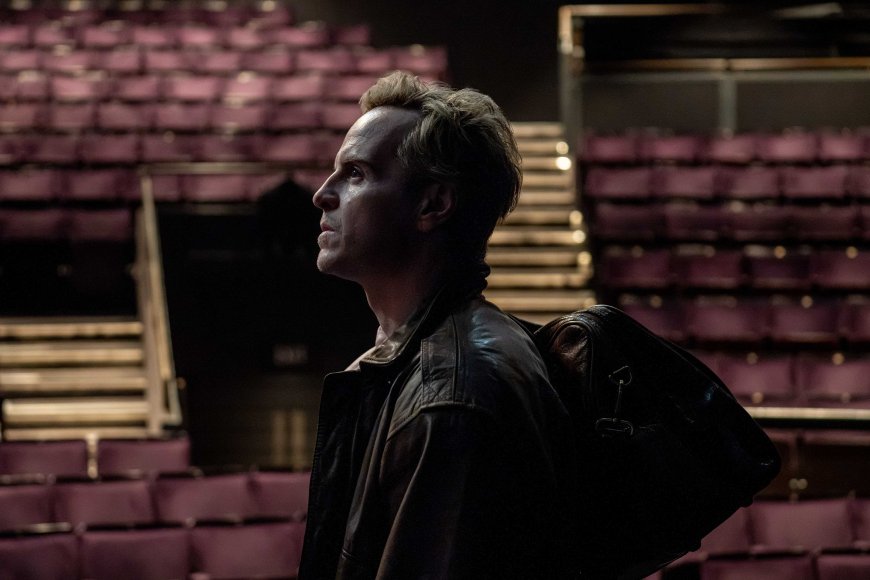
Simon Stone’s “Elsinore” provides out actor Andrew Scott a chance to play another actor. The film is designed to win him an Oscar while wringing tears from the audience. As Ian Charleson, who died of AIDS in 1990, Scott gets to slip into the skin of a gay man who never got to have a successful career outside the closet. Now 50, Scott has lived a decade longer than Charleson did. If he wins an Oscar for this role, he’ll be the first openly gay actor to do so. “Elsinore” turns past tragedies into a individual triumph.
It’s not a birth-to-death biopic. Stone and screenwriter Stephen Beresford choose to cover only the last year of Charleson’s life. HIV-positive but not yet showing signs of AIDS complications, Charleson examines his body in the mirror every day for KS legions. He goes through the motions of performing in movies he doesn’t care about, needing to act butch. On the set of one, his makeup artist notices a purple spot near his eye. This is the first sign his condition is worsening. He becomes a regular patient at Dr. Margaret Johnson’s (Olivia Colman) AIDS clinic, alongside many other gay men. Through all this, he dreams of playing Hamlet at the National Theatre. Dr. Johnson warns him against this plan, worrying that the stress might kill him. (She approaches Charleson with an attitude of tough love.) He remains set upon it. After a bout of severe illness, chemotherapy allows him to recover enough to perform again.
“Elsinore” muses on the frustrations of an actor’s life. Charleson starred in the 1981 hit “Chariots Of Fire,” as the athlete and missionary Eric Liddell. (By the time “Elsinore” is set, he was fed up with being defined by it, but he’s still dogged by its theme, composed by Vangelis.) Although he’d appeared on stage before, his first film role was Angel, a character man in queer director Derek Jarman’s punk fantasia “Jubilee.” (Jarman, played by out actor David Dawson, becomes a character in “Elsinore,” arguing with Charleson about his refusal to speak publicly about his sexuality and HIV status.) Dreaming of a career in Hollywood, following the conservative, patriotic leanings of “Chariots Of Fire,” Charleson removed it from his resumé. “Gandhi” was the only other high-profile film in which he was cast. In service of a narrative about the difficulties of Charleson’s career, “Elsinore” omits any mention of his distinguished theater work. Its Charleson is a man who wanted stardom but couldn’t get there.
Cinematographer Mike Eley portrays Charleson’s life in bleached tones, as though the image’s own vitality is draining away as he grew sicker. He never once keeps the camera on a tripod. The National Theatre’s bright lights provide a contrast with overcast skies and gray hospital wards. Quick, abrupt editing keeps up a fast pace. That leads to some insulting missteps. “Elsinore” cross-cuts between Charleson covered in fake blood onstage and writhing in agony as he dies, lying in bed at home. (Of course, the “to be or not to be” soliloquy is interpolated.) A montage serves up a quick reminder of all the emotional peaks we’ve seen, as if the film thinks we need a clip reel because we can’t remember scenes we watched half an hour ago. Its desperation to be moving actually detracts from that goal. Stefan Gregory’s score contributes to the film’s most manipulative qualities.
Scott rises above the film’s excess. He gives voice to a man trying to retain control of his body in order to satisfy his impulses as an actor. Charleson doesn’t give any elaborate rationale for his urge to spend his last months playing “Hamlet,” which baffles Dr. Johnson, but his thoughts are easy to comprehend. He wants to do the most meaningful thing possible as an actor. “Elsinore” demonstrates what being an artist can offer to people who’ve been let down by the larger world. There’s just one thing missing: It’s a version of AIDS and its impact on the gay community stripped bare of real politics. In the film, Jarman and Charleson clash and reconcile, but Jarman’s diary revealed that he was still furious with the actor on the day he died. “Elsinore” boils the tragedies of AIDS and homophobia down to their effect on one man.
“Elsinore” | Directed by Simon Stone | Focus Features | Opens November 20th at the AMC Lincoln Square, Angelika and Alamo Drafthouse Manhttan