
What happens when bisexual panic threatens to tear a marriage apart?
Biphobia is everywhere
 Mark
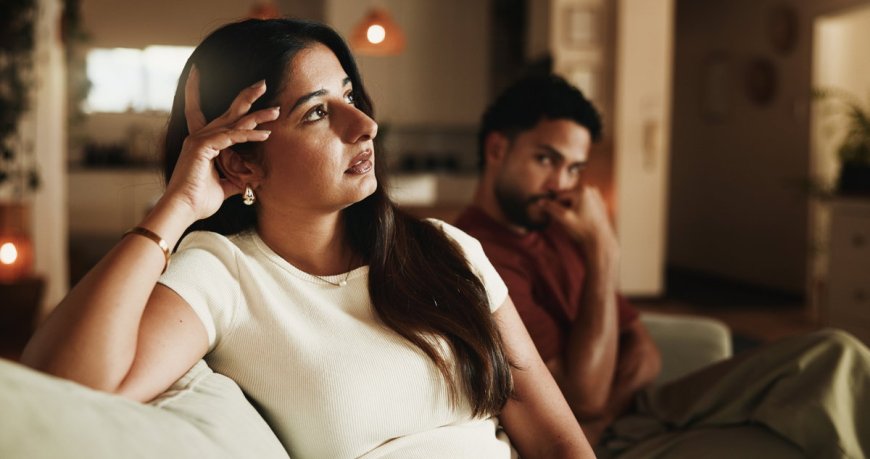

Bisexual adults make up 58.6% of the queer population, but for some reason, harmful biphobic myths still abound, even where you’d least expect them. For one newlywed, the revelation of her husband’s bisexuality recently caused a full-on identity crisis. Luckily, the internet stepped in to help.
The woman in question wrote into the Washington Post advice podcast Life Hax this week, where cohosts Carolyn Hax and Shane O’Neill helped put things in perspective.
“My husband came out as bisexual right after our honeymoon,” the writer-in explains. “I was blindsided and traumatized. He says he does not want to act on it, but he has never had a physical experience with another man.”
Almost 18 months later, she still hasn’t gotten over it, citing her husband’s coming out as a “breach of trust.”
How about we take this to the next level?
Subscribe to our newsletter for a refreshing cocktail (or mocktail) of LGBTQ+ entertainment and pop culture, served up with a side of eye-candy.
Subscribe to our Newsletter today
So much to unpack here, and thankfully, our hosts do a good job of putting things into context. As Hax points out, the woman’s feelings of betrayal don’t stem from the bisexuality, but the fact that her husband waited until their honeymoon to tell her. Which is totally valid. Nobody wants to suffer a Lady Eve situation on their honeymoon, and an earlier broaching of the subject could have helped this woman feel less blindsided.
That said, there’s probably a good reason why her husband didn’t feel comfortable bringing up the subject: biphobia.
“A lot of people still view bisexuality as a practice, not an orientation,” O’Neill explains. Even though bisexuality is quite common (about 5 .3% of the population identifies as bisexual) nasty stereotypes still keep many bisexuals in the closet, terrified to come out to their partners.
One woman recently wrote in to Queerty‘s own advice columnist asking what to do about friends who assume her bisexual husband is “just gay.” We all remember the cursed SATC episode where Carrie defines bisexuality as “just a stopover on the way to gaytown,” and sadly, that stale, binary concept of sexuality is still kicking around at this late date.
Not to mention the (also stereotypical, unhelpful, and untrue) assumption that being bisexual means you’re extra randy and more prone to cheating. We know that mixed sexual orientation marriages have always existed, and are often every bit as successful (if not moreso!) than straight or gay marriages.
But when those stereotypes are living rent free in your head, how do you get rid of them? More importantly, how do you rebuild trust with your partner?
“There’s a biphobia in my community,” O’Neill says (speaking specifically of the gay male community.) “A lot of gay men listening to this will be like, ‘girl he’s not bi he’s gay’…I too was once a bisexual man who had never had sex with anyone and then I was like, oh I figured it out. It happens.”
But just because it happens doesn’t mean that it’s what’s happening in every single situation. Which means that this woman’s trust issues might be better served by some internal work, rather than putting all the “blame” of the situation on her husband’s coming out.
As Jake often tells us in his column, while we might want to claim responsibility for things that are hurting us by assuming we’ve “turned” someone straight or caused their sexuality to pivot, that’s not a real thing. “While sexuality can be fluid for some people, and how we understand or express it may evolve over time, another person doesn’t have the power to simply flip someone’s orientation,” he assured someone in a similar letter last month.
Perhaps the reason so many cling to outdated ideas about bisexuality (and sexuality in general) is because the truth of sexuality is much more chaotic than we’re comfortable with. A wedding ring doesn’t necessarily protect anyone from infidelity, but the idea that bisexual people are more likely to cheat is deeply rooted in biphobia—as is the assumption that a bisexual person is confused or simply hasn’t made up their mind about who they’re attracted to. Feeling a breach of trust over being lied to is one thing. Not being able to empathize with a partner’s vulnerable coming out is quite another.
Related
Was this twice-divorced family cursed with bad gaydar?
Third time’s the charm?!?
Sign up for the Queerty newsletter to stay on top of the hottest stories in LGBTQ+ entertainment, politics, and culture.