
New Supreme Court term may produce important LGBTQ-related rulings
The US Supreme Court continues to deal with LGBTQ-related cases both on its formal merits docket and on the “shadow docket” of rulings on requests for Supreme Court action while cases are pending in lower courts. First up for the October 2026 Term of the Court on the merits docket is St. Mary Catholic Parish … Read More
 Mark
0
4
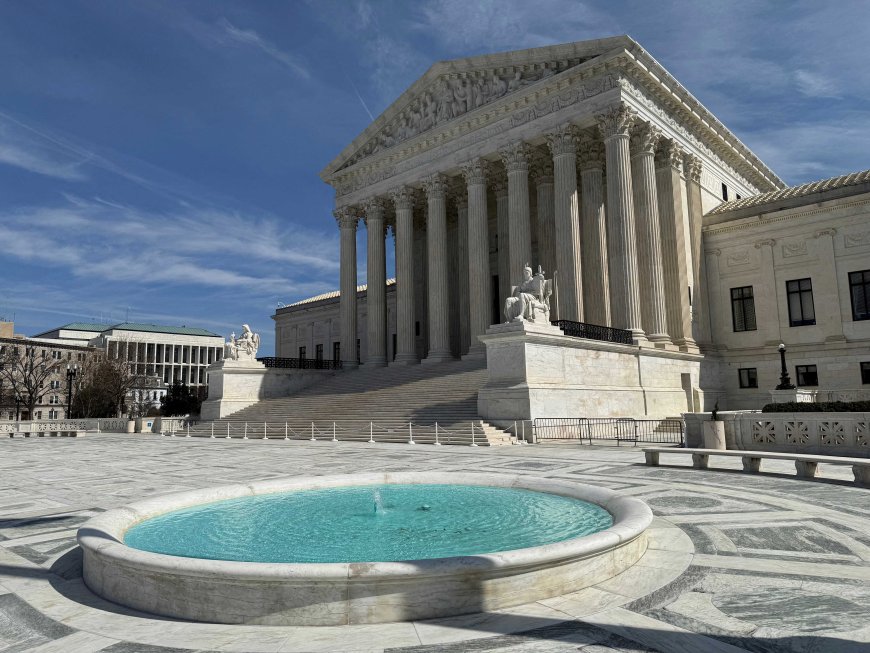
The US Supreme Court continues to deal with LGBTQ-related cases both on its formal merits docket and on the “shadow docket” of rulings on requests for Supreme Court action while cases are pending in lower courts.
First up for the October 2026 Term of the Court on the merits docket is St. Mary Catholic Parish v. Roy, which will be argued on November 3. In that case, the US Court of Appeals for the 10th Circuit ruled against a challenge to Colorado’s requirement that schools participating in the state’s universal preschool program, under which the state pays for families to send their children to the preschool of their choice, public or private, excludes schools that fail to afford “equal opportunity” to enroll regardless of race, religious affiliation, sexual orientation, gender identity, income level, or disability.
St. Mary Catholic Parish argued that it should not be required to enroll children of same-sex couples, because of the Catholic Church’s opposition to same-sex marriage. The 10th Circuit rejected its First Amendment religious free exercise argument, finding that the non-discrimination rule was not specifically targeted at religious schools and that the state’s interest in not financially sponsoring discriminatory pre-school programs was not unconstitutional.
The school argued — and the Trump Administration, which is participating in support of the school, argues as well — that Colorado’s non-discrimination policy is not “neutral” because the state grants various exemptions, such as allowing pre-schools to focus their admissions on “children of color,” “gender-nonconforming children,” “the LGBTQ community,” low-income families, and children with disabilities. As such, the school argues that the precedent of the Supreme Court’s long-standing rule under Employment Division v. Smith (1991) would require applying strict scrutiny and striking down the application of this rule to St. Mary’s if the state can’t prove a compelling justification for its rule.
St. Mary’s also argues that a more recent decision by the court, Carson v. Makin, holding that a high school tuition subsidy program in Maine may not explicitly disqualify all religious schools from participation, should take priority. Colorado argues that because its rule, unlike the Maine program, does not explicitly disqualify all religious pre-schools from the program, it is not targeting religious schools as such, and thus strict scrutiny does not apply.
One suspects that the current Supreme Court majority may decide to use this case as a vehicle to further undermine Employment Division v. Smith, since several justices have called for its reconsideration, so it is particularly interesting that the order granting St. Mary’s petition expressly excludes the question of whether that case should be overruled. St. Mary’s petition pointed out that there is a split among the circuit courts of appeals about how to apply the Employment Division precedent, which is probably why at least four members of the court voted to grant review. Since it is unlikely that the court will reach a unanimous decision in this case, it is also unlikely that an opinion will be issued quickly.
On the “shadow docket,” the court announced on Oct. 21 that it had rejected the Trump administration’s request for a stay of a lower court ruling that the U.S. Bureau of Prisons (BOP) may not stop providing gender-affirming care to federal prison inmates while an appeal is working its way through the courts. Kingdom v. Trump is a lawsuit brought by transgender prisoners who were threatened with a cutoff of their hormone therapy and social accommodations under a BOP rule that was announced shortly after Trump issued an executive order instructing the BOP to stop providing such care and accommodations as part of his announced policy of denying the “truth” of gender identity. Justices Thomas and Alito announced that they would have granted the stay, which would have had the effect of allowing the BOP to start weaning inmates off their hormones and stopping the policy of providing cross-sex hormones for inmates newly diagnosed with gender dysphoria.
Discontinuing hormones would essentially force detransitioning, and ending accommodations that BOP had been providing in terms of prisoner dress, grooming, and housing would likely cause psychological and emotional harm to those inmates, so the preliminary injunction issued by the trial court was aimed at freezing the “status quo” regarding gender-affirming care because the trial judge thought the inmate plaintiffs were likely to win their case on the merits. There are numerous lower federal court rulings holding that denying gender-affirming care to inmates diagnosed with serious gender dysphoria violates their Eighth Amendment rights to be free of cruel and unusual punishment, because inmates are totally dependent on their prison for medical care and many courts accept that gender dysphoria can be a serious medical condition for which they are entitled to have treatment. Of course, the Trump administration’s policy is to deny that such treatment is necessary because they deny the “truth” of gender identity.
The court’s denial o the stay was at least a preliminary victory for the transgender inmates.
Also pending on the “shadow docket” is an “emergency application for an injunction pending appeal” in K.M.K. v Washington Interscholastic Activities Association, in which a federal court in Seattle denied a preliminary injunction or an injunction pending appeal in a lawsuit filed by a mother and her cisgender daughter challenging Washington State’s policy of letting transgender girls compete in school athletics consistent with their gender identity. K.M.K, the daughter, was assigned to compete in a wrestling match with a transgender girl, lost, and contests the policy as unfair in violation of Title IX, the federal law banning sex discrimination in educational institutions that receive federal money.
K.M.K. filed both an appeal of the trial court’s ruling and a request for an injunction against the policy while their appeal is pending with the US Court of Appeals for the 9th Circuit. That court denied the request for an injunction pending appeal. K.M.K. filed an “Emergency Application for an Injunction Pending Appeal” on Oct. 2 with Justice Elena Kagan, who is the designated Circuit Justice for the 9th Circuit. She asked the respondents to file a response to the application, which they did by the deadline of Oct. 13, and K.M.K. filed a reply on Oct. 15. In the reply, K.M.K. claims that a male who scored very low in competition against other males then “declared” himself female and, without any gender-affirming treatment, won medals in competitions against women.
Several amicus briefs have been filed with the court, all urging it to grant an injunction against the policy. It is likely that Justice Kagan will follow the practice of referring the application to the full court for a decision, which can come at any time.
Alliance Defending Freedom, representing K.M.K., is asking the court to treat the “application” as a petition for review, to grant review, and to schedule the case for argument this term, pointing out that this is an issue pending in several courts around the country and that the disputed interpretation of Title IX needs to be resolved one way or the other.