The Pre-Raphaelites were pretty gay, but this guy was the gayest
To call gay, Jewish artist Simeon Solomon ahead of his time would be a massive understatement. At the peak of his short, infamous career, Solomon depicted scenes of queer love with tender romantic beauty, placed a Black woman model at the center of his artworks, and inspired his fellow Pre-Raphaelite painters to think outside of […]
 Mark
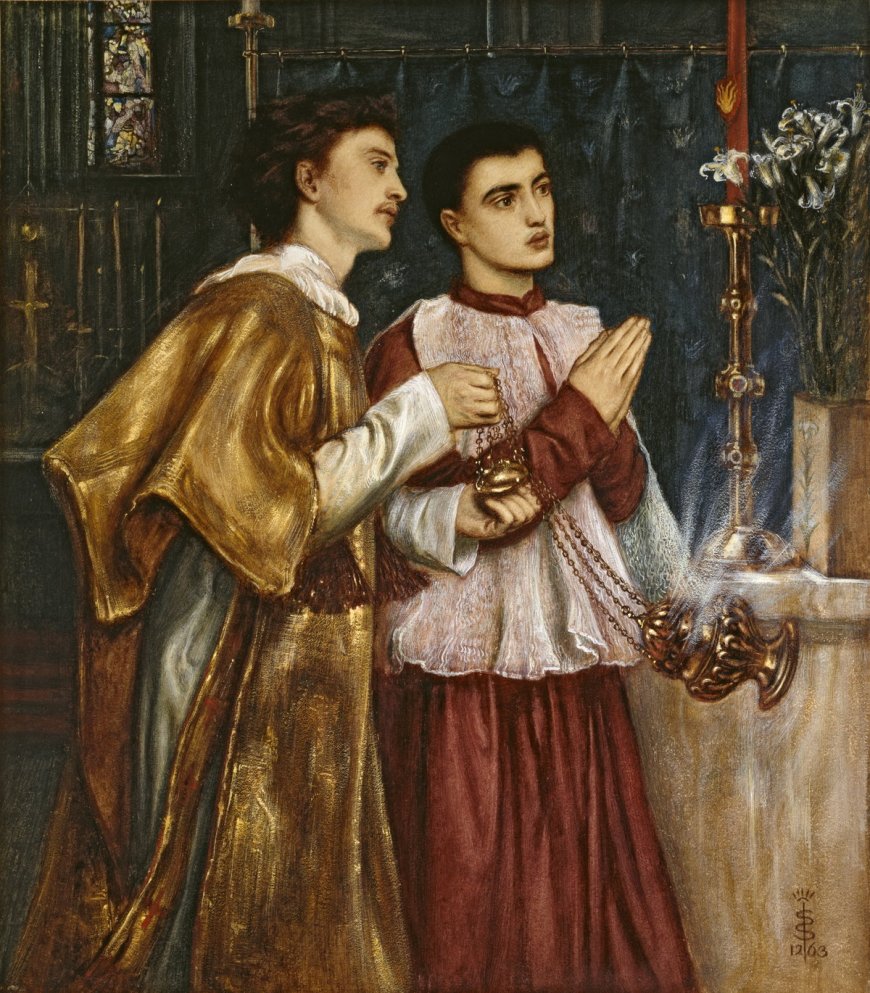

To call gay, Jewish artist Simeon Solomon ahead of his time would be a massive understatement. At the peak of his short, infamous career, Solomon depicted scenes of queer love with tender romantic beauty, placed a Black woman model at the center of his artworks, and inspired his fellow Pre-Raphaelite painters to think outside of the box.
But like many visionaries, detractors used his identity against the groundbreaking artist. Like other influential queer artists of the time—including one of his later collectors, Oscar Wilde—Solomon’s love of cruising rendered him a victim of Victorian England’s anti-sodomy laws. His career never recovered, and neither did Solomon.
The Pre-Raphaelite painters—defined by their return to a storybook romantic style of painting that predated a more academic post-Renaissance style—were fans of queer subject matter, and so was their audience. Provided the painters creating scenes of courtly love and sapphic passion were themselves straight, of course. That was where Solomon floundered.
Your dose of fabulosi-TEA
Subscribe to our newsletter for your front-row seat to all things entertainment with a sprinkle of everything else queer.
Subscribe to our Newsletter today
As one of the few Jewish members of the renowned artistic circle, he was alredy predisposed to be othered by his choice of subject matter. In sweeping canvases, Solomon depicted Jewish heroes like King David, the Jewish saints Shadrach, Meshach, and Abednego, and the mother of Moses, for whom Solomon used Black muse Fanny Eaton as a model. Solomon also depicted quieter scenes of Jewish life and worship, as well as Greek philosophers standing beside their male lovers.
The other Pre-Raphaelites ate it up. These painters, who included in their ranks Millais, Rossetti, and Burne Jones, loved to fly in the face of buttoned-up Victorian culture by emphasizing the sexual side of romance. But when Solomon was caught at age 32 having sex with a 60-year-old working class man in a London cruising area, he and his partner both had to serve hard time for public indecency and attempting to commit “buggery.”
This was the same fate Oscar Wilde lived out some decades later, and at the time, upper-class men were not expected to survive more than six months of gruelling prison labor. Solomon survived the sentence, but his career didn’t—especially after a second arrest in Paris for the same “crime” just a few years later. Solomon succumbed to alcoholism and died at 60, an echo of what would befall Wilde only 20 years later.
Now, scholars and art critics are working to secure Solomon’s proper place in history. As a queer, Jewish artist who put both aspects of himself into his work—aspects which at the time were seen to be scandalously contradictory—he paid the ultimate price for refusing to live the “respectable” life society would have preferred for him. Next year, Solomon will have his first major solo exhibition in Delaware.
“Being Jewish and gay meant that he did not receive the attention deserved at the time, and we are delighted to place him as an important part of William Morris and the Pre-Raphaelites’ circle,” one curator said of Solomon’s artistic footprint. Like so many of his contemporaries, Solomon was made to feel as if his queerness and his art practice were in complete opposition to each other. Today, we can celebrate both for the twin miracles they truly were.
Sign up for the Queerty newsletter to stay on top of the hottest stories in LGBTQ+ entertainment, politics, and culture.