Robert De Niro had a hunky gay dad & we’re not talking about it enough
I was today years old when I learned this
 Mark
Mark
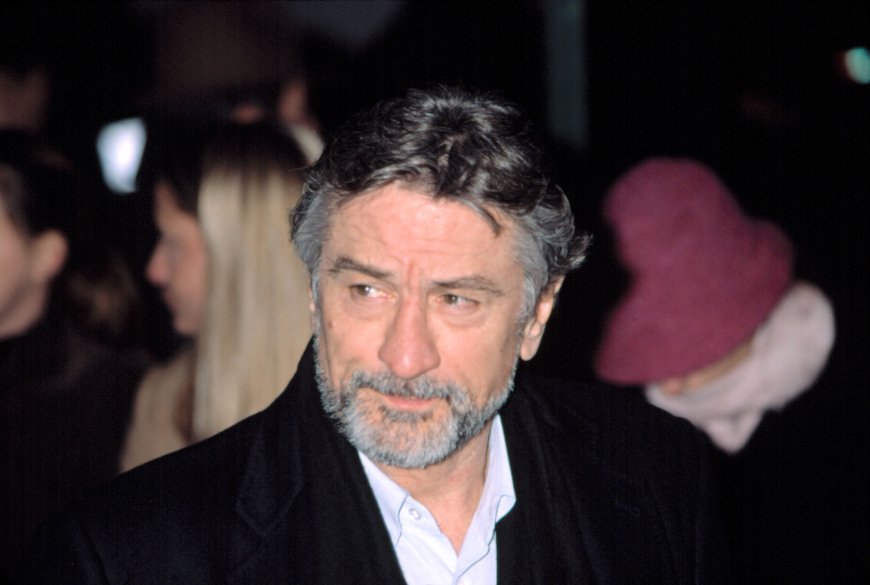

Earlier this year, acclaimed actor Robert De Niro’s daughter Airyn came out as trans, and her father had nothing but the sweetest, most supportive words for her.
“I love and support Airyn as my daughter. I don’t know what the big deal is,” De Niro told Variety. “I love all my children.”
How about we take this to the next level?
Subscribe to our newsletter for a refreshing cocktail (or mocktail) of LGBTQ+ entertainment and pop culture, served up with a side of eye-candy.
Subscribe to our Newsletter today
Period. De Niro did what the best allies do—showed up for his daughter and suffered zero anti-trans tomfoolery in the process.
And while it doesn’t take having been through a coming out before to treat your queer family members with respect and care, in De Niro’s case, his relationship with his father may have been key in helping the actor empathize with and show up for LGBTQ+ people both in and outside of his own family.
For those not in the know, De Niro’s father, the visual artist Robert De Niro Sr., was gay and sadly closeted throughout his career. He was also quite hot, which is clearly a strong family trait.
Full disclosure: Until this tweet showed up on my feed, I didn’t realize De Niro Sr. was gay—until a deep dive showed me that not only has De Niro spoken about his father’s struggles with being accepted several times, he also participated in a film about his father in 2014.
The documentary “Remembering the Artist: Robert De Niro Sr.” featured tearful interviews with De Niro as he read his father’s diaries and recounted the struggles he saw him face trying to make it as a painter in a cutthroat world.
“My father felt he was different,” De Niro says in the film, “and he was different. Not only as an artist, but for other reasons.”
As you may have guessed, some of those reasons have to do with his queerness. De Niro Sr. wrote in his diaries that: “If God doesn’t want me to be homosexual (about which I have so much guilt), he will find a woman whom I will love and who will love me. But I really don’t want my homosexuality to be cured.”
Throughout his life, De Niro Sr. seems to have struggled with gay shame and a sense that his queerness was a disease, a perspective sadly all too common for older generations of queer men who never got the chance to come out or experience the Gay Liberation movement.
De Niro himself only became aware of his father’s queer identity later on, and didn’t get the chance to talk with him about it. “I wasn’t aware of that,” he told interviewers during press for the documentary. “My mother told me once later, when I was a young adult, sort of inferred. I sort of understood.”
De Niro Sr. was able to achieve some success in the art world of the 40s and 50s with his striking, Chagall-esque studies and still lifes, but for much of his career, he struggled to find enough work. He briefly dated the poet Robert Duncan, and while De Niro Sr. spent time in Provincetown with queer literary greats like Anais Nin and Tennessee Williams, he was only able to come out shortly after his son was born, leading to a separation from De Niro’s mother, the artist Virginia Admiral.
After De Niro Sr. died in 1993, his son dedicated his first directorial effort, A Bronx Tale, to his father. And while De Niro Sr. did live long enough to see his son become one of the most exciting talents of the Hollywood new wave, the two didn’t get a chance to sit down and talk about some of the unspoken parts of De Niro Sr.’s past, something that his son seems to regret.
There’s never enough time to spend with your family elders, and never enough questions to ask. De Niro Sr. lived in a challenging time for gay artists, and we’ll never know the full extent of his internal struggle toward self-acceptance. What we do know is that were he alive today, seeing what his very cool, very queer family has become would probably make him burst with pride.
Related
The bad boy bisexual character that put Robert Redford on the map way back in 1965
In ‘Inside Daisy Clover,’ Redford’s Wade Lewis is said to be one of the earliest queer characters who was unashamed of their sexuality.
Sign up for the Queerty newsletter to stay on top of the hottest stories in LGBTQ+ entertainment, politics, and culture.