
Supreme Court considers expanding exemptions from anti-discrimination laws for religious schools
On November 3, the U.S. Supreme Court heard oral arguments in St. Mary Catholic Parish, Littleton, Colorado, v. Lisa Roy, executive director of the Colorado Department of Early Childhood. Ms. Roy’s department runs the state’s “universal preschool” program, under which the state funds preschool tuition for any school, public or private, religious or non-religious, selected … Read More
 Mark
0
3
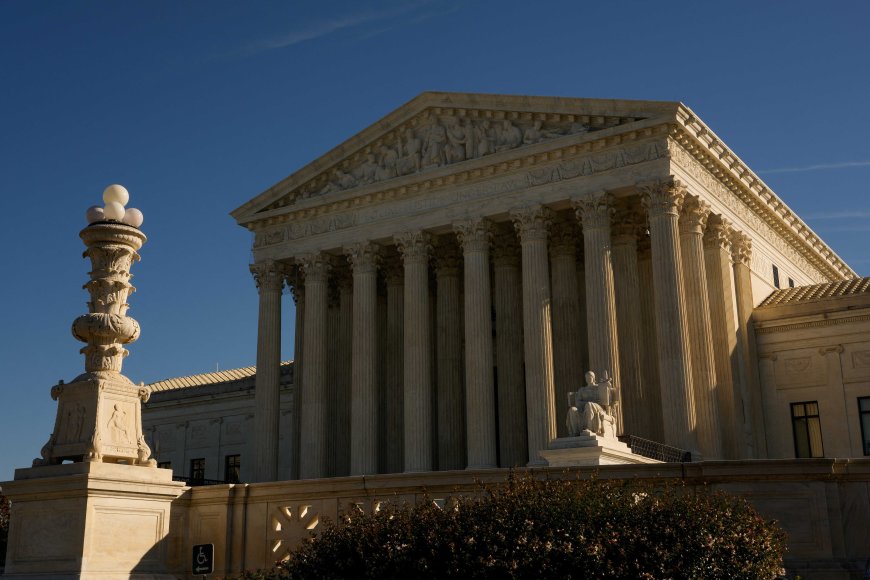
On November 3, the U.S. Supreme Court heard oral arguments in St. Mary Catholic Parish, Littleton, Colorado, v. Lisa Roy, executive director of the Colorado Department of Early Childhood. Ms. Roy’s department runs the state’s “universal preschool” program, under which the state funds preschool tuition for any school, public or private, religious or non-religious, selected by the preschoolers’ parents. Schools may opt in to the program by, among other things, adopting a non-discrimination policy concerning enrollment under which children or their families will not be excluded on the basis of characteristics specified in the state’s public accommodations law, which include sexual orientation and gender identity.
The Denver Catholic Archdiocese advised the 34 Catholic preschools in the state not to enroll in the state’s program because of the non-discrimination requirement, contending that adopting the policy would place a substantial burden on the religious freedom of the schools. As a result, the Archdiocese claims that there has been a 20% drop in enrollment in the Catholic pre-schools, and two have had to close, as parents who need the tuition subsidy to afford preschool for their children have enrolled them at other schools, even when the parents would prefer for their children to be in a Catholic preschool. They argue that this is a substantial burden on both the Catholic preschools and the families who will be denied state tuition assistance to send their children to those schools.
St. Mary and others, including some parents (together the petitioners) filed suit in the federal district court in Denver seeking an injunction against the non-discrimination requirement. The district court ruled against them, and it was affirmed on appeal by the U.S. Court of Appeals for the 10th Circuit. The Supreme Court granted their petition for review.
The case turns on the continued validity and interpretation of Employment Division v. Smith (1990), a precedent that governs the analysis of claims for religious exemptions from complying with laws. If a law does not specifically target religion and is generally applicable to everybody, the Court held, the religious objector is not excused from complying with it so long as the government has a rational basis for adopting the law. If the law was specifically enacted to prevent a religious practice or is not generally applicable because the government makes many exceptions to it, then the Court will apply “strict scrutiny” and require the government to show that it had a compelling reason to outlaw the religious practice in question.
To date, the Supreme Court has never squarely held that states have a compelling reason to outlaw discrimination because of sexual orientation or gender identity, but various comments in Supreme Court cases would support a claim that the government could have a rational basis in outlawing such discrimination.
The petitioners argue that the Supreme Court’s decision in Carson v. Makin (2022) supports its free exercise claim. That case involved a Maine statute that provided tuition assistance for high school age children living in an area without a local high school to help their parents pay for them to attend a high school elsewhere, either public or private, but specifically prohibited providing tuition assistance to attend a religious school. In that case, the Supreme Court held that the specific exclusion of religious schools violated the Free Exercise Clause, because the statute was not “neutral” regarding religion, but rather had specifically targeted religious schools for exclusion. The petitioners, charactising Carson as a “public benefit” case, pushes the claim that any rule that effectively excludes Catholic preschools because of their religious objections should be held unconstitutional. In effect, they are asking the court to apply a “disparate impact” test in place of the express exclusion test. Alternatively, they argue that the requirement was intended by the state to exclude Catholic schools from the program.
The district court in the St. Mary case found that under Employment Division v. Smith, the state’s requirement that participating preschools have non-discrimination policies was a rule of general application that did not specifically target religious schools. The state insists that it is happy to have religious schools in the program, as long as they adopt a non-discrimination policy, and that there are some. Furthermore, although there are some exceptions in the law, such as providing tuition subsidies for single-sex schools, or schools focused on children with disabilities, there is no showing that the state makes any exceptions for schools that are unwilling to include sexual orientation or gender identity in their non-discrimination policies, so that requirement is “generally applicable” to all schools that want to participate. The district court thus denied the injunction and ruled on the merits against the petitioner. The 10th Circuit Court of Appeals concurred with that result.
The petitioner are represented by the Becket Fund for Religious Liberty, which posed three questions to the Court: (1) Whether proving a lack of general applicability under Employment Division v. Smith requires showing unfettered discretion or categorical exemptions for identical secular conduct? (2) Whether Carson v. Makin displaces the rule of Employment Division v. Smith only when the government explicitly excludes religious people and institutions? (3) Whether Employment Division v. Smith should be overruled? The Court granted the petition limited to Questions 1 and 2. Therefore, the question whether Employment Division v. Smith should be overruled is not before the Court in this case. It is noteworthy that in earlier cases at least three of the justices have called for overruling Employment Division, but it takes four votes to grant a petition and evidently there were not at least four members of the Court who wanted to consider using this case to overruled Employment Division.
As a result, the arguments on November 3 were focused on interpreting Employment Division and Carson, rather than on whether the Court should revert the law to what it was before Employment Division v. Smith. Prior to 1990, the Court’s approach was to say that any government policy which posed a substantial burden on religious individuals or institutions would be subject to strict scrutiny and would be unconstitutional unless the government could show a compelling interest for the law and that the law was narrowly focused to achieve that interest without unnecessary restriction of religious freedom.
The change effected by Employment Division, in an opinion by the very conservative Catholic Republican Justice Antonin Scalia, was very controversial, and among the dissenters were some of the Court’s liberals, who criticized the ruling as cutting back on religious freedom. Scalia maintained that the prior precedents subjected too many general laws to constitutional attack, giving preferential treatment religious objectors.
The lawyers arguing in support of the petitioner — Nicholas Reaves of the Becket Fund and Principal Deputy Solicitor General Sarah Harris from the U.S. Justice Department — strained to bring this case within the scope of Carson v. Makin, arguing that the state agency establishing the requirements for participation in the program had to know that insisting on the non-discrimination policy would effectively exclude any Catholic preschool from the program, so this was the equivalent of an express exclusion based on religion, would not qualify for minimal scrutiny under Employment Division.
Colorado Solicitor General Helen Norton, arguing against the petitioner, and emphasizing that overruling Employment v. Smith was not before the Court in this case, pointed out that the preschool program was entirely voluntary and that the nondiscrimination requirement for participation served an important state interest in protecting LGBTQ families from discrimination under a government program funded by the taxpayers. In prior cases, the Court has commented that states may legitimately seek to protect people against discrimination.
From the questions and comments of the Supreme Court Justices, it appeared clear to observers that the three Democratic appointees to the Court, Justices Sotomayor, Kagan, and Jackson, agreed with the state’s arguments and that that petitioner were asking for a much broader religious exemption that would extend beyond the context of public benefit programs, cutting a big hole in the precedent of Employment Division v. Smith. Because the Court has traditionally taken the position that federal courts should not inquire into the good faith of religious objectors, it could open the door to people claiming the right to avoid compliance with any rule to which they objected, which would reduce non-discrimination law’s effectiveness.
The Republican-appointed majority on the Court, Chief Justice Roberts and Justices Thomas, Alito, Gorsuch, Kavanaugh and Barrett, seemed taken with the petitioners’ argument that, given the nature of the case, the state had to be aware that requiring agreement with a sexual orientation and gender identity non-discrimination policy in order for a preschool to participate in the program would necessarily exclude Catholic preschools from the program, and was in reality a violation of the “neutrality” rule. They seemed inclined to treat Carson v. Makin as relevant here, even though the Colorado rule does not expressly target religion. If they apply that reasoning in a decision in favor of the petitioners, they will add this case to the line of cases now dating back several years in which the Court has been cutting away at the scope of the Employment Division decision without overruling it, ever expanding the scope of Free Exercise exemptions from compliance with general laws.