August LGBTQ music: Katseye’s ‘Wild’ and Saul Williams’ ‘Leap Life’
This month, Gay City News reviews the latest projects by pop group Katseye, whose members Lara Raj and Megan Skiendiel are bi, and queer spoken word artist Saul Williams. Katseye | “Wild” | HYBE/Geffen The problem with Katseye isn’t that they’re a manufactured group, created by the K-pop label/management company HYBE on the reality TV … Read More
 Mark
Mark
0
45
This month, Gay City News reviews the latest projects by pop group Katseye, whose members Lara Raj and Megan Skiendiel are bi, and queer spoken word artist Saul Williams.
Katseye | “Wild” | HYBE/Geffen
[caption id="attachment_64660" align="aligncenter" width="700"] Katseye's 'Wild.'HYBE X Geffen[/caption]
The problem with Katseye isn’t that they’re a manufactured group, created by the K-pop label/management company HYBE on the reality TV show “Pop Star Academy: Katseye.” It’s that their music is an afterthought. Creating bangers comes second to establishing themselves as a brand. With Katseye, music becomes indistinguishable from advertising. Their six singers — Daniela Avanzini, Lara Raj, Manon Bannerman, Yongchae Jung, Megan Skiendiel and Sophia Laforteza — span Asia, Switzerland, and the U.S. They’ve broken through by starring in commercials. The “Hooti Frutti” video includes extended product placement for TicTac, and “Gnarly” gives an endorsement to Tesla. With Bannerman and Laforteza currently on hiatus, the members themselves may have big reservations about their experiences. The group’s been placed in the spotlight with an image and music they don’t appear to have much say in. (Raj, who’s Indian-American, has received racist death threats.) Their T&A-heavy videos add an edge of sleazy pandering to heterosexual men.
While their debut ep “S.I.S.” followed the same path for its five songs, “Gnarly” turned up the volume, daring to make noise and achieving the group’s best song. Katseye sang over a harsh, metallic beat. (The production picks up the long coattails of the late trans producer SOPHIE.) It read as self-parodic trolling. They haven’t followed it up with anything nearly as memorable, although their second major hit “Gabriela” aimed for “proper music” suitable for Whole Foods checkout lines. Their new 5-song ep “Wild” goes back and forth between these two modes.
“Animal” goes further than “Gabriela” in reaching for middlebrow respectability, with songwriting from Ed Sheeran. It even uses acoustic guitar! Amidst all this, the chorus “you move like an animal/ nobody knows you’re outta control” doesn’t fit the music at all. The ep’s other celebrity connection is more natural: “Bel Air” was written and recorded by Charli XCX, although her version remains unreleased. “Pinky Up” returns to the stomp of “Gnarly,” with some success, but “Hootie Frutti” finds diminishing returns in it.
These celebrity ties demonstrate how even Katseye’s best moments sound like other artists. The fingerprints of singer/producer Alice Longyu Gao, who co-wrote “Gnarly” and performed its demo version, are all over it. Although “Gabriela” was written in 2018, several singers turned down an offer to record it at the time. Listening to “Bel Air,” it’s impossible not to hear Charli XCX’s voice singing it. As cynical as I am about Katseye, “Gnarly” and “Pinky Up” turn consumerism into a sugar rush within its own bars. Is that fun? It depends how much pleasure you can get from capitalist hyperrealism.
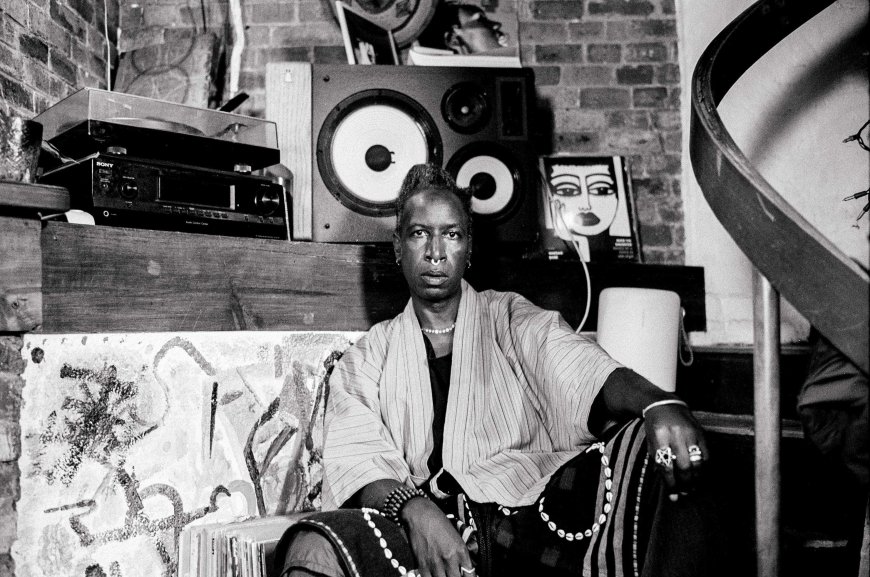
Saul Williams | “Leap Life” | Big Dada | August 28th
Reviewing Katseye and Saul Williams in the same column feels bitterly ironic. If the former reduces music to a commodity, Williams sees it as a spiritual form with healing potential, naming one of his songs “Not Everything For Sale.”
His voice stretches not just across genres, but art forms. In 2022, he made his debut as a filmmaker, co-directing the Afrofuturist musical “Neptune Frost.” Long before that, he’d made a name for himself as a poet and actor. Last year, he played a preacher in Ryan Coogler’s “Sinners.” Williams remains adjacent to hip-hop — he was featured on Denzel Curry’s 2022 “Mental” — without exactly being a rapper. He’s paved a path for queer Black artists like Moor Mother, who appears on “Conspiracy,” to mine similar spaces.
While densely produced, ‘Leap Life” retains spontaneity. Its songs evolve over minutes, refusing to tread back on themselves. They dig far in a pursuit of inner space. “The Dagger” adds up layers of drums, paying homage to Williams’ Haitian ancestry. Drum’n’bass loops come and go during “Controlled Is Not Controllable.” “Baobab Constellation” jumps into the improvisatory traditions of jazz and hip-hop. Williams performs in league with a track that treats field recordings and saxophones as equals. It uses natural sounds — running water, animals’ cries — as an instrument, even as the production works in industrial electronics. Samples of car horns lend musicality to a traffic jam during “Coming Forth.” The synthesizers of “I Think I Get It Now” imitate buzzing insects. Beyond Williams, many other voices slide in and out of the songs. “Neptune Frost” co-director Anisia Uzeyman sings in French on “Une Photographie.” Ambient jazz artist Carlos Niño and Massive Attack producer Robert del Naja also contributed.
“Robot Slave” and “Controlled But Not Controllable” turn to one of the central ideas of “Neptune Frost,” the paradox that computers and smart phones are dependent on the exploitation of Africans. On the former, he warns “control dissension if you want to, but bear in mind the system’s designed to haunt you.” (Coltan, a mineral necessary to their functioning, is mined in the Democratic Republic of the Congo, under horrendous conditions that profit Western companies.)
“Mazahua” finds Williams murmuring “we destroy these systems…I’ve seen people unbury themselves.” “Great, Great Grandmother” pulls the legacy of slavery into the present, as a voice intones “burn down the prisons.”
While connecting to the past, “Leap Life” feels like a missive from the future. The album never settles into any single genre, synthesizing jazz, hip-hop, industrial, and various forms of African music into something new. Under the pressure of fascism’s rise, “Leap Life” speaks to its harshness. More hopefully, Williams also reminds us of music’s basic function as a technology of ritual and communication.
Katseye's 'Wild.'HYBE X Geffen[/caption]
The problem with Katseye isn’t that they’re a manufactured group, created by the K-pop label/management company HYBE on the reality TV show “Pop Star Academy: Katseye.” It’s that their music is an afterthought. Creating bangers comes second to establishing themselves as a brand. With Katseye, music becomes indistinguishable from advertising. Their six singers — Daniela Avanzini, Lara Raj, Manon Bannerman, Yongchae Jung, Megan Skiendiel and Sophia Laforteza — span Asia, Switzerland, and the U.S. They’ve broken through by starring in commercials. The “Hooti Frutti” video includes extended product placement for TicTac, and “Gnarly” gives an endorsement to Tesla. With Bannerman and Laforteza currently on hiatus, the members themselves may have big reservations about their experiences. The group’s been placed in the spotlight with an image and music they don’t appear to have much say in. (Raj, who’s Indian-American, has received racist death threats.) Their T&A-heavy videos add an edge of sleazy pandering to heterosexual men.
While their debut ep “S.I.S.” followed the same path for its five songs, “Gnarly” turned up the volume, daring to make noise and achieving the group’s best song. Katseye sang over a harsh, metallic beat. (The production picks up the long coattails of the late trans producer SOPHIE.) It read as self-parodic trolling. They haven’t followed it up with anything nearly as memorable, although their second major hit “Gabriela” aimed for “proper music” suitable for Whole Foods checkout lines. Their new 5-song ep “Wild” goes back and forth between these two modes.
“Animal” goes further than “Gabriela” in reaching for middlebrow respectability, with songwriting from Ed Sheeran. It even uses acoustic guitar! Amidst all this, the chorus “you move like an animal/ nobody knows you’re outta control” doesn’t fit the music at all. The ep’s other celebrity connection is more natural: “Bel Air” was written and recorded by Charli XCX, although her version remains unreleased. “Pinky Up” returns to the stomp of “Gnarly,” with some success, but “Hootie Frutti” finds diminishing returns in it.
These celebrity ties demonstrate how even Katseye’s best moments sound like other artists. The fingerprints of singer/producer Alice Longyu Gao, who co-wrote “Gnarly” and performed its demo version, are all over it. Although “Gabriela” was written in 2018, several singers turned down an offer to record it at the time. Listening to “Bel Air,” it’s impossible not to hear Charli XCX’s voice singing it. As cynical as I am about Katseye, “Gnarly” and “Pinky Up” turn consumerism into a sugar rush within its own bars. Is that fun? It depends how much pleasure you can get from capitalist hyperrealism.
Saul Williams | “Leap Life” | Big Dada | August 28th
Reviewing Katseye and Saul Williams in the same column feels bitterly ironic. If the former reduces music to a commodity, Williams sees it as a spiritual form with healing potential, naming one of his songs “Not Everything For Sale.”
His voice stretches not just across genres, but art forms. In 2022, he made his debut as a filmmaker, co-directing the Afrofuturist musical “Neptune Frost.” Long before that, he’d made a name for himself as a poet and actor. Last year, he played a preacher in Ryan Coogler’s “Sinners.” Williams remains adjacent to hip-hop — he was featured on Denzel Curry’s 2022 “Mental” — without exactly being a rapper. He’s paved a path for queer Black artists like Moor Mother, who appears on “Conspiracy,” to mine similar spaces.
While densely produced, ‘Leap Life” retains spontaneity. Its songs evolve over minutes, refusing to tread back on themselves. They dig far in a pursuit of inner space. “The Dagger” adds up layers of drums, paying homage to Williams’ Haitian ancestry. Drum’n’bass loops come and go during “Controlled Is Not Controllable.” “Baobab Constellation” jumps into the improvisatory traditions of jazz and hip-hop. Williams performs in league with a track that treats field recordings and saxophones as equals. It uses natural sounds — running water, animals’ cries — as an instrument, even as the production works in industrial electronics. Samples of car horns lend musicality to a traffic jam during “Coming Forth.” The synthesizers of “I Think I Get It Now” imitate buzzing insects. Beyond Williams, many other voices slide in and out of the songs. “Neptune Frost” co-director Anisia Uzeyman sings in French on “Une Photographie.” Ambient jazz artist Carlos Niño and Massive Attack producer Robert del Naja also contributed.
“Robot Slave” and “Controlled But Not Controllable” turn to one of the central ideas of “Neptune Frost,” the paradox that computers and smart phones are dependent on the exploitation of Africans. On the former, he warns “control dissension if you want to, but bear in mind the system’s designed to haunt you.” (Coltan, a mineral necessary to their functioning, is mined in the Democratic Republic of the Congo, under horrendous conditions that profit Western companies.)
“Mazahua” finds Williams murmuring “we destroy these systems…I’ve seen people unbury themselves.” “Great, Great Grandmother” pulls the legacy of slavery into the present, as a voice intones “burn down the prisons.”
While connecting to the past, “Leap Life” feels like a missive from the future. The album never settles into any single genre, synthesizing jazz, hip-hop, industrial, and various forms of African music into something new. Under the pressure of fascism’s rise, “Leap Life” speaks to its harshness. More hopefully, Williams also reminds us of music’s basic function as a technology of ritual and communication.
Katseye's 'Wild.'HYBE X Geffen[/caption]
The problem with Katseye isn’t that they’re a manufactured group, created by the K-pop label/management company HYBE on the reality TV show “Pop Star Academy: Katseye.” It’s that their music is an afterthought. Creating bangers comes second to establishing themselves as a brand. With Katseye, music becomes indistinguishable from advertising. Their six singers — Daniela Avanzini, Lara Raj, Manon Bannerman, Yongchae Jung, Megan Skiendiel and Sophia Laforteza — span Asia, Switzerland, and the U.S. They’ve broken through by starring in commercials. The “Hooti Frutti” video includes extended product placement for TicTac, and “Gnarly” gives an endorsement to Tesla. With Bannerman and Laforteza currently on hiatus, the members themselves may have big reservations about their experiences. The group’s been placed in the spotlight with an image and music they don’t appear to have much say in. (Raj, who’s Indian-American, has received racist death threats.) Their T&A-heavy videos add an edge of sleazy pandering to heterosexual men.
While their debut ep “S.I.S.” followed the same path for its five songs, “Gnarly” turned up the volume, daring to make noise and achieving the group’s best song. Katseye sang over a harsh, metallic beat. (The production picks up the long coattails of the late trans producer SOPHIE.) It read as self-parodic trolling. They haven’t followed it up with anything nearly as memorable, although their second major hit “Gabriela” aimed for “proper music” suitable for Whole Foods checkout lines. Their new 5-song ep “Wild” goes back and forth between these two modes.
“Animal” goes further than “Gabriela” in reaching for middlebrow respectability, with songwriting from Ed Sheeran. It even uses acoustic guitar! Amidst all this, the chorus “you move like an animal/ nobody knows you’re outta control” doesn’t fit the music at all. The ep’s other celebrity connection is more natural: “Bel Air” was written and recorded by Charli XCX, although her version remains unreleased. “Pinky Up” returns to the stomp of “Gnarly,” with some success, but “Hootie Frutti” finds diminishing returns in it.
These celebrity ties demonstrate how even Katseye’s best moments sound like other artists. The fingerprints of singer/producer Alice Longyu Gao, who co-wrote “Gnarly” and performed its demo version, are all over it. Although “Gabriela” was written in 2018, several singers turned down an offer to record it at the time. Listening to “Bel Air,” it’s impossible not to hear Charli XCX’s voice singing it. As cynical as I am about Katseye, “Gnarly” and “Pinky Up” turn consumerism into a sugar rush within its own bars. Is that fun? It depends how much pleasure you can get from capitalist hyperrealism.
Saul Williams | “Leap Life” | Big Dada | August 28th
Reviewing Katseye and Saul Williams in the same column feels bitterly ironic. If the former reduces music to a commodity, Williams sees it as a spiritual form with healing potential, naming one of his songs “Not Everything For Sale.”
His voice stretches not just across genres, but art forms. In 2022, he made his debut as a filmmaker, co-directing the Afrofuturist musical “Neptune Frost.” Long before that, he’d made a name for himself as a poet and actor. Last year, he played a preacher in Ryan Coogler’s “Sinners.” Williams remains adjacent to hip-hop — he was featured on Denzel Curry’s 2022 “Mental” — without exactly being a rapper. He’s paved a path for queer Black artists like Moor Mother, who appears on “Conspiracy,” to mine similar spaces.
While densely produced, ‘Leap Life” retains spontaneity. Its songs evolve over minutes, refusing to tread back on themselves. They dig far in a pursuit of inner space. “The Dagger” adds up layers of drums, paying homage to Williams’ Haitian ancestry. Drum’n’bass loops come and go during “Controlled Is Not Controllable.” “Baobab Constellation” jumps into the improvisatory traditions of jazz and hip-hop. Williams performs in league with a track that treats field recordings and saxophones as equals. It uses natural sounds — running water, animals’ cries — as an instrument, even as the production works in industrial electronics. Samples of car horns lend musicality to a traffic jam during “Coming Forth.” The synthesizers of “I Think I Get It Now” imitate buzzing insects. Beyond Williams, many other voices slide in and out of the songs. “Neptune Frost” co-director Anisia Uzeyman sings in French on “Une Photographie.” Ambient jazz artist Carlos Niño and Massive Attack producer Robert del Naja also contributed.
“Robot Slave” and “Controlled But Not Controllable” turn to one of the central ideas of “Neptune Frost,” the paradox that computers and smart phones are dependent on the exploitation of Africans. On the former, he warns “control dissension if you want to, but bear in mind the system’s designed to haunt you.” (Coltan, a mineral necessary to their functioning, is mined in the Democratic Republic of the Congo, under horrendous conditions that profit Western companies.)
“Mazahua” finds Williams murmuring “we destroy these systems…I’ve seen people unbury themselves.” “Great, Great Grandmother” pulls the legacy of slavery into the present, as a voice intones “burn down the prisons.”
While connecting to the past, “Leap Life” feels like a missive from the future. The album never settles into any single genre, synthesizing jazz, hip-hop, industrial, and various forms of African music into something new. Under the pressure of fascism’s rise, “Leap Life” speaks to its harshness. More hopefully, Williams also reminds us of music’s basic function as a technology of ritual and communication.