Brooklyn appellate court finds city ambulance liable for 2016 hit-and-run of trans cyclist
A Brooklyn appellate court found last week that the City and FDNY were liable for a 2016 hit-and-run ambulance accident that derailed the life of a trans cyclist who was left with debilitating injuries. The Appellate Division, Second Judicial Department overturned a lower court’s 2024 decision to dismiss the case — even after a… Read More
 Mark
Mark
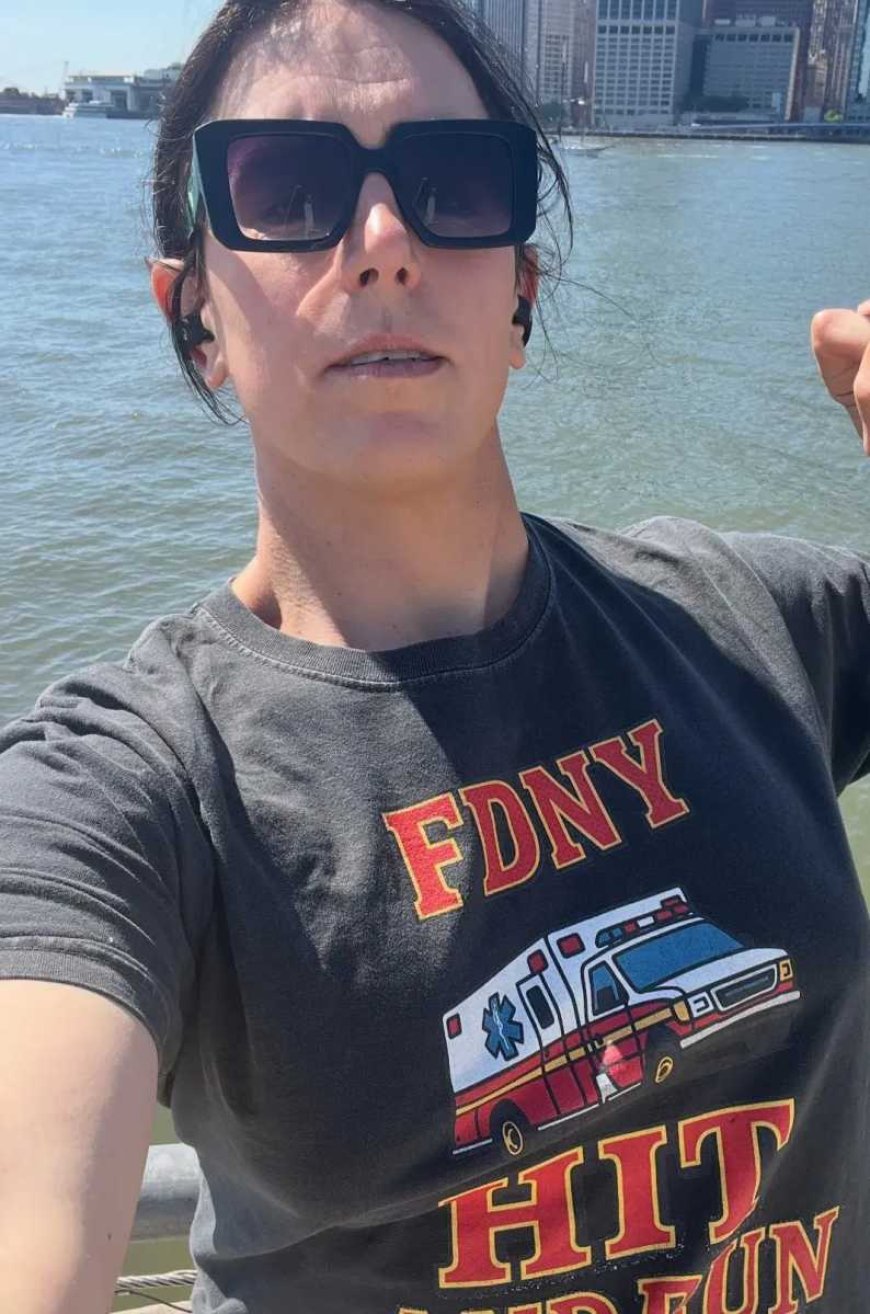
A Brooklyn appellate court found last week that the City and FDNY were liable for a 2016 hit-and-run ambulance accident that derailed the life of a trans cyclist who was left with debilitating injuries.
The Appellate Division, Second Judicial Department overturned a lower court’s 2024 decision to dismiss the case — even after a jury unanimously found the city ambulance to be liable for the wreck.
Aeliana Boyer, 34, was riding her bicycle through a green light at the intersection of Bond and Union Streets in Gowanus when an ambulance collided with her and drove off. Boyer said the accident left her with a concussion, torn ligaments in her knees, chronic nerve damage and pain and spine and shoulder injuries that required surgery, among other ailments.
The injuries reportedly left her unable to work for several years and threw her into financial turmoil.
Boyer sued the City of New York and the Fire Department, but the city responded by denying that the vehicle that struck her was operated by them. The question over whether the city was liable proceeded to trial before a jury, which unanimously found that the FDNY ambulance was involved in the accident based on GPS data and that the defendants were responsible for Boyer’s damages.
But Kings County Supreme Court Justice Richard Montelione subsequently set aside the jury's verdict and ruled that Boyer had not met the burden to prove it was a city ambulance, dismissing the case.
Montelione found that “there is no question of fact” that Boyer collided with an ambulance, but focused on several slight discrepancies in Boyer’s testimony. Boyer testified that it seemed like the ambulance that struck her had two female crew members, but the ambulance crew that was GPS tracked to the incident was male. Montelione also pointed to the fact that, under questioning, Boyer said she did not distinctly remember the FDNY insignia, opening the possibility that it could have been a private ambulance.
The appellate court panel reinstated the jury verdict, citing the GPS evidence that placed an FDNY ambulance at the location of the accident within moments of when it occurred.
“[Boyer] is entitled to the presumption that the jury credited her testimony, as well as that of another witness identifying the red and white ambulance as an FDNY ambulance, notwithstanding the discrepancy in the plaintiff's description of the ambulance's driver and passenger,” the appellate court wrote.
A city Law Department spokesperson declined to comment on the decision.
Boyer told the Daily News after the accident that she was mistreated by emergency responders based on her gender identity. In the wake of Montelione’s decision, some of Boyer’s supporters also suggested that the court decision was biased because the judge, who is openly gay, had focused on the fact that Boyer had incorrectly identified the gender of the EMS workers.
For Boyer, who is still struggling with basic living expenses and therapy from issues related to the event, her case will continue, as she seeks damages. After the appellate decision on July 1, a supporter wrote on a GoFundMe page supporting Boyer that she gave her “sincerest thanks” to everyone who had helped her in the case, lasting over a decade.
“Unfortunately, the fight isn’t fully over. Winning the liability trial now affords her the right to sue the city for damages. She is now preparing for her next trial with the city,” Jacqueline Mary wrote.