‘Dog Day Afternoon’: A botched caper, a bold queer love story
Most fans of the 1975 film “Dog Day Afternoon” — the harrowing tale of a half-baked bank robbery gone awry — know that it was based on an actual heist that took place in Brooklyn a few years prior. The gritty film, starring Al Pacino as the bumbling yet brash honcho Sonny, won the Oscar … Read More
 Mark
Mark
0
51
Most fans of the 1975 film “Dog Day Afternoon” — the harrowing tale of a half-baked bank robbery gone awry — know that it was based on an actual heist that took place in Brooklyn a few years prior. The gritty film, starring Al Pacino as the bumbling yet brash honcho Sonny, won the Oscar for Best Original Screenplay and is widely regarded as one of the greatest crime dramas of all time.
What film buffs may not know, however, is that the source material was an article in Look magazine titled "The Boys in the Bank," a pointed, somewhat leering reference to the recent landmark gay film “The Boys in the Band.” What truly spiced up the story was that the perpetrators happened to be queer, and the caper, which dragged on for several hours, was a crime of passion. “Dog Day Afternoon” was one of the first mainstream Hollywood movies to feature a fierce, openly gay protagonist.
This was a remarkable feat for the mid-1970s, given that queer characters were usually portrayed as wretched victims, tortured psychopaths, or both. The gaggle of "queens" in “The Boys in the Band,” for instance, register as bitter and self-loathing. In the early ‘70s, most states still had laws against private consensual same-sex activity. LGBTQ individuals were routinely harassed, arrested, and brutalized.
During the film’s development, studios balked at the queer subject matter until Pacino came on board. After seeing the dailies from the first day of filming, he felt Sonny was "too soft" and insisted they reshoot so he could play him as more resilient. Director Sidney Lumet even brought in LGBTQ historian Randy Wicker as an "authenticity consultant" to ensure they got the characterizations right.
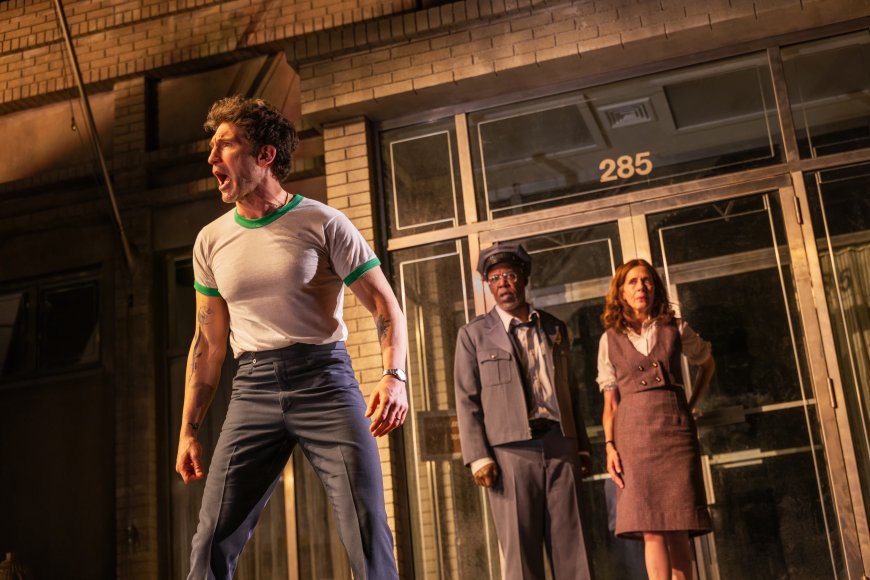
Now, some 50 years later, “Dog Day Afternoon” has been reimagined for the Broadway stage in a gripping, albeit uneven production written by Stephen Adly Guirgis and directed by Rupert Goold. The play co-stars Jon Bernthal as Sonny and Ebon Moss-Bachrach as his gun-toting accomplice, Sal. Both actors, known for their roles in the FX series “The Bear,” deliver first-rate performances.
[caption id="attachment_62438" align="aligncenter" width="467"]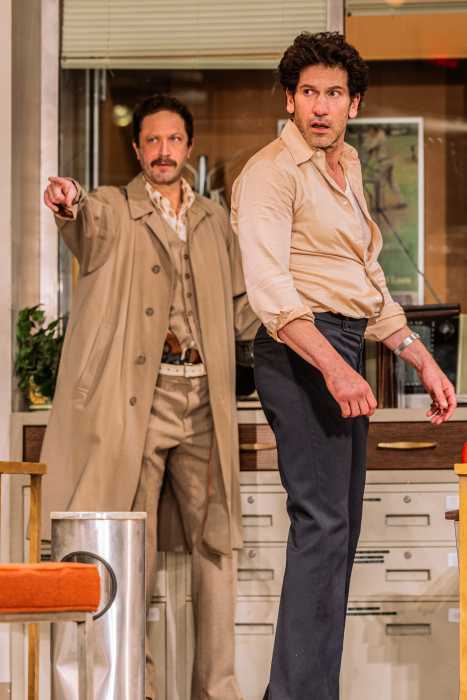 Ebon Moss-Bachrach (“Sal”) and Jon Bernthal (“Sonny”) in "Dog Day Afternoon."Matthew Murphy and Evan Zimmerman[/caption]
This transition to the stage begs the question: Are the LGBTQ characters portrayed with sensitivity for today's audiences? The answer is, for the most part, affirmative. Notably, the play uses Sonny’s sexuality as a plot twist rather than a punchline.
Astute theatergoers will recognize a clue revealed halfway through the play. Sonny and Sal, who have corralled several hostages at gunpoint, fondly recount their wild nights out together. Sonny mentions Julius’, now known as the oldest gay bar in New York City, and Tenth of Always, a short-lived nightspot that once attracted trans and gender non-conforming patrons.
The truth comes out when TV news reports label the duo "avowed homosexuals." Sal denies it, but Sonny not only owns up to being gay, he’s proud of it.
“To be a homosexual — okay — it ain’t a bad thing,” Sonny says. “If ya ask me, it’s a lot harder, a lot more manly, to swim against the tide, to be true to oneself under the eyes of God above.”
As part of the deal, Sonny demands that his wife be brought to the scene outside the bank, now crammed with heavily armed police, federal agents, news cameras, and a jeering rabble. His wife turns out to be a man named Leon, who he recently “married” in a lavish ceremony. Sonny’s motive for robbing the bank is to provide his beloved with the funds needed for gender-affirming surgery. This rationale feels even more resonant in today's anti-trans political climate.
Detective Fucco (John Ortiz), tasked with negotiating with the burglars, tries his best to treat Sonny’s and Leon’s romantic relationship with delicacy, not derision. “I got a gay next door walks my dog 3 times a week,” says Fucco. “I trust him with the keys to my apartment!”
Leon, recently hospitalized at Bellevue after a failed suicide attempt, is a wreck. But as embodied by Esteban Andres Cruz, he is tough and determined, making no apologies for his identity or his preferences. There’s even a scene (not in the film) where a spokesperson from The Gay Liberation Front, a gay rights group from the era, is interviewed on live TV, condemning Sonny for reinforcing negative gay stereotypes.
[caption id="attachment_62439" align="aligncenter" width="700"]
Ebon Moss-Bachrach (“Sal”) and Jon Bernthal (“Sonny”) in "Dog Day Afternoon."Matthew Murphy and Evan Zimmerman[/caption]
This transition to the stage begs the question: Are the LGBTQ characters portrayed with sensitivity for today's audiences? The answer is, for the most part, affirmative. Notably, the play uses Sonny’s sexuality as a plot twist rather than a punchline.
Astute theatergoers will recognize a clue revealed halfway through the play. Sonny and Sal, who have corralled several hostages at gunpoint, fondly recount their wild nights out together. Sonny mentions Julius’, now known as the oldest gay bar in New York City, and Tenth of Always, a short-lived nightspot that once attracted trans and gender non-conforming patrons.
The truth comes out when TV news reports label the duo "avowed homosexuals." Sal denies it, but Sonny not only owns up to being gay, he’s proud of it.
“To be a homosexual — okay — it ain’t a bad thing,” Sonny says. “If ya ask me, it’s a lot harder, a lot more manly, to swim against the tide, to be true to oneself under the eyes of God above.”
As part of the deal, Sonny demands that his wife be brought to the scene outside the bank, now crammed with heavily armed police, federal agents, news cameras, and a jeering rabble. His wife turns out to be a man named Leon, who he recently “married” in a lavish ceremony. Sonny’s motive for robbing the bank is to provide his beloved with the funds needed for gender-affirming surgery. This rationale feels even more resonant in today's anti-trans political climate.
Detective Fucco (John Ortiz), tasked with negotiating with the burglars, tries his best to treat Sonny’s and Leon’s romantic relationship with delicacy, not derision. “I got a gay next door walks my dog 3 times a week,” says Fucco. “I trust him with the keys to my apartment!”
Leon, recently hospitalized at Bellevue after a failed suicide attempt, is a wreck. But as embodied by Esteban Andres Cruz, he is tough and determined, making no apologies for his identity or his preferences. There’s even a scene (not in the film) where a spokesperson from The Gay Liberation Front, a gay rights group from the era, is interviewed on live TV, condemning Sonny for reinforcing negative gay stereotypes.
[caption id="attachment_62439" align="aligncenter" width="700"]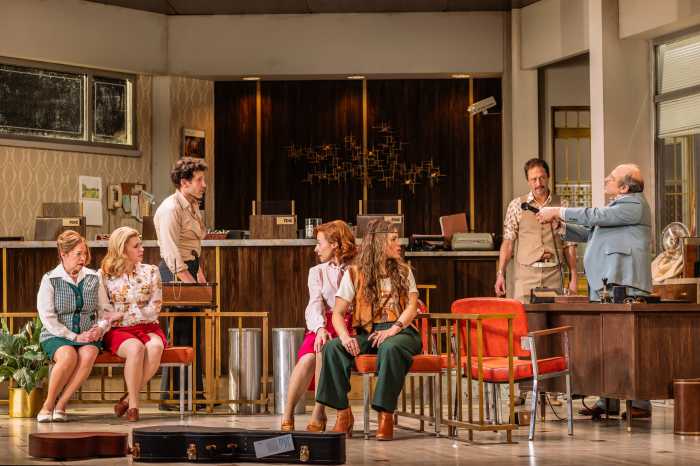 L to R: Wilemina Olivia-Garcia (“Lorna”), Andrea Syglowski (“Alison”), Jon Bernthal
(“Sonny”), Elizabeth Canavan (“Roxxanna/Gloria”), Paola Lázaro (“Guadalupe”), Ebon
Moss-Bachrach (“Sal”), and Michael Kostroff (“Butterman”).Matthew Murphy and Evan Zimmerman[/caption] The robbery is botched from the get-go. The vault turns out to be nearly empty, the security guard suffers a cardiac event, the hostages are unexpectedly needy, and the siege explodes into a surreal media circus. Bernthal’s Sonny is a whirlwind of kinetic energy, capturing the manic desperation of a man clearly in over his head but fueled by love. Moss-Bachrach provides the perfect foil as Sal, whose quiet, simmering intensity suggests a man who knows the ending of this story won't be a happy one. On the downside, the play falters in its abrupt tonal shifts. Goold’s direction leans into the absurdity of the situation, with humorous moments often undercutting the dramatic tension. Guirgis, known for his gritty, street-wise dialogue, lets the scenes between the hostages and the robbers run a bit long. The drama’s depiction of the queer community is a far cry from the “freaks” of 1970s cinema. Instead, we see multifaceted characters who are vulnerable, desperate, and deeply human. By grounding the heist in a story of love and identity, the play manages to honor the legacy of the original film while offering a fresh perspective for a modern audience. They did an admirable job balancing the prevailing antigay sentiment of the time with the gutsy defiance that has long been a hallmark of the LGBTQ community. Dog Day Afternoon | August Wilson Theatre | 245 W. 52nd St. | Dogdayafternoon.com | $89 – $350 | Two hours, 15 minutes | Through September 6, 2026
Ebon Moss-Bachrach (“Sal”) and Jon Bernthal (“Sonny”) in "Dog Day Afternoon."Matthew Murphy and Evan Zimmerman[/caption]
This transition to the stage begs the question: Are the LGBTQ characters portrayed with sensitivity for today's audiences? The answer is, for the most part, affirmative. Notably, the play uses Sonny’s sexuality as a plot twist rather than a punchline.
Astute theatergoers will recognize a clue revealed halfway through the play. Sonny and Sal, who have corralled several hostages at gunpoint, fondly recount their wild nights out together. Sonny mentions Julius’, now known as the oldest gay bar in New York City, and Tenth of Always, a short-lived nightspot that once attracted trans and gender non-conforming patrons.
The truth comes out when TV news reports label the duo "avowed homosexuals." Sal denies it, but Sonny not only owns up to being gay, he’s proud of it.
“To be a homosexual — okay — it ain’t a bad thing,” Sonny says. “If ya ask me, it’s a lot harder, a lot more manly, to swim against the tide, to be true to oneself under the eyes of God above.”
As part of the deal, Sonny demands that his wife be brought to the scene outside the bank, now crammed with heavily armed police, federal agents, news cameras, and a jeering rabble. His wife turns out to be a man named Leon, who he recently “married” in a lavish ceremony. Sonny’s motive for robbing the bank is to provide his beloved with the funds needed for gender-affirming surgery. This rationale feels even more resonant in today's anti-trans political climate.
Detective Fucco (John Ortiz), tasked with negotiating with the burglars, tries his best to treat Sonny’s and Leon’s romantic relationship with delicacy, not derision. “I got a gay next door walks my dog 3 times a week,” says Fucco. “I trust him with the keys to my apartment!”
Leon, recently hospitalized at Bellevue after a failed suicide attempt, is a wreck. But as embodied by Esteban Andres Cruz, he is tough and determined, making no apologies for his identity or his preferences. There’s even a scene (not in the film) where a spokesperson from The Gay Liberation Front, a gay rights group from the era, is interviewed on live TV, condemning Sonny for reinforcing negative gay stereotypes.
[caption id="attachment_62439" align="aligncenter" width="700"] L to R: Wilemina Olivia-Garcia (“Lorna”), Andrea Syglowski (“Alison”), Jon Bernthal(“Sonny”), Elizabeth Canavan (“Roxxanna/Gloria”), Paola Lázaro (“Guadalupe”), Ebon
Moss-Bachrach (“Sal”), and Michael Kostroff (“Butterman”).Matthew Murphy and Evan Zimmerman[/caption] The robbery is botched from the get-go. The vault turns out to be nearly empty, the security guard suffers a cardiac event, the hostages are unexpectedly needy, and the siege explodes into a surreal media circus. Bernthal’s Sonny is a whirlwind of kinetic energy, capturing the manic desperation of a man clearly in over his head but fueled by love. Moss-Bachrach provides the perfect foil as Sal, whose quiet, simmering intensity suggests a man who knows the ending of this story won't be a happy one. On the downside, the play falters in its abrupt tonal shifts. Goold’s direction leans into the absurdity of the situation, with humorous moments often undercutting the dramatic tension. Guirgis, known for his gritty, street-wise dialogue, lets the scenes between the hostages and the robbers run a bit long. The drama’s depiction of the queer community is a far cry from the “freaks” of 1970s cinema. Instead, we see multifaceted characters who are vulnerable, desperate, and deeply human. By grounding the heist in a story of love and identity, the play manages to honor the legacy of the original film while offering a fresh perspective for a modern audience. They did an admirable job balancing the prevailing antigay sentiment of the time with the gutsy defiance that has long been a hallmark of the LGBTQ community. Dog Day Afternoon | August Wilson Theatre | 245 W. 52nd St. | Dogdayafternoon.com | $89 – $350 | Two hours, 15 minutes | Through September 6, 2026