Inside the tropical island with X-rated palm trees
The Seychelles is an archipelago of more than 100 islands set amidst the clear waters of the Indian Ocean.
 Mark
Mark
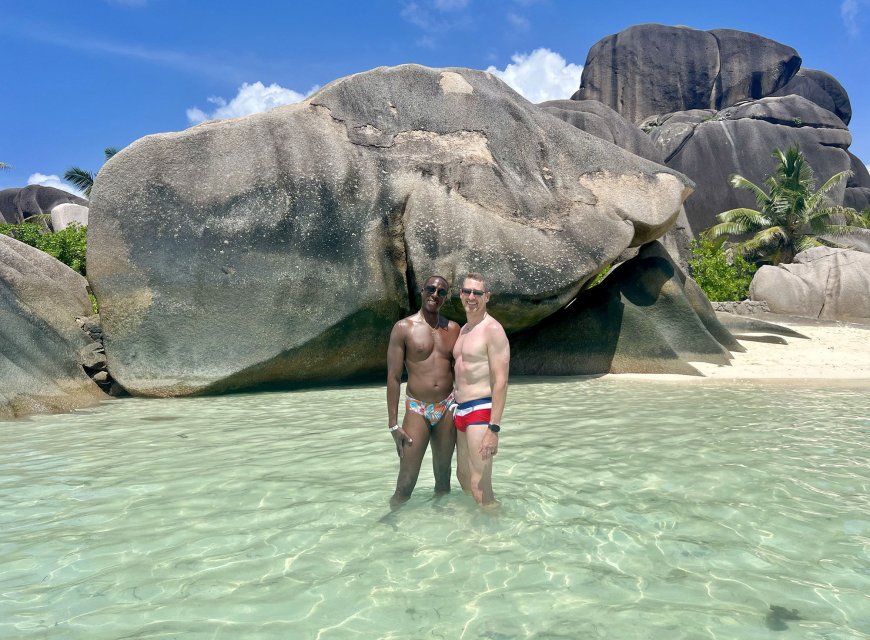
The Seychelles is an archipelago of more than 100 islands set amidst the clear waters of the Indian Ocean, offering idyllic beaches and an interesting mix of Caribbean and South Seas charm.
For queer travelers, the Seychelles is an intriguing destination, as it is one of only a few African countries to offer legal protections. Male same-sex intercourse was removed from the country’s penal code in 2016. And while the Seychelles does not currently recognize same-sex marriage, further protections were added in 2024, with increased penalties for hate crimes (including hate speech) against queer people.
This little-visited African country lies just south of the equator, about a 4.5-hour flight south from Dubai. But it is well worth the trip, given its variety of outstanding beaches. The scenery here is truly unique, as these are the only oceanic granitic islands in the world. The beaches feature undulating, weathered granite boulders thrusting out of the sugar-white sand, adding drama to the picture-postcard scenery.

But on Praslin, one of the easternmost islands of the group, visitors will find something else that’s found nowhere else on Earth — the coco de mer palm tree. This endangered palm grows only on Praslin and neighboring Curieuse Island and produces the largest seeds in the entire plant kingdom. These trees are specifically male or female, unlike the more familiar coconut palms, and that’s where things start to get really interesting.
My husband and I visited the islands with the small luxury line Variety Cruises on a seven-day idyllic sailing around the country, with plenty of stops for swimming, snorkeling, hiking, and cultural learning. Early on, we were enchanted with the endangered native Giant Tortoises. Interacting with and feeding these centuries-old creatures was a vacation highlight.
Pack your bags, we’re going on an adventure
Subscribe to our weekly newsletter for the best LGBTQ+ travel guides, stories, and more.
Subscribe to our Newsletter today
As we moved from island to island, we heard more and more about the coco de mer, including guides extolling how much their seeds resembled a woman’s midsection, both front and back. We paid scant attention to these stories, which sounded like either an urban legend or at least an exaggeration.

It wasn’t until our daylong excursion on Praslin Island that we saw and understood the strangeness of this particular nut. We toured the Vallee De Mai Nature Reserve, a World Heritage Site featuring a lush forest of thick tropical vegetation — and plenty of coco de mer trees. There, we saw the seeds everywhere, and it was almost enough to blush.
The seeds do bear a striking resemblance to both a woman’s buttocks on one side and her groin area on the other. We examined the samples that our guide, Roanna, passed around, giggling at the various comments our fellow cruise passengers made. Then she explained that the male trees have quite different-shaped organs and showed us one of the long, curving, cylindrical flower clusters. They looked like … well … let’s say they’re quite phallic.
We, along with our fellow passengers, had long since stopped pretending that our humor levels were anything above sophomoric. Couples began posing for pictures with the male and female samples, sure that their friends back home wouldn’t believe the stories otherwise.

Local legend has it that the trees are shy about mating and only do so on certain nights, when they actually move across the forest floor to meet and do the deed. But there’s danger involved, too, because any human who witnesses this mating is said to turn into one of the black parrots that populate these forests. In reality, the trees are pollinated by the ubiquitous geckos and lizards that can be seen on branches here, but according to our guide.
As we moved through the educational tour and continued along the path, we heard the group behind us arrive at our previous stop. They soon began roaring with laughter — and we chuckled to ourselves, exchanging knowing glances.

Join the GayCities newsletter for weekly updates on the best LGBTQ+ destinations and events—nearby and around the world.