
Nepal Court Legalizes Marriage Equality in Landmark LGBTQ+ Ruling
Nepal Supreme Court orders marriage equality, marking a historic LGBTQ+ rights win
 Mark
Mark
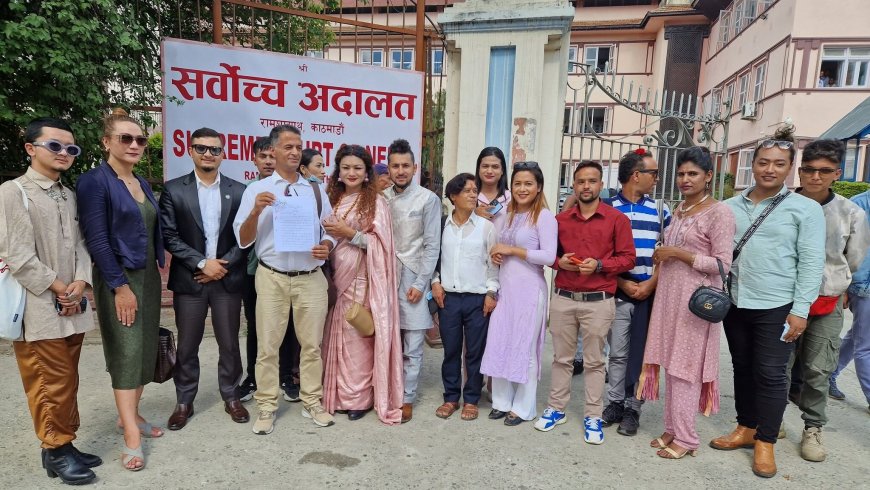
The Supreme Court of Nepal has issued a binding ruling requiring the government to fully recognize marriage equality, marking one of the most significant LGBTQ+ rights decisions in the country’s history.
Delivered on June 18, 2026, the decision directs state authorities to ensure that same-sex couples are granted equal legal access to marriage under national law. The ruling builds on a 2023 interim order that had already opened the door to recognition, though implementation had remained uneven across government agencies.
With this latest judgment, the court has now made marriage equality a clear constitutional requirement rather than a provisional allowance. Court Rejects Challenge To Equality Measures
The ruling followed a final hearing held on May 7, 2026, during which the court reviewed competing arguments over the legality of recognizing same-sex unions. Judges ultimately dismissed a counter-petition that sought to block marriage rights for LGBTQ+ couples, reinforcing earlier interpretations of constitutional protections.
The decision also instructs the government to update civil law provisions that previously defined marriage strictly as a union between a man and a woman. Legal experts and advocates say the directive leaves little ambiguity for policymakers moving forward.
The judgment represents the fourth major Supreme Court decision over nearly two decades affirming protections for gender and sexual minorities in Nepal. Activists Call Ruling A Turning Point
Human rights activist, monk, and former politician Sunil Babu Pant described the ruling as a defining moment for equality and legal recognition.
“This landmark ruling marks a historic milestone for equality, dignity, and human rights in Nepal, while providing crucial legal clarity and protection for the rights of same-sex couples,” Pant said, speaking to Pahichan Media.
He added that the verdict strengthens earlier constitutional interpretations, referencing the long-running case Sunil Babu Pant vs Nepal Government as a foundation for today’s outcome. He also pointed to subsequent rulings that helped expand recognition for non-traditional family structures and relationship registrations.
Pant emphasized that the decision confirms equal protection under the constitution for gender and sexual minority couples, reinforcing principles of non-discrimination and legal inclusion. LGBTQ+ Groups Celebrate Historic Directive
Local advocacy organization Blue Diamond Society welcomed the ruling, calling it a landmark directive that affirms the right to marry regardless of gender or sexual orientation.
In a statement shared on Instagram, the group highlighted that the court has now issued multiple rulings over the years affirming marriage rights for LGBTQ+ people in Nepal.
“The ruling is now the fourth Supreme Court decision over nearly two decades that makes clear: the freedom to marry the person you love is a guarantee under Nepal’s Constitution, and LGBTQIA+ couples and their families must be afforded the dignity, respect, and protections that only marriage can provide,” the organization wrote.
The group also noted that a counter-writ petition attempting to halt marriage equality measures was decisively rejected by the court.
Blue Diamond Society added that it would now look to the government for swift implementation of updated civil registration systems to ensure the ruling is enforced in practice. Years Of Legal Progress And Partial Recognition
The latest decision follows a gradual legal shift in Nepal toward recognition of LGBTQ+ relationships.
In 2023, the Supreme Court issued an interim order that provisionally recognized same-sex marriage after a group of nine LGBTQ+ activists challenged existing marriage laws. Those laws had previously defined marriage exclusively as a heterosexual union.
That interim ruling led to the creation of a temporary registration system for some same-sex couples, though access remained inconsistent depending on local authorities.
The country’s first officially registered LGBTQ+ marriage was recorded on Nov. 29, 2023, between a trans woman and a cisgender man who had been married since 2017 but only received formal recognition years later.
Since then, local advocacy groups have documented at least 35 same-sex marriages, with nine confirmed through media reporting, signaling growing but uneven acceptance prior to the court’s final directive. What Happens Next
With the Supreme Court’s directive now in place, the responsibility shifts to the government to revise civil code language and ensure consistent nationwide implementation.
For many advocates, the ruling is both a legal milestone and a practical test of enforcement. While recognition now exists at the highest judicial level, full equality will depend on how quickly administrative systems adapt.
Still, for LGBTQ+ communities across Nepal, the decision represents a historic affirmation that the right to marry is not conditional on gender or sexual orientation, but grounded in constitutional equality.