Rogue Ninth Circuit panel rules for Trump administration in healthcare subpoena case
A rogue panel of the San Francisco-based U.S. Court of Appeals for the Ninth Circuit voted 2-1 to reverse a decision by U.S. District Judge Jamal Whitehead, who issued a preliminary injunction blocking a wide-ranging administrative subpoena served by the U.S. Department of Justice on QueerDoc LLP. The subpoena demanded that QueerDoc, a website that … Read More
 Mark
Mark
0
31
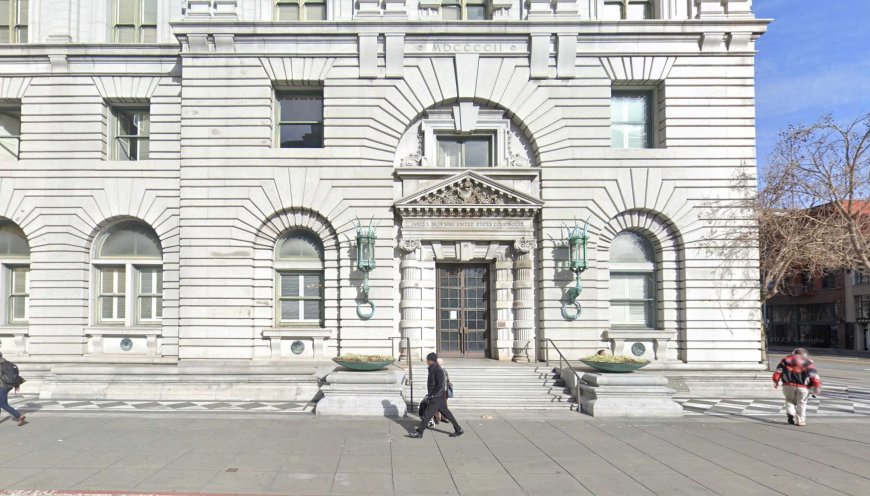
A rogue panel of the San Francisco-based U.S. Court of Appeals for the Ninth Circuit voted 2-1 to reverse a decision by U.S. District Judge Jamal Whitehead, who issued a preliminary injunction blocking a wide-ranging administrative subpoena served by the U.S. Department of Justice on QueerDoc LLP. The subpoena demanded that QueerDoc, a website that provides referrals for gender-affirming care, provide the government with personally identifying information about all of QueerDoc’s clients using its services.
Judge Whitehead had found, as have numerous other district court judges, that the subpoenas the Justice Department sent to healthcare institutions for purported investigations of violations of the Federal Food, Drug, and Cosmetic Act (FDCA) were issued in bad faith, intending to pressure healthcare providers to stop providing gender-affirming care to minors. Judge Whitehead found, based on executive orders and statements by President Trump, and statements by then-Attorney General Pam Bondi and other DOJ officials, that these subpoenas are part of the Trump administration’s strategy to “end” gender-affirming care for minors in states where it is legal to provide it.
QueerDoc operates a website that assists people in making telehealth appointments with doctors who can diagnose their gender dysphoria and can then prescribe puberty blockers or cross-sex hormones as appropriate to assist in their gender transition. QueerDoc can also connect its clients with on-line pharmacies, as well as providing information about how the medication is administered. QueerDoc, which consists of two people running the website, does not itself provide gender-affirming care or drugs to anyone.
QueerDoc’s response to the subpoena was to file a lawsuit against the Justice Department, seeking to have the subpoena quashed by the court. QueerDoc particularly objected to DOJ’s demand for names and identifying information about patients and individuals providing treatment. QueerDoc moved for a preliminary injunction so that it could avoid responding to the subpoena while its lawsuit was proceeding. Judge Whitehead granted the preliminary injunction on Oct. 27, 2025.
DOJ claims that the purpose for these subpoenas is to identify violations of the FDCA, but the relevant provisions of the FDCA don’t apply to anything that QueerDoc is doing. It is not labeling or mislabeling drugs or misrepresenting their use, and it has nothing to do with bills submitted to insurers by doctors and pharmacies for compensation for treatment and drugs.
DOJ claims that one of its concerns is that those prescribing puberty blockers and cross-sex hormones to treat gender dysphoria in minors are manipulating the “billing codes” associated with seeking compensation from insurers and federal agencies to disguise the fact that they are being used for an “off-label” purpose of gender-affirming care. When the Food & Drug Administration approves a drug as safe and effective at the end of a rigorous testing process, it approves a label for the drug describing the use for which the drug was tested, but federal law does not expressly dictate that drugs may not be used for purposes other than those identified on the label, and off-label use is common in medical practice as new uses are discovered for approved medications. This is the case with gender-affirming care, as the drugs in question have other uses for which they were originally approved. But QueerDoc has nothing to do with billing codes for care or for providing medications.
Judge Whitehead concluded that although another statute, the Health Insurance Portability and Accountability Act (HIPAA), authorizes the Attorney General to issue subpoenas in “any investigation of a Federal healthcare offense,” precedent supports judicial intervention upon a showing that the subpoena was issued for an improper purpose, and that the intention for these numerous subpoenas was to pressure the recipients to stop providing services to minors to treat gender dysphoria. Indeed, many of the recipients of these subpoenas suspended their activities of providing such care rather quickly, lessening its availability in states where it was not only legal but in fact specifically protected by state law, such as Washington state, where QueerDoc filed its lawsuit.
The opinion for the Ninth Circuit panel by Senior Circuit Judge Carlos T. Bea, a 92-year-old appointee of President George W. Bush, joined by Trump appointee Daniel A. Bress, took the position that under the unitary executive theory it could not be an improper purpose for DOJ to effectuate the president’s executive orders, regardless of the facts about QueerDoc’s limited role. If the president’s purpose, as amplified by the Justice Department, was to “end” gender-affirming care for minors, he and the agencies of the executive branch are free to attempt do so by pressuring those involved through subpoenas and threats of prosecution.
Senior Circuit Judge Richard A. Paez, a 79-year-old Clinton appointee, dissented in a detailed opinion much longer than Bea’s opinion, pointing out that the majority opinion totally missed the mark, distorted and misapplied precedent, confused the role of the president and the role of the Justice Department, and was totally out of step with opinions by other federal courts which have found that these subpoenas were not issued in good faith because the states, not the federal government and certainly not the president, regulates the practice of medicine, which is really what is at issue here.
The relevant statutes are directed at the pharmaceutical and insurance industries, certainly not at an entity such as QueerDoc, which is merely assisting persons with gender dysphoria in getting connected with doctors who can diagnose that condition and prescribe medication for it.
“As I see this case,” wrote Judge Paez, “the narrow question we must decide is whether the district court’s finding that the Department of Justice (DOJ) issued the subpoena to QueerDoc in bad faith was clearly erroneous. It was not. DOJ submitted essentially nothing in opposition to the motion to quash the subpoena. There is, however, a mountain of evidence that corroborates that DOJ used the threat of criminal investigation to pressure healthcare providers to stop offering gender-affirming care. The record amply supports the district court’s finding that DOJ issued the subpoena as pretext for its real goal of eliminating gender-affirming care, not in good faith investigation of potential violations of the Federal Food, Drug, and Cosmetic Act (FDCA).”
He accused the majority of manufacturing “legal errors that will require federal courts to rubber stamp investigations initiated by the DOJ to harass opponents and chill disfavored causes, so long as the investigation serves the president’s policy priorities. But the president’s authority to voice a policy position is far broader than the DOJ’s statutorily constrained authority to issue subpoenas. Because the law does not permit the DOJ to initiate sham investigations – even if the President says to do so – I dissent.”
The Ninth Circuit is the largest federal circuit, with 29 active judges and a huge corps of senior judges. For a long time, the Ninth Circuit had a substantial majority of judges appointed by Democratic presidents, and its decisions were frequently reversed by the ever-more-conservative Supreme Court. However, Trump’s appointments of ten judges during his first term narrowed the gap, and at present there are 16 Democratic appointees and 13 Republican appointees. Senior judges who wish to participate on panels are worked into the rotation, and sometimes even make up a majority of a three-judge panel, as in this case.
QueerDoc, which is represented by several major law firms and the ACLU, is likely to seek en banc review, which in the Ninth Circuit means an 11-judge bench that includes the Chief Judge of the Circuit (now an Obama appointee) and 10 other judges assembled at random by the Chief Judge. Assuming a truly random selection, most en banc panels will have a slight majority of Democratic appointees. While en banc review is not frequently granted, a panel opinion that flies in the face of precedent on a controversial subject is a likely candidate for en banc reconsideration. Another alternative might be for QueerDoc to file a petition for Supreme Court review, accompanied by a motion for a stay of the subpoena while an appeal is being litigated.