
Q&A: LeeOz Levy and Juan Pablo Olyslager on survival, stereotypes, and the making of ’10 Kilos’
The gritty, engrossing drama, “10 Kilos,” is based on the remarkable true story of Sharon Yitzhaki (Daniella Kertesz). In La Paz, Bolivia in 1996, Sharon, an Israeli with an American passport, was waiting for her lover Roni (Tom Garziani) to return to their hotel room. However, the police arrive instead and arrest her for drug … Read More
 Mark
Mark
0
32
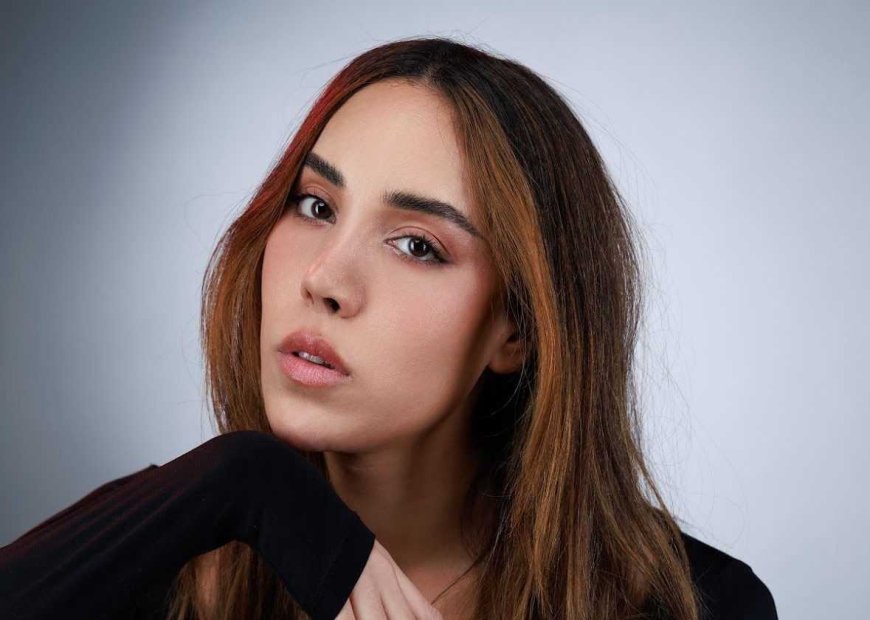
The gritty, engrossing drama, “10 Kilos,” is based on the remarkable true story of Sharon Yitzhaki (Daniella Kertesz). In La Paz, Bolivia in 1996, Sharon, an Israeli with an American passport, was waiting for her lover Roni (Tom Garziani) to return to their hotel room. However, the police arrive instead and arrest her for drug trafficking; they find 10 kilos of cocaine in her hotel room. Sharon, who insists that she has been set up, is looking at a possible 20-year sentence in Miraflores prison.
While incarcerated, she befriends Terri (trans actress LeeOz Levy), who is trans, and they “adopt” a young girl, Lena (Stephany Merida) whose mother dies in prison. (Lena is one of several children in the film who is born and grew up in prison so as not to be separated from their mothers per Bolivian law.) Sharon also gets personally and professionally involved working as a sicario and a drug dealer for Amadeo (Juan Pablo Olyslager), a La Paz cartel kingpin.
In separate interviews, Levy and Olyslager spoke with Gay City News about making “10 Kilos.”
LeeOz, did you talk with the real Terri and what did she advise you about playing her?
LeeOz Levy: My character is based on a true person whose real name is not Terri. I have not met her.
How did you find the character then?
LeeOz Levy: I did not have a lot of information, and I needed to make her up on my own. [Director] Doron and [the real life] Sharon did not want the character to be based on the real person. They gave me artistic freedom to create her from scratch. I asked Sharon questions about her, but she said you have the freedom to do whatever you want. I created an autobiography — where she was born, her childhood, her life journey, and her aesthetics, and her makeup. Sharon showed me photos of female prisoners in a Bolivian jail, and how they looked. I loved their heavy makeup. I decided that Terri was born in Mexico and transitioned when she was 18. She wanted to go to America and have a better life. She performed sex work, and then she found herself in jail. She always wanted to be a mother. The most important thing was her friendship she had with Sharon and how they need to survive in that awful place.
In real life, it appears Terri and Sharon had a romantic relationship, whereas the film downplays this, suggesting more of a friendship between them. Were you aware of that? What are your thoughts on that?
LeeOz Levy: I was aware of that, and was totally up for it, but it didn’t happen. I wanted Sharon and Terri to be lovers. I wasn’t part of that decision.
“10 Kilos” does not let Terri fall into the stereotypical trans prison role. Can you talk about that?
LeeOz Levy: Yes, there is a stereotype. We cannot ignore that. It is based on something, and we, as trans people — especially women — are portrayed in a very specific way. Terri’s goal was to be a mother for a bunch of reasons. As trans women, we are being told by the patriarchy that our value is as mothers. I guess she internalized that. Terri is a very good, warm, smart person. She is a “magical minority” who supports the white female and helps them find love, but has no life of her own. I wanted to make Terri as kind and relatable and not just a supporting character. That was the most important thing to me.
What observations do you have about Terri being part of Sharon’s “found family” coparenting Lena?
LeeOz Levy: I don’t have any desire to be a mother. But I have a lot of relationships in my life where we have a parenting dynamic, and I am the mentor. I could relate to that from the fundamental place in your heart where you want to take care of someone you love and make them feel good.
Can you talk about preparing to play someone who is incarcerated? What research did you do about prison life?
LeeOz Levy: I talked with Sharon about being in jail and the feeling that your life is ending. I was never in jail. I had no idea, but I tried to find that place where I felt like I am a prisoner of my own gender and when I was a child and people forbid me to by myself. I used that energy and the difficulty of not being able to be yourself. Even now, I don’t feel free enough. Our freedom as women, as LGBT, as trans, is always threatened. It is always in the back of your mind that your freedom is in danger — especially in Israel and the United States. It is not a good time to be LGBTQ.
“10 Kilos” is your feature film debut, I also just saw you in the short “Photos of Her.” Can you talk about your other projects?
LeeOz Levy: I hope so. I love acting. My favorite moments in life are from “action” to “cut.” It’s more difficult as a trans person to find work, but I have hope that I will portray more characters. I like the experience of being someone else for a while. I hope that I will get more to say and more stories to tell. It’s more complicated as a trans person, but we shall overcome, and I will make everyone proud.
[caption id="attachment_64770" align="aligncenter" width="408"] Juan Pablo Olyslagerstars as Amadeo in "10 Kilos."Livia Blanc[/caption]
Juan Pablo, what appealed to you about playing a drug cartel kingpin?
Juan Pablo Olyslager: It’s not the first time I played a role like this, and I enjoy these parts tremendously, because you can be somebody that you are not in real life. I start with myself, but I eliminate parts of myself and go deeper on my darker sides when I do a role like this.
Did the real Sharon advise you about the role? If not, what research did you do to play Amadeo?
Juan Pablo Olyslager: Sharon did not. I could not talk to her. I wish I had. It would have helped me to hear her version of Amadeo and how she fell in love with him. He fell in love with her as well, but he did not want to show that he cared about it. He was afraid of losing her and was not just because she was running his business.
The director told me about him, and I heard Sharon’s opinion of him. The [script] also gave me a lot of information. What I liked about Amadeo was that he was an educated guy and different than most drug lords. He reminded me of the Bolivian character in “Scarface.” Amadeo was living in a prison, but he was living like a king. He “owned” the prison. That happens all over Latin America. This was not the first time I played the kingpin of a prison. In 2007, I made “V.I.P.: Very Important Prisoners,” and we shot in a real prison with real inmates.
How did you lean into or away from making Amadeo a stereotype?
Juan Pablo Olyslager: The stereotypes are this ultra-violent, uneducated drug lords that exist in real life, so it is atypical to have one more sophisticated. That’s what I tried to play here — a character who is not over the top, except in the [violent] pool scene. I made him menacing by having him threaten people in a calm way. If you are shouting and physically doing stuff, you are like a dog barking. That was different about Amadeo. He was contrary to that. The text suggested he was rougher, but I tried to do the opposite.
What did you think of the morality of Sharon’s relationship with Amadeo?
Juan Pablo Olyslager: I don’t judge the character. Being in her position, she did what most women would do. If you are in prison and your life is threatened, and you are falsely accused, you do what you need to do to survive. I think people will judge her, but in prison, you become a different person. I saw that when I made “V.I.P.” You make your alliances to survive. You don’t think about morality.
“10 Kilos” | Directed by Doron Eran | Opening August 21 at Village East | Distributed by Breaking Glass Pictures
Juan Pablo Olyslagerstars as Amadeo in "10 Kilos."Livia Blanc[/caption]
Juan Pablo, what appealed to you about playing a drug cartel kingpin?
Juan Pablo Olyslager: It’s not the first time I played a role like this, and I enjoy these parts tremendously, because you can be somebody that you are not in real life. I start with myself, but I eliminate parts of myself and go deeper on my darker sides when I do a role like this.
Did the real Sharon advise you about the role? If not, what research did you do to play Amadeo?
Juan Pablo Olyslager: Sharon did not. I could not talk to her. I wish I had. It would have helped me to hear her version of Amadeo and how she fell in love with him. He fell in love with her as well, but he did not want to show that he cared about it. He was afraid of losing her and was not just because she was running his business.
The director told me about him, and I heard Sharon’s opinion of him. The [script] also gave me a lot of information. What I liked about Amadeo was that he was an educated guy and different than most drug lords. He reminded me of the Bolivian character in “Scarface.” Amadeo was living in a prison, but he was living like a king. He “owned” the prison. That happens all over Latin America. This was not the first time I played the kingpin of a prison. In 2007, I made “V.I.P.: Very Important Prisoners,” and we shot in a real prison with real inmates.
How did you lean into or away from making Amadeo a stereotype?
Juan Pablo Olyslager: The stereotypes are this ultra-violent, uneducated drug lords that exist in real life, so it is atypical to have one more sophisticated. That’s what I tried to play here — a character who is not over the top, except in the [violent] pool scene. I made him menacing by having him threaten people in a calm way. If you are shouting and physically doing stuff, you are like a dog barking. That was different about Amadeo. He was contrary to that. The text suggested he was rougher, but I tried to do the opposite.
What did you think of the morality of Sharon’s relationship with Amadeo?
Juan Pablo Olyslager: I don’t judge the character. Being in her position, she did what most women would do. If you are in prison and your life is threatened, and you are falsely accused, you do what you need to do to survive. I think people will judge her, but in prison, you become a different person. I saw that when I made “V.I.P.” You make your alliances to survive. You don’t think about morality.
“10 Kilos” | Directed by Doron Eran | Opening August 21 at Village East | Distributed by Breaking Glass Pictures
Juan Pablo Olyslagerstars as Amadeo in "10 Kilos."Livia Blanc[/caption]
Juan Pablo, what appealed to you about playing a drug cartel kingpin?
Juan Pablo Olyslager: It’s not the first time I played a role like this, and I enjoy these parts tremendously, because you can be somebody that you are not in real life. I start with myself, but I eliminate parts of myself and go deeper on my darker sides when I do a role like this.
Did the real Sharon advise you about the role? If not, what research did you do to play Amadeo?
Juan Pablo Olyslager: Sharon did not. I could not talk to her. I wish I had. It would have helped me to hear her version of Amadeo and how she fell in love with him. He fell in love with her as well, but he did not want to show that he cared about it. He was afraid of losing her and was not just because she was running his business.
The director told me about him, and I heard Sharon’s opinion of him. The [script] also gave me a lot of information. What I liked about Amadeo was that he was an educated guy and different than most drug lords. He reminded me of the Bolivian character in “Scarface.” Amadeo was living in a prison, but he was living like a king. He “owned” the prison. That happens all over Latin America. This was not the first time I played the kingpin of a prison. In 2007, I made “V.I.P.: Very Important Prisoners,” and we shot in a real prison with real inmates.
How did you lean into or away from making Amadeo a stereotype?
Juan Pablo Olyslager: The stereotypes are this ultra-violent, uneducated drug lords that exist in real life, so it is atypical to have one more sophisticated. That’s what I tried to play here — a character who is not over the top, except in the [violent] pool scene. I made him menacing by having him threaten people in a calm way. If you are shouting and physically doing stuff, you are like a dog barking. That was different about Amadeo. He was contrary to that. The text suggested he was rougher, but I tried to do the opposite.
What did you think of the morality of Sharon’s relationship with Amadeo?
Juan Pablo Olyslager: I don’t judge the character. Being in her position, she did what most women would do. If you are in prison and your life is threatened, and you are falsely accused, you do what you need to do to survive. I think people will judge her, but in prison, you become a different person. I saw that when I made “V.I.P.” You make your alliances to survive. You don’t think about morality.
“10 Kilos” | Directed by Doron Eran | Opening August 21 at Village East | Distributed by Breaking Glass Pictures