10th Circuit Court finds survivors of Club Q shooting not entitled to compensation
In a ruling exposing the limits of federal and state law to compensate the victims of a mass shooting that took place at Club Q, a gay nightclub in Colorado Springs, in 2022, a three-judge panel of the Denver-based 10th Circuit U.S. Court of Appeals ruled on Sept. 9 to affirm a decision by Senior … Read More
 Mark
Mark
0
30
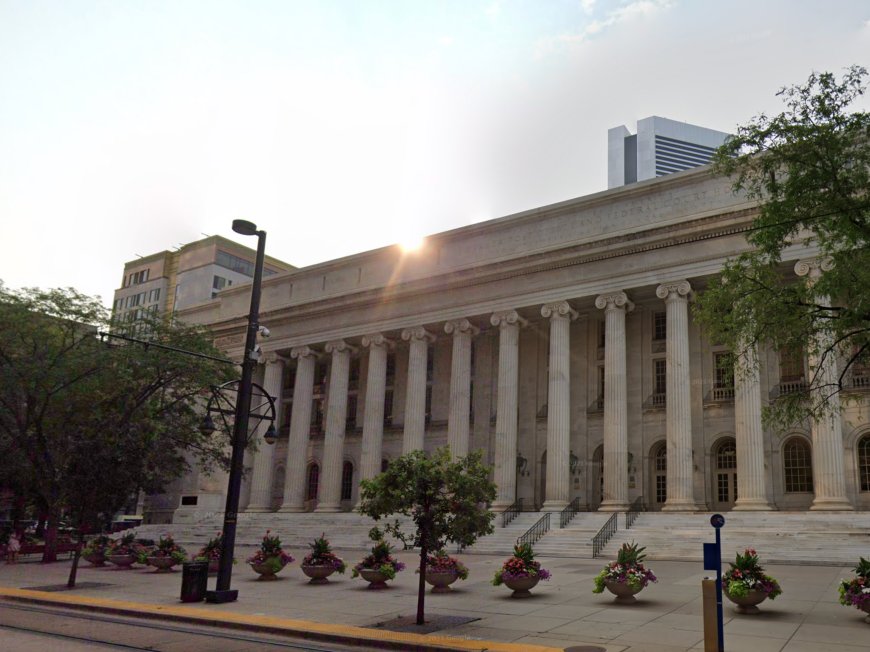
In a ruling exposing the limits of federal and state law to compensate the victims of a mass shooting that took place at Club Q, a gay nightclub in Colorado Springs, in 2022, a three-judge panel of the Denver-based 10th Circuit U.S. Court of Appeals ruled on Sept. 9 to affirm a decision by Senior District Judge William J. Martinez to dismiss the claims brought against county and local officials and owners of Club Q.
Anderson Lee Aldrich, the shooter, was known to local law enforcement. In June 2021, he held his grandparents at gunpoint threatening to kill them and showing them a homemade bomb he had made. They escaped and called 911, telling the sheriff’s office that Aldrich had collected weapons and aspired to be “the next mass killer.” Officers from the Sheriff’s Office searched the grandparents’ house, where Aldrich was staying, and found bomb-making materials. Aldrich, who according to news reports identifies as non-binary, was charged with several felonies, including first-degree kidnapping, but posted bond and was let out of jail. A few months later, members of Aldrich’s family told the state court that Aldrich was 3-D printing gun parts and they worried that Aldrich would hurt the grandparents. The state court “expressed concern that Aldrich was also ‘planning for something’ unrelated to the grandparents, emphasizing that Aldrich was ‘saving all those firearms and trying to make this bomb.” But the grandparents had moved to Florida and the local prosecutor didn’t move forward with the case, so the court dismissed the case against Aldrich for “failure to prosecute.” Then Aldrich unsuccessfully tried to retrieve “seized firearms” from the Sheriff’s Office. But there was nothing to stop Aldrich from going out to buy more.
A Colorado statute called the Colorado Violence Prevention Act (CVPA) was passed in 2019, a version of a “red flag law” providing a way to restrict firearms possession or access for people displaying a pattern of statements and behaviors indicating an intent to inflict violence. But the El Paso County Board of Commissioners voted to resist this law, and the Sheriff’s Office issued a statement suggesting reluctance to seek Extreme Risk Protection Orders (ERPO) authorized under the law. The law did not require local law enforcement to request such Orders, leaving that to their discretion, and the El Paso Sheriff did not seek such an order against Aldrich, despite these experiences in 2021.
On Nov. 19, 2022, Aldrich entered Club Q around midnight armed with an AR-15-style rifle, wearing a tactical vest and ballistic plates with a handgun strapped to the vest. He started shooting, murdering five people and wounding numerous others, with some people also sustaining injuries in the panic that ensued in the club. Some patrons subdued Aldrich until law enforcement arrived. Aldrich was prosecuted in both federal and state court, pleading guilty to numerous counts and no contest to hate crime charges. Aldrich received multiple life sentences. Ironically, the judge who conducted the federal sentencing hearing, Charlotte Sweeney, is the only out lesbian US district judge in Colorado. Aldrich was named as a defendant by the plaintiffs — survivors and family members — in the civil lawsuit against the the Club Q defendants, but Aldrich never responded to the complaint, so the court clerk entered a default judgment against Aldrich. It seems unlikely that Aldrich, who was 22 when committing the crimes, has assets to compensate the plaintiffs.
The plaintiffs argued that the county board and sheriff should be held accountable to Aldrich’s victims for failure to enforce the CVPA against Aldrich. They argued that such failure had increased the risk of a mass shooting, violating the plaintiffs’ rights to due process of law under the 14th Amendment of the Constitution. They argued that in light of the information that law enforcement had about Aldrich, the government should have taken reasonable steps to disarm him and had fallen down on prosecuting him in connection with the earlier incidents.
The plaintiffs’ claims against the Club Q defendants were based on a state law: the Colorado Premises Liability Act (CPLA), which provides a mechanism to hold property owners accountable for injuries to persons who are lawfully on their premises and suffer injuries when the property owner is at fault. They also alleged that the Club Q defendants were negligent in their security arrangements, and wrongful death liability claims were lodged by surviving family members of some of the murder victims.
The plaintiffs’ complaint pointed out that prior to the pandemic, Club Q had employed four security staff, including an armed guard, but during the pandemic they reduced the staff to two security people and no armed guard. They alleged that the head of security was “unlicensed, overworked, and lacked formal active-shooter training.” There was no attempt to screen patrons coming into the club for weapons, and nobody was stationed outside to monitor those entering. There was only one exit — the front door — as a back door was blocked, so there was no way to evacuate in an emergency, creating, in the words of the complaint, a “death trap.” According to the plaintiffs, there had been a recent attempted stabbing at the club, and a nearby shooting, and Club Q had received repeated threatening phone calls in the weeks before the shooting. It also developed that Aldrich had been there several times, apparently “casing the joint” by asking questions about evacuation procedures and security!
The trial judge, Senior US District Judge William J. Martinez, granted the government defendants’ motions to dismiss the constitutional claims, and granted the Club Q defendants’ motions to dismiss the claims under the CVPA. He declined to retain jurisdiction over the state negligence and wrongful death claims once the federal claims had been dismissed.
In its Sept. 9 ruling, the 10th Circuit panel affirmed these dismissals, but also ruled that the CVPA preempted any attempt to pursue separate tort claims against the Club Q defendants, so those should also have been dismissed by the trial judge. By declining to assert jurisdiction over those claims, Judge Martinez left open the possibility that plaintiffs could refile those claims in state court, but the 10th Circuit’s ruling precludes that.
The lengthy 10th Circuit opinion by Circuit Judge Gregory A. Phillips applied Supreme Court precedent holding that government defendants could not be held accountable in personal injury lawsuits unless they affirmatively engaged in conduct that increased the risk of harm to the plaintiffs. Failing to enforce the CVPA by the board and the sheriff’s office was not, in the view of Judge Martinez or the 10th Circuit, the kind of affirmative conduct that could subject the government defendants to liability to the plaintiffs for Aldrich’s actions.
As to the Colorado Premises Liability Act (CPLA), the 10th Circuit opinion agreed with Judge Martinez that the various faults regarding security by the Club Q defendants were not the “predominant cause” of the plaintiffs’ injuries, as required by Colorado precedents interpreting that law. Furthermore, the 10th Circuit opined that Judge Martinez should have granted the Club Q defendants’ motion to dismiss the negligence and wrongful death claims because CPLA is the exclusive remedy for property owners’ liability to those who are injured on their premises.
This writer read the opinion with great frustration at the failure of federal and Colorado law to provide accountability in this case. If the plaintiffs’ factual allegations were to be tested at trial about the conduct of the county board and the sheriff’s office and the Club Q owners and found by a jury to be true, the search for accountability for government and business owners for their failure to protect the patrons of Club Q from this kind of mass shooting when there were tools available to significantly lessen the risk of this kind of incident are most disappointing, and some might even say outrageous.