‘Barbara Forever’ looks back at the life of a lesbian director
The opening scene of Brydie O’Connor’s “Barbara Forever” features lesbian filmmaker Barbara Hammer videotaping herself while naked. For Hammer, nudity was a larger metaphor. She was willing to film herself having sex, and she also wanted to show her experience living with cancer. Her work kept up a desire to reveal the unseen. Eventually, that … Read More
 Mark
Mark
0
20
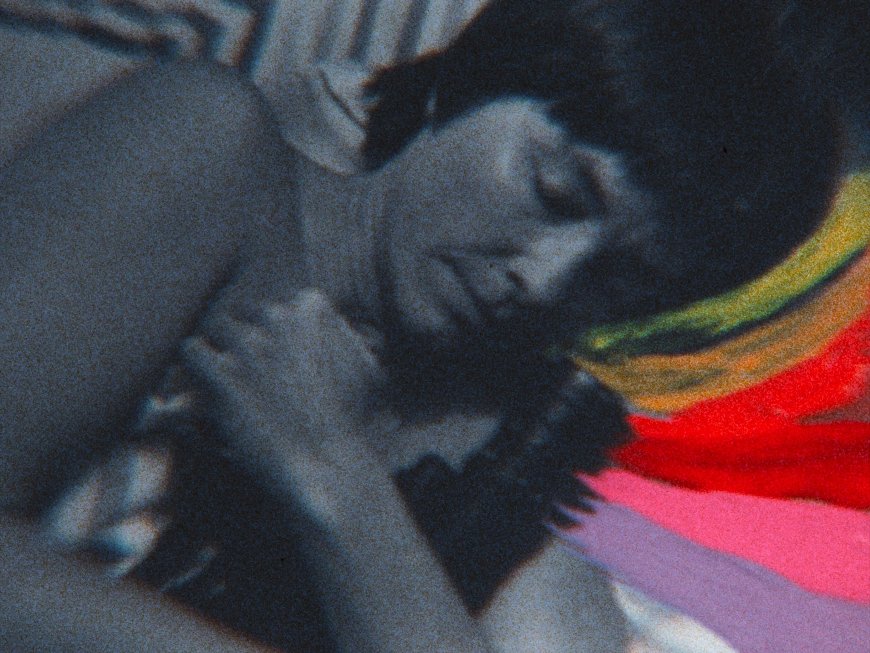
The opening scene of Brydie O’Connor’s “Barbara Forever” features lesbian filmmaker Barbara Hammer videotaping herself while naked. For Hammer, nudity was a larger metaphor. She was willing to film herself having sex, and she also wanted to show her experience living with cancer. Her work kept up a desire to reveal the unseen. Eventually, that meant aging and illness.
Recording one’s life and sharing it in public is now a bit banal. One of this year’s best documentaries, Ross McElwee’s “Remake,” takes an anguished stock about its effect on his family. However, Barbara Hammer broke ground by finding a new language to speak about lesbians’ experiences. While men like Jonas Mekas had made diary films, she had to figure out how to represent a group of people rarely allowed to speak for themselves in film before. Hammer’s life became the source material for a very ambitious project, spanning decades. “Barbara Forever” summarizes it.
Starting in the early ‘70s, Hammer was drawn to document the lesbian communities in which she participated. Erasure had done its job on her: She’d never heard the word “lesbian” till she was 30, participating in a feminist consciousness-raising group. Although her mother wanted her to be a child star, settling down in marriage to a man meant that she was relegated to making coffee. Her art was central to her “dyke adolescence” (in her words); upon coming out, she made 13 films in a year and a half.
Since most images of women sleeping with other women were made for the male gaze, rather than a lesbian audience, her early films searched for a way to express pleasure outside porn, without rejecting explicit images of unsimulated sex. “Multiple Orgasm” gives the clitoris its due by superimposing Hammer masturbating onto mountains, ending with the director’s ecstatic face. “Dyketactics” takes a more psychedelic approach that also overlaps women’s bodies and nature. “Superdyke” resonates with sheer joy, as a group of lesbians race through crowds, go shopping for vibrators, and ride motorycles on the beach, declaring themselves Amazons. Margaret Moore’s piano score gives it a touch of silent comedy.
“Barbara Forever” isn’t nearly as experimental as its subject’s own work. Most of this film’s visuals are re-edited from Hammer’s films, as she relates her own story in voice-over. Since she died before “Barbara Forever” was finished, her widow Florrie Burke is the only person who appears in newly shot footage. With one exception, looking back to Hammer’s childhood, the film’s chronology is linear. If it’s a neatly crafted biography, its images constantly shift with the times. More than a mere biography, it functions as a “greatest hits” compilation.
Hammer’s “Audience” documents reactions to a 1982 screening of her films in San Francisco. By this point, she’d become self-conscious about her associations with lesbian feminism and criticism she’d received for supposedly equating women with nature. Moving to New York in the ‘80s, she tried to break into the art world, facing rejection from its male gatekeepers. Although the Whitney Biennial showed her short “Optic Nerve” in 1987, “Barbara Forever” presents her first feature, “Nitrate Kisses,” as her eventual breakthrough to a wider audience.
From Hammer’s description of her life in the ‘60s and ‘70s, being a lesbian granted her a lot of freedom. The struggle to be taken as seriously as her male peers comes to the fore during the last half hour of “Barbara Forever.” From the footage of her appearance at Sundance in 1992, where “Nitrate Kisses” played, the rise of New Queer Cinema finally brought her to that point, but soon afterwards, she was blackballed by the NEA and found it hard to find funding. Although she made 80 films, she worked quickly and casually, without treating narrative features as the pinnacle of cinema.
The role of sex has become one of contemporary cinema’s central questions. How can one come up with a path through it without repeating the sexism and exploitation of the past? For so many recent queer films – Harry Lighton’s “Pilion,” Jane Schoenbrun’s “Teenage Sex And Death At Camp Miasma,” Gustavo Vinagre and Vinicus Couto’s “The Passion According To G.H.B.” — this question is paramount. For many gay male directors in the ‘70s, embracing porn as part of liberation — especially since Hollywood had no interest in them — was the way forward, but lesbian sex had been fetishized by heterosexual men. Finding an authentic image of it led to innovation. Hammer’s work reminds us of the danger of cutting off art from its sources in the body.
“Barbara Forever” | Directed by Brydie O’Connor | Strand Releasing | Opens at Film Forum Sept. 4th