In My Mind Conference explores intersectional impact of climate change on LGBTQ communities of color
The annual In My Mind conference, which covers a range of topics pertaining to mental health among LGBTQ people of color, returned to New York’s LGBT Community Center on Oct. 8 with a special focus on climate change and how that growing issue impacts marginalized communities and their psychological well-being. Antoine Craigwell, the president, founder, … Read More
 Mark
Mark
0
4
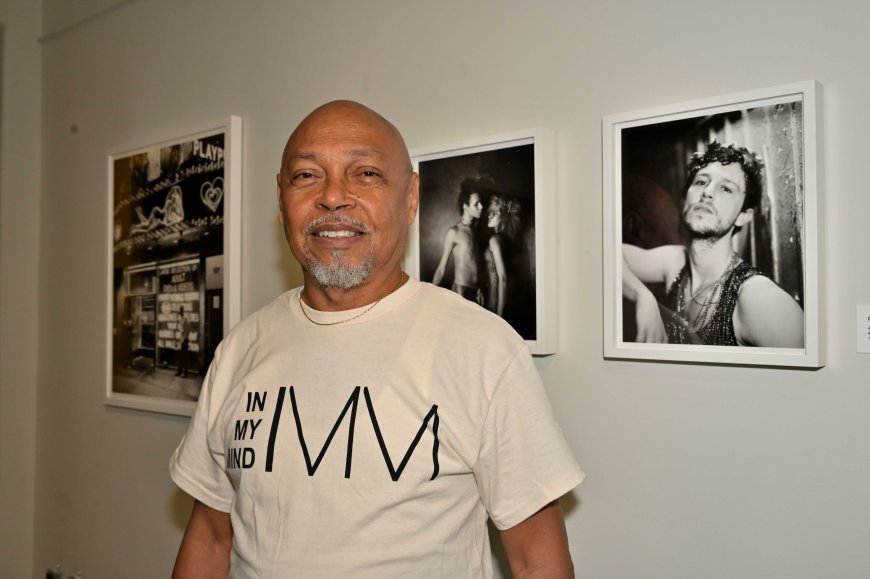
The annual In My Mind conference, which covers a range of topics pertaining to mental health among LGBTQ people of color, returned to New York's LGBT Community Center on Oct. 8 with a special focus on climate change and how that growing issue impacts marginalized communities and their psychological well-being.
[caption id="attachment_65303" align="aligncenter" width="700"] Anthony Mercedes delivers remarks at the In My Mind Conference on Oct. 8.Donna Aceto[/caption]
Antoine Craigwell, the president, founder, and CEO of DBGM, which serves as the conference's host organization, said this year's theme reflected the growing influence of climate change on communities all around the world.
“In the last several years, I have been seeing all the reporting and the devastation about more frequent and more intense climate disasters,” Craigwell told Gay City News, which served as a media sponsor of the conference. “And it occurred to me that when a climate disaster happens, people are displaced, people are dispossessed, people are left wondering: How does this dispossession — this disruption — that the climate has had on our lives then affect our mental health?"
Craigwell, who hails from Guyana, recalled visiting that country in August for a series of workshops, but noticed that even in a tropical country, people were complaining about the heat.
"In these workshops, people are sitting there sweating; I am sweating," said Craigwell, who received a Gay City News Impact Award in 2023. "And I'm watching: They're not focused; they're distracted. They are uncomfortable. So it does not matter what I talk about. They're not hearing me because right now, they are uncomfortable, so I've had to cut a number of words."
Unless education systems can adapt, Craigwell questioned how can people in undeveloped countries will be able to cover the costs of air conditioning.
"Climate change is directly impacting our physical lives and undermining our mental health," Craigwell said. "And so what I find very frightening — but also scary — is that people are not taking that aspect serious. People are not talking about the mental health aspect."
The day-long conference sought to address those gaps by featuring several different discussions and breakout sessions touching on climate-related issues across regions — from Asia to Africa to the Caribbean — such as "Intersectionality in Action: Mental Health and Eco-Justice," "Closing the Research Gap on Climate Change’s Impact on Human Well-Being," and "Activating the Process of Remembering: a Healing-informed Social Imaginary for Community Building in the Context of Climate Change."
[caption id="attachment_65302" align="aligncenter" width="700"]
Anthony Mercedes delivers remarks at the In My Mind Conference on Oct. 8.Donna Aceto[/caption]
Antoine Craigwell, the president, founder, and CEO of DBGM, which serves as the conference's host organization, said this year's theme reflected the growing influence of climate change on communities all around the world.
“In the last several years, I have been seeing all the reporting and the devastation about more frequent and more intense climate disasters,” Craigwell told Gay City News, which served as a media sponsor of the conference. “And it occurred to me that when a climate disaster happens, people are displaced, people are dispossessed, people are left wondering: How does this dispossession — this disruption — that the climate has had on our lives then affect our mental health?"
Craigwell, who hails from Guyana, recalled visiting that country in August for a series of workshops, but noticed that even in a tropical country, people were complaining about the heat.
"In these workshops, people are sitting there sweating; I am sweating," said Craigwell, who received a Gay City News Impact Award in 2023. "And I'm watching: They're not focused; they're distracted. They are uncomfortable. So it does not matter what I talk about. They're not hearing me because right now, they are uncomfortable, so I've had to cut a number of words."
Unless education systems can adapt, Craigwell questioned how can people in undeveloped countries will be able to cover the costs of air conditioning.
"Climate change is directly impacting our physical lives and undermining our mental health," Craigwell said. "And so what I find very frightening — but also scary — is that people are not taking that aspect serious. People are not talking about the mental health aspect."
The day-long conference sought to address those gaps by featuring several different discussions and breakout sessions touching on climate-related issues across regions — from Asia to Africa to the Caribbean — such as "Intersectionality in Action: Mental Health and Eco-Justice," "Closing the Research Gap on Climate Change’s Impact on Human Well-Being," and "Activating the Process of Remembering: a Healing-informed Social Imaginary for Community Building in the Context of Climate Change."
[caption id="attachment_65302" align="aligncenter" width="700"] The New York Transgender Advocacy Group team attends the In My Mind Conference on Oct. 8.Donna Aceto[/caption]
The conference's main speakers included Meghsha Pskwasaw8n Barner and Odanak Abenaki, representing the Two-Spirit and Native LGBTQ+ Center for Equality; Damon Watkins and Jesse Lasoff-Santos of I-CARE; Aidil Iman of Greenpeace Malaysia; and Fortunate T Silinda of the University of South Africa.
One such session, led by Gary Bailey of the Simmons University School of Social Work, focused on the intersectional impact of climate and environmental issues on North American LGBTQ communities. During that session, Bailey touched on several examples of how that impact plays out, including through poor air quality, restrictive access to green spaces, food insecurity, and discrimination.
Bailey emphasized that Black, Brown, and Indigenous LGBTQ people ultimately experience layered forms of vulnerability — and in underscoring the intersectional realities, he made the case that environmental justice must recognize the whole person, not just one aspect of their identity.
Bailey also touched on the privileges many people take for granted, including heat during the winter.
"My heat went out for a week last winter," Bailey said, noting that he realized he had never experienced the cold in that way before. In another example, Bailey noted that people are often encouraged to walk, but for many people that becomes next to impossible when it is too hot in the summer.
[caption id="attachment_65301" align="aligncenter" width="700"]
The New York Transgender Advocacy Group team attends the In My Mind Conference on Oct. 8.Donna Aceto[/caption]
The conference's main speakers included Meghsha Pskwasaw8n Barner and Odanak Abenaki, representing the Two-Spirit and Native LGBTQ+ Center for Equality; Damon Watkins and Jesse Lasoff-Santos of I-CARE; Aidil Iman of Greenpeace Malaysia; and Fortunate T Silinda of the University of South Africa.
One such session, led by Gary Bailey of the Simmons University School of Social Work, focused on the intersectional impact of climate and environmental issues on North American LGBTQ communities. During that session, Bailey touched on several examples of how that impact plays out, including through poor air quality, restrictive access to green spaces, food insecurity, and discrimination.
Bailey emphasized that Black, Brown, and Indigenous LGBTQ people ultimately experience layered forms of vulnerability — and in underscoring the intersectional realities, he made the case that environmental justice must recognize the whole person, not just one aspect of their identity.
Bailey also touched on the privileges many people take for granted, including heat during the winter.
"My heat went out for a week last winter," Bailey said, noting that he realized he had never experienced the cold in that way before. In another example, Bailey noted that people are often encouraged to walk, but for many people that becomes next to impossible when it is too hot in the summer.
[caption id="attachment_65301" align="aligncenter" width="700"] Gary Bailey speaks during a session at the In My Mind Conference on Oct. 8.Donna Aceto[/caption]
Moreover, Bailey explained that equity is a key factor when examining the intersection of climate change and marginalized communities, and he posed several questions that the general population may not immediately consider in the context of an equitable disaster response: How long can friends on dialysis survive without access to care, for example? In hindsight, an obvious example of poor disaster response was seen in Hurricane Katrina, which disproportionately devastated Black residents of New Orleans.
Following the session, Bailey told Gay City News he has been part of the conference since its inception and appreciated this year's unique focus on climate change.
"As a social worker, I think we need to be focusing much, much more on environmental justice," Bailey said. "You know, my school exists because 125 years ago, Dr. Richard Cabot was treating immigrants at Mass. General Hospital, and he would get them physically healthy, discharge them, and they'd immediately get sick again. And he's a smart guy, and he said, 'Whoa, it's not what we're doing here — its the environment we're sending them back to that needs help.' And so we exist because we understood that you can't take the person out of their environment. And if the environment is physically toxic, emotionally toxic, and environmentally toxic, people aren't going to thrive."
Learn more about the In My Mind Conference at inmymindconference.com.
Gary Bailey speaks during a session at the In My Mind Conference on Oct. 8.Donna Aceto[/caption]
Moreover, Bailey explained that equity is a key factor when examining the intersection of climate change and marginalized communities, and he posed several questions that the general population may not immediately consider in the context of an equitable disaster response: How long can friends on dialysis survive without access to care, for example? In hindsight, an obvious example of poor disaster response was seen in Hurricane Katrina, which disproportionately devastated Black residents of New Orleans.
Following the session, Bailey told Gay City News he has been part of the conference since its inception and appreciated this year's unique focus on climate change.
"As a social worker, I think we need to be focusing much, much more on environmental justice," Bailey said. "You know, my school exists because 125 years ago, Dr. Richard Cabot was treating immigrants at Mass. General Hospital, and he would get them physically healthy, discharge them, and they'd immediately get sick again. And he's a smart guy, and he said, 'Whoa, it's not what we're doing here — its the environment we're sending them back to that needs help.' And so we exist because we understood that you can't take the person out of their environment. And if the environment is physically toxic, emotionally toxic, and environmentally toxic, people aren't going to thrive."
Learn more about the In My Mind Conference at inmymindconference.com.
Anthony Mercedes delivers remarks at the In My Mind Conference on Oct. 8.Donna Aceto[/caption]
Antoine Craigwell, the president, founder, and CEO of DBGM, which serves as the conference's host organization, said this year's theme reflected the growing influence of climate change on communities all around the world.
“In the last several years, I have been seeing all the reporting and the devastation about more frequent and more intense climate disasters,” Craigwell told Gay City News, which served as a media sponsor of the conference. “And it occurred to me that when a climate disaster happens, people are displaced, people are dispossessed, people are left wondering: How does this dispossession — this disruption — that the climate has had on our lives then affect our mental health?"
Craigwell, who hails from Guyana, recalled visiting that country in August for a series of workshops, but noticed that even in a tropical country, people were complaining about the heat.
"In these workshops, people are sitting there sweating; I am sweating," said Craigwell, who received a Gay City News Impact Award in 2023. "And I'm watching: They're not focused; they're distracted. They are uncomfortable. So it does not matter what I talk about. They're not hearing me because right now, they are uncomfortable, so I've had to cut a number of words."
Unless education systems can adapt, Craigwell questioned how can people in undeveloped countries will be able to cover the costs of air conditioning.
"Climate change is directly impacting our physical lives and undermining our mental health," Craigwell said. "And so what I find very frightening — but also scary — is that people are not taking that aspect serious. People are not talking about the mental health aspect."
The day-long conference sought to address those gaps by featuring several different discussions and breakout sessions touching on climate-related issues across regions — from Asia to Africa to the Caribbean — such as "Intersectionality in Action: Mental Health and Eco-Justice," "Closing the Research Gap on Climate Change’s Impact on Human Well-Being," and "Activating the Process of Remembering: a Healing-informed Social Imaginary for Community Building in the Context of Climate Change."
[caption id="attachment_65302" align="aligncenter" width="700"] The New York Transgender Advocacy Group team attends the In My Mind Conference on Oct. 8.Donna Aceto[/caption]
The conference's main speakers included Meghsha Pskwasaw8n Barner and Odanak Abenaki, representing the Two-Spirit and Native LGBTQ+ Center for Equality; Damon Watkins and Jesse Lasoff-Santos of I-CARE; Aidil Iman of Greenpeace Malaysia; and Fortunate T Silinda of the University of South Africa.
One such session, led by Gary Bailey of the Simmons University School of Social Work, focused on the intersectional impact of climate and environmental issues on North American LGBTQ communities. During that session, Bailey touched on several examples of how that impact plays out, including through poor air quality, restrictive access to green spaces, food insecurity, and discrimination.
Bailey emphasized that Black, Brown, and Indigenous LGBTQ people ultimately experience layered forms of vulnerability — and in underscoring the intersectional realities, he made the case that environmental justice must recognize the whole person, not just one aspect of their identity.
Bailey also touched on the privileges many people take for granted, including heat during the winter.
"My heat went out for a week last winter," Bailey said, noting that he realized he had never experienced the cold in that way before. In another example, Bailey noted that people are often encouraged to walk, but for many people that becomes next to impossible when it is too hot in the summer.
[caption id="attachment_65301" align="aligncenter" width="700"] Gary Bailey speaks during a session at the In My Mind Conference on Oct. 8.Donna Aceto[/caption]
Moreover, Bailey explained that equity is a key factor when examining the intersection of climate change and marginalized communities, and he posed several questions that the general population may not immediately consider in the context of an equitable disaster response: How long can friends on dialysis survive without access to care, for example? In hindsight, an obvious example of poor disaster response was seen in Hurricane Katrina, which disproportionately devastated Black residents of New Orleans.
Following the session, Bailey told Gay City News he has been part of the conference since its inception and appreciated this year's unique focus on climate change.
"As a social worker, I think we need to be focusing much, much more on environmental justice," Bailey said. "You know, my school exists because 125 years ago, Dr. Richard Cabot was treating immigrants at Mass. General Hospital, and he would get them physically healthy, discharge them, and they'd immediately get sick again. And he's a smart guy, and he said, 'Whoa, it's not what we're doing here — its the environment we're sending them back to that needs help.' And so we exist because we understood that you can't take the person out of their environment. And if the environment is physically toxic, emotionally toxic, and environmentally toxic, people aren't going to thrive."
Learn more about the In My Mind Conference at inmymindconference.com.