Keke Palmer’s ‘I Love Boosters’ Beauty Transformation Was Inspired by Drag Culture, Says Makeup Director
Exclusive: Makeup Director Jeremy Dell reveals the drag-inspired beauty world of I Love Boosters.
 Mark
Mark
If there’s one thing Boots Riley rarely delivers, it’s restraint.
With I Love Boosters, the filmmaker behind Sorry to Bother You returns with another stylized swing at contemporary culture, this time through a world of professional shoplifters, fashion obsession and social satire wrapped in spectacle. The film premiered at SXSW before heading into a nationwide theatrical rollout and tour, bringing Riley’s signature surrealism into a glossy new arena.
But underneath the cast list: Keke Palmer, Naomi Ackie, Taylour Paige, LaKeith Stanfield, Poppy Liu, Eiza González, Will Poulter, Don Cheadle and Demi Moore, sits another major creative force shaping the experience: Makeup Director Jeremy Dell.
When I spoke with Dell for Gayety, one thing became clear quickly: the makeup wasn’t created to complement the movie. It was built to become part of the storytelling. Building A Beauty Universe
Dell said his earliest conversations around the film weren’t about realism.
Instead, they centered on creating a world where beauty could function as emotion.
“When I started building the makeup language for the film, I was honestly excited by the freedom to create a heightened universe where beauty itself became part of the storytelling,” Dell told me.
Rather than approaching the film through conventional glamour, he treated makeup like another character.
“I didn’t want the makeup to just ‘look pretty,’ I wanted it to feel loud, emotional, rebellious, and unforgettable.”
That approach became the guiding principle for the film’s aesthetic: amplify reality until beauty starts saying things dialogue doesn’t.
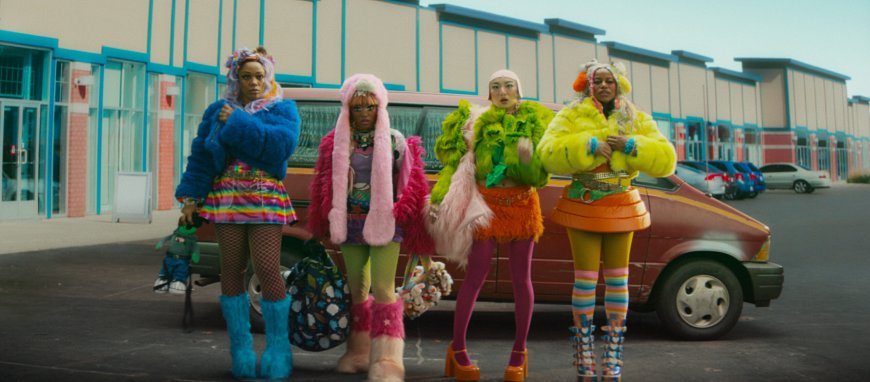
Dell described the final world as feeling “slightly turned up,” comparing the visual tone to “a fever dream runway show with a little queer chaos sprinkled on top.”
That tracks for a Boots Riley project. Beauty As Character Development
Riley’s work often uses satire to examine power structures, identity and culture. Dell said the makeup department responded by thinking less about trends and more about what each face communicated before anyone spoke.
“The tone of the film really pushed me to make character choices that reflected identity, ego, fantasy, and community.”
Some characters, he explained, wore confidence like protection. Others embraced excess as identity.
“It was very much about celebrating people who unapologetically take up space.”
That philosophy appears woven throughout the film’s world of status and fashion, not polished perfection but self-expression pushed to its limit. Why Keke Palmer’s Corvette Feels Instantly Iconic
Even before audiences see the full film, Keke Palmer’s Corvette already feels positioned for cult status.
Dell laughed when talking about developing her look.
“Corvette is bold, loud, chaotic, glamorous, and impossible to ignore, basically the kind of person who would enter a room like a drag queen hitting the final chorus of a lip sync.”
Her character’s obsession with Angry Rustlers candy became an unexpected jumping-off point.
“Since she’s obsessed with Angry Rustlers candy, I leaned heavily into statement lips with punchy, hyper-saturated colors that almost felt edible.”
The goal wasn’t realism but more of a focus on energy.
“Keke also wears confidence so effortlessly, so every look had this electric quality that jumped right off the screen.” Drag, Queer Influence And The Art Of Being Seen
One of the most interesting parts of our conversation centered on queer influence.
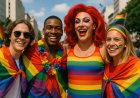
Beauty trends have long borrowed from LGBTQ+ spaces, but Dell was direct about where I Love Boosters found inspiration.
“Definitely drag culture.”
One phrase stayed with him throughout production:
“Paint me for the people in the cheap seats.”
That mindset shaped everything.
“I wanted bold shapes, exaggerated color, graphic moments, and makeup that could command attention from across the room.”
Dell said queer artistry gave the creative team permission to reject subtlety.
“There’s a fearlessness in drag and queer self-expression that gave me permission to go bigger and more theatrical.”
That influence stretched across the movie’s larger visual references, which pulled from runway archives, underground club scenes, editorial beauty, vintage glamour, punk textures, nightlife and pop art.
What excited Dell most was the absence of limits.
“We were encouraged to push things further, glossier, messier, campierm and honestly that kind of creative freedom is every queer creative’s dream.” A Collaboration Built To Go Big
Dell stopped short of naming one favorite transformation. Instead, he pointed to the process.
“This project was such a labor of love and such a deep collaboration with costume designer Shirley Kurata, hair designer Jessi Dean, and my incredible makeup team.”
He described storyboards, makeup tests and lookbooks becoming a creative exchange between departments and cast.
“The actors absolutely brought their own thoughts, references, and energy into the trailer too.”
By the end, Dell said, the goal became creating looks that felt elevated but specific to each character.
When I asked him whether queer audiences who gravitate toward camp and transformation would connect with I Love Boosters, his answer came quickly.
“Absolutely.”
He described the final result as a collision of drag glamour, pop art, special effects, grunge, clean beauty and fashion fantasy.
“There’s something very queer about the film’s willingness to be excessive, dramatic, playful, and self-aware all at once.”
And if audiences only remember three words?
Dell already has them ready:
“Camp. Chaotic. Delicious.”