‘PUTTING MYSELF OUT THERE’: Brooklyn teen artist reimagines fame through queer public art
A 17-year-old Brooklyn artist is taking their face off the screen and onto New York City walls, using a citywide poster campaign to challenge ideas about fame, identity and human connection. Ezra Blumenfeld’s high-fashion-style self-portrait, bearing the words “PUTTING MYSELF OUT THERE,” will soon appear at 80 to 100 locations across New York City,… Read More
 Mark
Mark
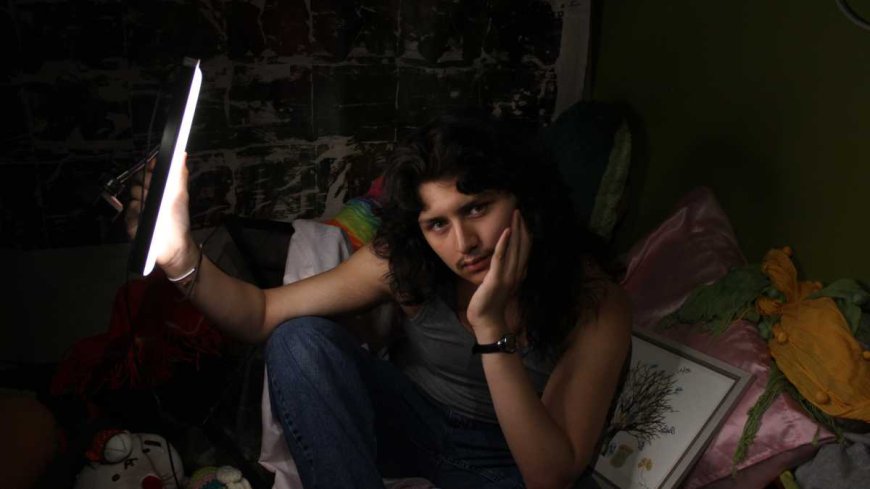
A 17-year-old Brooklyn artist is taking their face off the screen and onto New York City walls, using a citywide poster campaign to challenge ideas about fame, identity and human connection.
Ezra Blumenfeld’s high-fashion-style self-portrait, bearing the words “PUTTING MYSELF OUT THERE,” will soon appear at 80 to 100 locations across New York City, with a focus on Brooklyn, Manhattan and Queens. The Filipino Jewish American, trans and queer artist hopes the project will encourage New Yorkers to look beyond their screens and reconnect with the physical world.
The concept for Blumenfeld’s latest work was born during a walk through Boston. The artist, whose work has already been shown at the Metropolitan Museum of Art and the Brooklyn Museum, was inspired by a wall layered with peeling, weather-beaten and aging advertising posters. They were captivated by this analog form of advertising in the digital age and thought, "I wish I were famous enough to be on one of those."
That thought evolved into a bigger question: What happens when New Yorkers encounter a stranger’s face on a wall instead of a screen, especially in an era when artists often seek recognition and fame through social media?
Blumenfeld feels recognition earned through physical presence and real connection is more meaningful than recognition through technology. By choosing paper on a wall over screens, the work asks New Yorkers to look up from their phones and face another human being in the physical world.
The title comes from advice nearly everyone has heard: If you want to get famous, find love or get anything at all, you have to put yourself out there.
“To have the experiences you want and to live the way you want, you have to put yourself out there. I always thought that was the stupidest thing ever," Blumenfeld explained." I was like, I'm always putting myself out there and doing things that I don't want to, and yet nothing's coming from it. But then, I feel like this project really quite literally spoke to that ... I want to use the phrase that I feel I hated for a while to remind not only myself but also other people that you can make it; you can do it. That's kind of the thesis of the project in its own sense.”
[caption id="attachment_250196" align="alignnone" width="476"] Ezra Blumenfeld’s “PUTTING MYSELF OUT THERE” campaign will bring the Brooklyn artist’s self-portrait to 80 to 100 locations across New York City.[/caption]
The project is an analog answer to the digital world and Blumenfeld’s “love letter” to wheat-pasting. Shot with a Pentax camera using Kodak Kodacolor 100 color-negative film to achieve a “painterly look,” the work aims to help people reconnect with the analog process, bringing back the tactile nature of art and promoting human-to-human interaction instead of human-to-screen-to-human interaction, Blumenfeld told Brooklyn Paper.
“As someone who really likes the medium of printmaking, [the project is] reminding people, ‘Oh, this is still here; this has lasted such a long time and has such a long legacy of advertisement,'" they said. [It’s] a reminder that we are in a material world, not in a consumerist way, but ... to remind them that we are physical beings, and that we exist in this world, and to remind people to be present."
Blumenfeld also hopes people see themselves in the portrait.
“I hope that people, when they see the art, like people with my own identity, they can kind of sense a similar identity from myself as someone with a mustache and a dress that doesn't look completely white, or maybe to some people I do look completely white, but that they feel like they see themselves, or like they're like, ‘Wow, artists can be up in these spaces too.”
Supported by the inaugural Robert S. Wennett and Mario Cader-Frech Foundation Award, a $25,000 artist grant presented through YoungArts, the project explores how fame, advertising and technology create an “ego-barrier” between people. The award supports artists working in design, film, photography or visual art whose work uplifts or embodies the LGBTQ+ community.
The image resembles an advertisement for a celebrity who doesn't exist, placing a trans and queer teenager of color at the center of a “celebrity” campaign. The goal is for viewers to encounter Ezra’s identity on Ezra’s terms, rather than through stereotypes or assumptions.
The campaign kicks off Oct. 18, when a professional poster company will install the images at legally permitted locations only. On Oct. 19, Blumenfeld and a team of seven LGBTQ+ and BIPOC teen photographers will begin documenting the community’s responses to the posters, whether they are tagged, torn down, reclaimed or ignored. The team hopes to capture the real-world encounters that follow when the public is given the opportunity to respond.
The documentation will be featured in a gallery exhibition in November or early spring 2027, showcasing Blumenfeld’s work alongside that of the photographers who documented the project. The photographers will receive a portion of the funding at professional rates.
For Blumenfeld, the project is more than a solo act of self-presentation. Collaborating with other emerging young queer artists will help shape how the work is perceived and remembered while building a community of young artists.
“For the future, we gotta make sure we're making bonds early on and create community while we can," they said. "Ultimately, I'm aiming to make a community out of my team of photographers by the end of this project, and foster that community, and possibly even after that, building on that community and just creating a wider net of young artists within New York City, and then hopefully everywhere."