
Federal appeals court says trans Arizonans can amend birth certificates without surgery
The San Francisco-based US Court of Appeals for the Ninth Circuit ruled on Oct. 6 in Roe v. Johnston that because Arizona’s statute governing amendments to birth certificates does not require a “sex change operation” as a prerequisite for getting an amended birth certificate, Senior US District Court Judge James A. Soto erred by awarding … Read More
 Mark
Mark
0
3
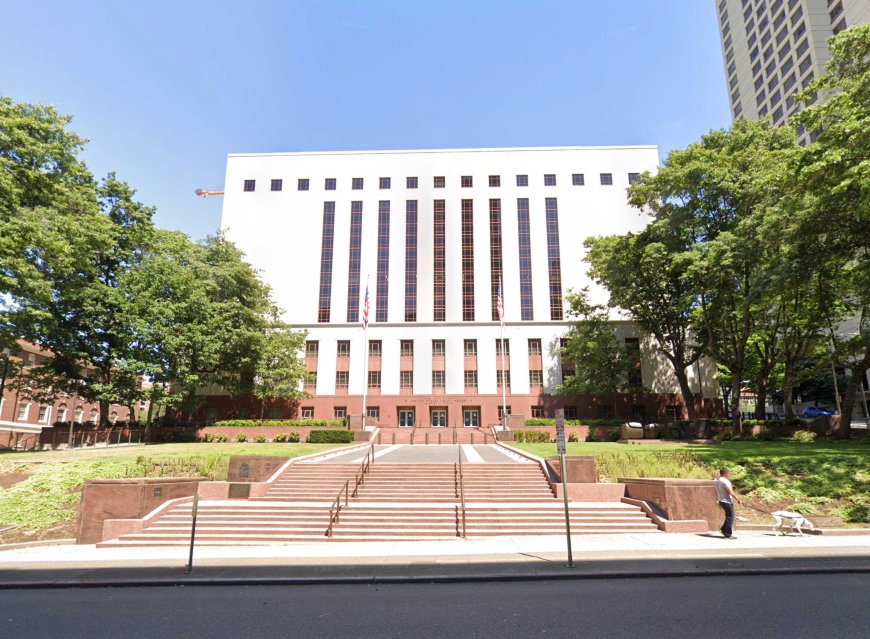
The San Francisco-based US Court of Appeals for the Ninth Circuit ruled on Oct. 6 in Roe v. Johnston that because Arizona’s statute governing amendments to birth certificates does not require a “sex change operation” as a prerequisite for getting an amended birth certificate, Senior US District Court Judge James A. Soto erred by awarding an injunction to transgender plaintiffs who had been unsuccessful in obtaining court orders from state judges to direct the Arizona Department of Health Services to provide them with amended birth certificates.
The Ninth Circuit panel found that its reading of the unambiguous language of the Arizona statute made clear that such amendments can be obtained without getting a “sex change operation,” and that Judge Soto and the state judges who had refused to issue court orders were mistaken in their interpretation. Based on its reading of the statute, the Ninth Circuit held that the Arizona provision challenged by the plaintiffs did not violate their constitutional rights to equal protection or due process.
Arizona has statutory provisions allowing for “corrections” and for “amendments” to birth certificates. “Corrections” are for taking care of typographical errors or incorrect information. “Amendments” are for circumstances where a birth certificate should have different information due to changed circumstances, and are numbered (A)(1), (A)(2), (A)(3), and (A)(4). The statute provides that the Health Department’s registrar “shall amend” a birth certificate when (1) an individual is adopted, (2) a man who is not listed on the birth certificate as the father voluntarily acknowledges his paternity, or (3) an individual has had a “sex change operation” that has been verified by a physician’s written statement and asks in writing to have the sex marker on their birth certificate changed. These amendments do not require a court order but go directly to the Health Department registrar.
(A)(4) says that the registrar shall amend a birth certificate when they receive a “court order ordering an amendment to a birth certificate.” This category does not state any conditions, additional requirements, or limitations, leaving it up to the trial judge to determine whether it is appropriate to order an amendment.
The reason that some of the plaintiffs were denied court orders was because some Arizona trial judges asserted that the Health Department would not change a sex marker on a birth certificate without a physician’s certification of a “sex change operation,” assuming that category (A)(3) was the only way to get such an amendment, and Judge Soto issued an injunction against such a requirement, specifying that the word “operation” should be removed from (A)(3), so transgender people could get amended birth certificates by providing a physician’s verification that they had transitioned. When the Health Department appealed, the Republican leaders of the state legislature intervened as co-appellants, arguing that (A)(3) was the only way to get an amended birth certificate.
But the Ninth Circuit opinion, written by Circuit Judge Roopali Desai, found that the clear language of (A)(3) only applied to situations where a sex change operation had been performed, but was not, on its face, the only way to get such an amendment. He characterized (A)(4) as a “catch-all” provision for all other requests of any nature to amend a birth certificate, including for transgender people who had transitioned without surgery.
Thus, the plaintiffs’ argument that the statute discriminated against them because they were transgender people who had not had a sex change operation was, in the opinion of the appellate court, incorrect, since they could apply to a state court for an order and there was nothing in the statute to say that they couldn’t use (A)(4) for that purpose. Judge Desai pointed out that the defendant in this case, the Health Department, agreed that if it received a court order to change the sex marker on a birth certificate, it would obey the court order.
Judge Desai rejected the plaintiffs’ argument that there was discrimination going on nonetheless, because getting a court order involved added expense and effort. The appellate court found that the legislature had a rational basis to provide that those who had a “sex change operation” could apply directly to the Health Department with their documentation, just as an application accompanied by an adoption decree or by documentation of a written voluntary acknowledgement of paternity could be presented directly to the Health Department without requiring further judicial involvement.
This did not rule out transgender people getting amended birth certificates by presenting their evidence concerning their gender transition to a state judge and getting a court order. Armed with this Ninth Circuit decision, which was grounded by that court’s reliance on an Arizona Court of Appeals decision that held that a lesbian couple could include both of their names on their child’s birth certificate under (A)(4), the transgender applicants would have a strong argument to present to doubtful state court judges.
Thus, the Ninth Circuit panel concluded that Judge Soto erred in finding that the “sex change operation requirement” rendered the statute unconstitutional, because the Ninth Circuit found that there was no such “requirement.” As a result, the court reversed Judge Soto’s preliminary injunction and sent the case back to the trial court for any “further proceedings.”
The plaintiffs were represented by lawyers from the National Center for Lesbian Rights, Cooley LLP (a national firm with lawyers from their New York and San Francisco offices), and local counsel Payslie Bowman of the law firm Osborn Maledon PA, Phoenix, Arizona. Among those filing amicus briefs on behalf of the plaintiffs were attorneys from GLBTQ Legal Advocates and Defenders, Boston, and Lamba Legal, and numerous attorney generals from states that do not require sex change operations in order to amend birth certificates.
All the federal judges involved in this case were appointed by Democratic presidents. Judge Soto was appointed by President Obama and Judge Desai was appointed by President Biden. Joining Judge Desai’s opinion was Senior Circuit Judge Andrew Hurwitz, who was appointed by President Obama. The third judge assigned to the panel, Senior Circuit Judge Susan Graber, had recused herself from participating in this case, so the panel proceeded to decide the case with their quorum of two judges. Judge Graber was appointed by President Clinton.
The intervenors from the legislature could ask for a larger panel review from the Ninth Circuit, or could ask the Supreme Court to intervene, but since the decision turns entirely on a question of state statutory interpretation, it seems unlikely that the Supreme Court would grant review.