These islands are a bucket-list trip to a stunning place you’ve never heard of
The Faroe Islands showcase some of the most stunning landscapes in the world, with a people who bring smiles to life.
 Mark
Mark
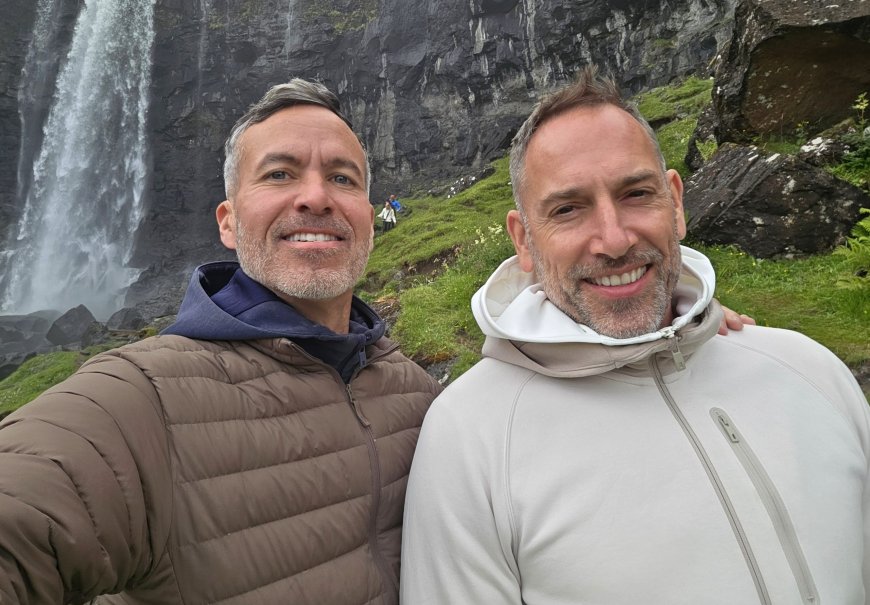

Smack dab between Scotland, Iceland and Norway are the Faroe Islands – the most beautiful place you’ve never heard of.
An archipelago rising out of the Northern Atlantic, the little-known country – a territory of Denmark – is part Middle Earth, part Jurassic Park.
At every turn are waterfalls, cliffs that meet the sea, volcanic rock formations that seem painted for a Steven Spielberg movie set, small villages right off of a postcard and a people full of life.
Before I go any further with this, there’s an element of visiting the Faroe Islands that is essential: respect.
Pack your bags, we’re going on an adventure
Subscribe to our weekly newsletter for the best LGBTQ+ travel guides, stories, and more.
Subscribe to our Newsletter today
Respecting the land, respecting the village residents, respecting the culture and, of course, respecting the sheep.
Related: The Amsterdam World Pride parade was another level on the ‘Gaywatch’ boat
The pristine condition of the islands is a massive selling point the people and the government have protected. As tourism increases – and it’s exploded in the last decade – it will be easy for the place to get lost in soda cans and candy wrappers.
If you take the journey to this magical place that seems to leap off the pages of a storybook, it’s essential you commit to impacting it in the least-possible way.
With that said, if you can commit to that, and if you have the resources… you gotta go.
It was one of the favorite trips of my life.
Related: The Amsterdam World Pride parade was another level on the ‘Gaywatch’ boat
Last month on our way to World Pride in Amsterdam, my husband and I were looking for a stop along the way. We’d seen photos of the Faroe Islands a decade ago, and visiting became a bucket-list item.

Arriving on July 27 – believe it or not, it was, unbeknownst to us, Gay Pride that day – we could not have anticipated the almost 72 hours that exceeded every expectation.
One of the remarkable aspects of the Faroe Islands is how untouched almost every corner of the country feels.
Powerlines are unground or hidden in the mountains. There’s only one bridge – Connecting the islands are tunnels, out of sight and unobtrusive.
In sight? The green. And the volcanic rocks. The waves and the grey sky wrapping around some of the most stunning landscapes anyone could ever lay their eyes on.

Also – the sheep. While New Zealand is known for its extraordinary number of sheep, they also outnumber the people in the Faroe Islands. Driving, hiking, strolling – The sheep are everywhere.
Driving out of Gjogv – one of the must-see villages located on the north side of the country – we met a ram unwilling to let us pass, challenging our Volkswagen to a battering contest that we ultimately avoided.
When and where they want, the sheep run the place.
While we didn’t travel there for Pride, the country’s annual celebration of the LGBTQ community happened when we arrived, on a Monday – it’s always July 27.

The country has only about 50k residents, so the local LGBTQ community plans the highest-profile Pride events on the day before the biggest two-day national holiday of the year: St. Olaf’s Day, honoring a sainted Norwegian king.
While the constant highlight of our trip was the topographical beauty – whether it was driving from the airport to the capital of Tórshavn or standing on the black beach of Saksun – the two-day celebration in the streets honoring St. Olaf made the evenings memorable.

Unforgettable was sitting on our window sill at Hotel Tórshavn listening to thousands of people sing together at midnight to celebrate their community and their country.
Another national-holiday highlight for us was one of the country’s best athletes – rowing champion and former handball star Bergur Leifsson Durhuus (below) – randomly sitting with us in a hotel lounge and showing off his medals. Rowing – particularly open-water – is the national sport of the country.
And by the way, July 29, 2029 will be the 1,000th anniversary of St. Olaf’s Day. If ever a time to head to the Faroe Islands, it could be this incredible holiday.
How often will you get the chance to experience the 1,000th anniversary of anything?

Some key stops in the Faroe Islands
We were there for less than 72 hours, so there are lots of experiences we simply didn’t have the time to visit.
One of the best aspects of visiting the Faroe Islands is how nearby everything is. Outside of ferries to the outer islands, the drive from one end of the country to the other is only about one and a half hours.
Along the way… every five minutes is something to stop, whip out your phone, and take some pictures.

Literally every five minutes is something else that’s just stunning.
If I could do the trip over, I’d spend five to seven days there. Two or three nights in the capital of Tórshavn, and then a couple of nights at one of the small villages, maybe Gjogv, where there is a guest house.
Regardless, Gjogv was one of the highlights for us.
We got to see some adorable puffins up close, as well as the blue ocean, mountains rising from the sea, an impressive gorge that gives the town its name, and we got to visit with the owner and operator of the local coffee house, who gave us a detailed explanation of how to pronounce the town’s name.

He also made us a waffle with rhubarb jam that hit the spot on yet another breezy afternoon.
Not far from Gjogv – again, nothing is too far – is the Fossa Waterfall, which was the most impressive of the probably 200 waterfalls we saw on our trip.
On the other side of the country, possibly the most stunning view we saw was of the village of Skarðsáfossur.
With a waterfall, mountains, puffins, horses and chickens, it felt like visiting the Shire. Locally sourced tea and preserves were on-hand, along with a small cafe. But, as mentioned above – Leave the residents alone.

No, their homes are not museums. No, you shouldn’t be staring into their windows. While the place feels like a national park, the people there are not part of a zoo.
The one spot I wish we had explored more was Saksun. Another black beach, more waterfalls. And yes, a grass-covered church.
Yet the church and the cemetery there are now off-limits to tourists. The sign outside the church explains that tourists have, unfortunately, disrespected the graves.

Respect. If people traveling the thousands of miles to the Faroe Islands can’t respect the people the land, over time it will lose what makes it one of the most special places you will ever see.
I’ll never forget our three days in the Faroe Islands. How often does a bucket-list item – something you’ve thought about for years – exceed expectations by a mile?
We’ll be back, hopefully for the 1,000th anniversary of the celebration of St. Olaf. Rose Nylund would be so proud.
Join the GayCities newsletter for weekly updates on the best LGBTQ+ destinations and events—nearby and around the world.