U.S. Open Pride was one big queer celebration, where tennis visibility was the star
Open Pride logos and rainbow colors appeared on screens across the tournament site and inside Arthur Ashe Stadium during Thursday's celebration.
 Mark
Mark

Open Pride felt especially important at the U.S. Open this year. In a political environment marked by attacks on the LGBTQ+ community, and as corporations and other sporting events have stepped away from Pride initiatives, the visibility at the U.S. Open felt meaningful.
From the moment fans arrived, Pride was hard to miss.
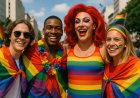
The New York City Queer Big Apple Corps Marching Band and Pride cheerleaders helped get the party started as fans stepped off the 7 train and made their way into the grounds. Throughout the day, the sounds of Madonna, Whitney Houston and other gay icons played across the tennis center, giving the event a distinctly queer soundtrack.
The setting itself carries plenty of LGBTQ+ history. The U.S. Open is played at the Billie Jean King National Tennis Center, named for one of tennis’s most influential figures and a trailblazer for LGBTQ+ rights. King, who helped create the WTA, has been an important figure in the sport’s history, and the WTA has a longstanding connection to the LGBTQ+ community among its players and fans. The USTA’s President is Brian Vahaly, a former professional player who is openly gay, married and father of two.
For the first time in history, men’s tennis has two out gay professional tennis players: Joao Lucas Reis da Silva and Mika Brunold are currently competing on the lower levels of the professional tour.
Get off the sidelines and into the game
Our weekly playbook is packed with everything from locker room chatter to pressing LGBTQ sports issues.
Subscribe to our Newsletter today
At this year’s Open, that history was reflected throughout the grounds.

Related
The top storylines for gay tennis fans as the U.S. Open begins its two weeks of drama
We break down five storylines every queer tennis fan needs to know about the steamy, drama-filled U.S. Open in New York City.
Open Pride logos and rainbow colors appeared on screens across the tournament site and inside Arthur Ashe Stadium, the largest tennis stadium in the world. Some ball kids wore rainbow wristbands.
The daily guide, distributed to thousands of fans each day, featured the Open Pride logo. At Louis Armstrong Stadium, Jordan Lucas, the prominent queer volleyball player who went viral after a commentator said he should be punched for his behavior, took part in the coin toss to kick off the day.
There was also a private “Out and Open” Pride brunch on site, bringing together prominent queer celebrities, athletes and Vahaly.
Perhaps fittingly, one of the WTA’s most prominent and longtime out lesbians, Demi Schuurs, celebrated the day with a win. Schuurs and her doubles partner, Ellen Perez, won their first-round match in straight sets.

As for the evening session, Pride colors flashed around Arthur Ashe stadium.
For all that visibility, however, there were some notable omissions. The U.S. Open’s social media profile typically changes to a Pride-themed logo for the occasion. That did not happen this year. And as of this writing, the U.S. Open’s Instagram account had only shared one Pride-related story, meaning the post would disappear after 24 hours.
That contrast is worth noticing. Pride was highly visible inside the tournament grounds, but the same level of visibility did not necessarily extend to the tournament’s social media presence where scrutiny was more likely.
Still, the overall feeling was celebratory. Fans were greeted by rainbow colors, queer performers and Pride-themed touches throughout the grounds, while LGBTQ+ players and supporters were part of the day’s story rather than an afterthought.
In 2026, that feels significant. At a time when LGBTQ+ visibility is increasingly contested — and when some major institutions have decided that Pride is easier to quietly step away from — the U.S. Open chose to put it on display.
For queer tennis fans, that’s something worth celebrating.
Subscribe to the Outsports newsletter to keep up with your favorite out athletes, inspiring LGBTQ sports stories, and more.