
California Trans Athlete AB Hernandez Says CIF Podium Rule ‘Crushed’ Her
AB Hernandez says California’s controversial track policy left her feeling singled out again.
 Mark
Mark
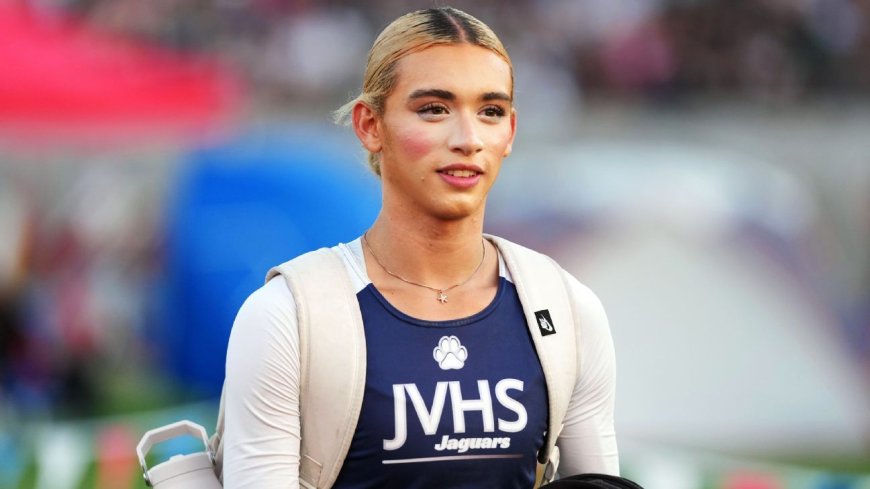
As California’s high school track and field championships kick off this weekend, one student-athlete is once again carrying the weight of a national political debate she never asked to lead.
AB Hernandez, a transgender senior at Jurupa Valley High School, is returning to the CIF State Track and Field Championships under a policy that continues to single her out every time she competes, and especially if she wins.
The California Interscholastic Federation’s controversial “pilot entry process” was introduced ahead of the 2025 championships after mounting political backlash surrounding Hernandez’s success in girls’ track events. The rule allows additional cisgender athletes to advance or receive medals in competitions where Hernandez places ahead of them.
In practice, that has created surreal podium moments. Last year, Hernandez out-jumped the rest of the field by nearly two feet in the triple jump but still shared the top podium spot with another athlete.
Now, the policy is back for another season.
According to Hernandez’s mother, Nereyda Hernandez, the family believed the arrangement would only apply during last year’s state finals. Learning it would continue through the qualifying rounds this year hit hard.
“They had only mentioned it was going to be for the [2025] championships,” Nereyda Hernandez told KQED. “We didn’t think we’d have to deal with it again.”
She added that the decision “crushed AB’s heart.” A Rule That Keeps The Spotlight On One Teenager
Hernandez has become one of the most visible transgender high school athletes in the country, though much of that visibility has come from adults arguing over her existence instead of her athletic performance.
The CIF has maintained that Hernandez is eligible to compete under California law and federation policy. Yet critics say the organization undermined its own stance by creating a separate framework around her participation rather than defending its rules outright.
Instead of quieting the outrage, the compromise appears to have amplified it.
Conservative commentators and anti-trans activists have repeatedly targeted Hernandez online and at competitions. Meanwhile, LGBTQ+ advocates argue the CIF’s policy effectively marks her as different from every other athlete on the field.
The issue isn’t whether Hernandez is allowed to compete. She is. The debate now centers on whether she’s being treated equally while doing so.
For many observers, the answer is no. The Bigger Question Facing High School Sports
The controversy surrounding Hernandez has exposed how quickly youth athletics can become a political battleground.
At an age when most seniors are focused on graduation parties, prom photos and college plans, Hernandez has spent her final high school season navigating national headlines and public scrutiny.
Despite the attention, she has continued to compete at an elite level.
Supporters point out that no other athlete in California is required to share podium placements after winning an event. Hernandez’s results are recorded officially, but the added medals and duplicated placements create a separate standard that applies only to her.
Critics of the policy say that distinction sends a message whether intended or not: that transgender athletes can participate, but only under modified conditions.
The long-term future of the CIF’s policy remains unclear, though many expect it to stay in place after Hernandez graduates. That possibility has raised concern among advocates who fear future transgender athletes could face similar treatment.
The conversation has also grown beyond high school sports. Both the NCAA and NAIA have implemented policies restricting transgender women from competing in women’s collegiate athletics, limiting opportunities for athletes like Hernandez after graduation. Trying To Finish Senior Year In Peace
Lost underneath the political rhetoric is the reality that Hernandez is still a teenager finishing her senior year.
Friends, classes and state titles should be the center of the story. Instead, every jump, medal and podium appearance has become symbolic to people who have never met her.
Even many who disagree about transgender participation in sports have questioned whether a single student should bear this level of public pressure.
Through it all, Hernandez has largely remained composed while adults around her escalate the debate.
This weekend, she’ll return to the track once more, likely under intense scrutiny, likely with cameras nearby and likely aware that her performance will again spark conversation far beyond the stadium.
But for supporters, the hope extends past medals or championships.
They want a future where transgender student-athletes can compete without becoming national talking points. A future where teenagers are allowed to simply play sports, celebrate wins and move through high school without policies designed around their identity.
For now, Hernandez is still competing in the middle of the storm.