Q&A with gay director Todd Stephens on director’s cut of ‘Gypsy 83’
Out gay writer/director Todd Stephens’ 2001 film, “Gypsy 83,” which has a loyal cult following, is now being re-released in a director’s cut. This new version, which adds 44 minutes of footage, expands on the backstory of the characters, adding more depth and shading to this poignant coming-of-age/getting of wisdom. The film has the Stevie … Read More
 Mark
Mark
0
24
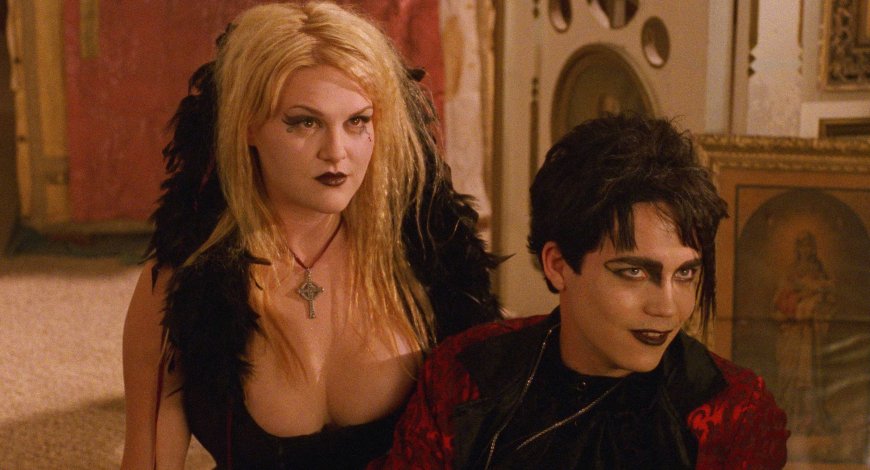
Out gay writer/director Todd Stephens’ 2001 film, “Gypsy 83,” which has a loyal cult following, is now being re-released in a director’s cut. This new version, which adds 44 minutes of footage, expands on the backstory of the characters, adding more depth and shading to this poignant coming-of-age/getting of wisdom.
The film has the Stevie Nicks-obsessed Clive (Birkett Turton) and his best friend Gypsy (Sara Rue), escaping Sandusky, Ohio to attend a “Night of 1,000 Stevies” concert event in New York City. On their journey, Clive and Gypsy encounter Bambi Le Bleau (a terrific Karen Black), an “International Recording Artist and Karaoke Hostess Extraordinaire,” Zachariah (Anson Scoville), a studly Amish guy, and a frat boy (Paulo Costanzo) who secretly catches the eye of Clive, away from the judgment of his college buddies. By the time Clive and Gypsy arrive in New York, they are a bit more jaded, a bit more self-aware, and forced to confront some harsh truths.
Stephens spoke with Gay City News about his fabulous new version of this 25-year-old film.
[caption id="attachment_64641" align="aligncenter" width="466"] Todd Stephens.Phil Smrek[/caption]
What prompted the director’s cut version, and what does it mean to restore “Gypsy 83?”
Back in the early 2000s, everyone said we wouldn’t be able to sell the film if it was over 90 minutes. Our first [edit] was 2 hours and 40 minutes. We were rushing towards a deadline and did not have the proper time to edit it fully. The machete came out, and we had to cut some of our favorite scenes, like Clive at the railroad tracks talking about his brother. It wasn’t long after I locked the picture that I knew I fucked up. For decades, I intended to go back and make It right. I am grateful Altered Innocence [the film’s distributor] supported the restoration. It is finally the movie I wanted it to be.
The film is very much about the characters, both lead and supporting, having dreams. Some are realized, some are stalled, some are crushed, and some are dangerous. Do you want your film to inspire or be a reality check? It kind of does both.
It is about dreams. I know a lot of talented people that I grew up with that didn’t “go for it,” or something held them back. I see that with Karen Black’s character, Bambi — a brilliant person, but there is damage in her way. The same with Gypsy’s dad [John Doe]. A lot of people have broken dreams. Gypsy says to Bambi, “The dream never dies, does it?” For me, the dream never did die. I tried to direct “Edge of Seventeen,” so a lot of this broken dream stuff was commenting on that experience. [Stephens penned the autobiographical “Edge of Seventeen,” but stepped down after directing 25% of the film. The direction was completed by David Moreton.]
How did you lean into and away from the coming-of-age tropes in “Gypsy 83”?
The coming-of-age thing, in both “Edge” and “Gypsy,” come from an autobiographical place being a queer man writing about relationships with their best friend who is a woman. Kind of like a love relationship — not romantic love, but an intimate relationship, where you cuddle when you sleep. They are your “ride or die” and “got your back.” That is the part of the coming-of-age experience I find truthful and tried to lean into. It’s not a bromance, but maybe a twisted bromance.
A straight bromance! There is a real sense of Gypsy and Clive being outsiders — even when they find their people. What can you say about their resilience? They, like all the other characters, seek a sense of belonging after being abandoned.
A lot of it comes from my own mommy issues that I realize are in a lot of my movies. My mom is amazing and supportive now, but when I was coming out, she went from being the most trusted person in my life to saying I was going to hell. That sense of being abandoned or rejected informs so much of my films — even “Swan Song” with Mr. Pat (Udo Kier) and Linda Evans’ character.
A lot of it is about finding chosen family with new friends. Clive and Gypsy are very “me and you against the world.” Luckily, they found each other to weather the storms of all the abandonment they have. They go to New York and think it’s going to be perfect, but it doesn’t always work out that way. I remember, in Sandusky, I went to a queer bar where everyone got along. It was men and queer women and trans and old and young and Black and white. Right after I moved to New York, I took some female friends to Uncle Charlie’s, and they got kicked out — some sick queen did not want any women in the club. That informed that scene in the club in New York in “Gypsy 83.”
What decisions did you make with the characters Gypsy and Clive encounter on the road?
Karen Black was someone I dreamt about working with since I was born. When Karen agreed to do the movie, she requested I write more scenes to flesh out her part. I did that, and we filmed them, and we cut them out. I’ll never forget telling her. I like that the Bambi character is less episodic in the director’s cut. She may remind Gypsy of her mother and this lost soul, broken dream kind of person. Gypsy does try to reconnect with Bambi. And Bambi comes back into the story in the director’s cut. I was able to honor Karen Black and put the film in the way she envisioned her character.
With Zachariah, like Clive and Gypsy, there is this conversation about home versus a dream. Home has some good stuff in it, like Gypsy’s dad hanging out in the music shop eating donuts. There is comfort and safety and family. But sometimes that is just not enough. For Zachariah, home may not be enough. He was a blank slate looking for something he wasn’t getting at home.
Can you talk about the music in the film? There are more tunes by The Cure than Stevie Nicks, Grandmother of Goth that she is.
I always meant the film to be a love letter to Stevie. I don’t know if she even knows about the movie or was even asked. Her manager decided back in the day not to let us use any of Stevie’s music, which was heartbreaking. When we did the director’s cut, I reapproached her and, unfortunately, she had the same answer. I don’t know and will never understand why. I would like to know if Stevie has seen the film. It was meant with such love and reverence. I was, and remain, a huge fan of Stevie Nicks. It was stupid to make a movie about a character obsessed with Stevie Nicks without the rights to the music. That’s a learned lesson. I thought it was all going to work out. We shot Sara Rue signing “Gypsy,” but when the rights didn’t clear, we came up with another ending where she is finding her own voice and we reshot it. I think it was a better ending and a better arc for the character, so sometimes things work out for the best.
Last question, do you have stars in your eyes, or a wild heart?
Oh. Oh! I think I have a wild heart. Yeah, I have a wild heart.
“Gypsy 83: The Director’s Cut” | Directed by Todd Stephens | Opening August 14 at the Quad Cinema | Distributed by Altered Innocence
Todd Stephens.Phil Smrek[/caption]
What prompted the director’s cut version, and what does it mean to restore “Gypsy 83?”
Back in the early 2000s, everyone said we wouldn’t be able to sell the film if it was over 90 minutes. Our first [edit] was 2 hours and 40 minutes. We were rushing towards a deadline and did not have the proper time to edit it fully. The machete came out, and we had to cut some of our favorite scenes, like Clive at the railroad tracks talking about his brother. It wasn’t long after I locked the picture that I knew I fucked up. For decades, I intended to go back and make It right. I am grateful Altered Innocence [the film’s distributor] supported the restoration. It is finally the movie I wanted it to be.
The film is very much about the characters, both lead and supporting, having dreams. Some are realized, some are stalled, some are crushed, and some are dangerous. Do you want your film to inspire or be a reality check? It kind of does both.
It is about dreams. I know a lot of talented people that I grew up with that didn’t “go for it,” or something held them back. I see that with Karen Black’s character, Bambi — a brilliant person, but there is damage in her way. The same with Gypsy’s dad [John Doe]. A lot of people have broken dreams. Gypsy says to Bambi, “The dream never dies, does it?” For me, the dream never did die. I tried to direct “Edge of Seventeen,” so a lot of this broken dream stuff was commenting on that experience. [Stephens penned the autobiographical “Edge of Seventeen,” but stepped down after directing 25% of the film. The direction was completed by David Moreton.]
How did you lean into and away from the coming-of-age tropes in “Gypsy 83”?
The coming-of-age thing, in both “Edge” and “Gypsy,” come from an autobiographical place being a queer man writing about relationships with their best friend who is a woman. Kind of like a love relationship — not romantic love, but an intimate relationship, where you cuddle when you sleep. They are your “ride or die” and “got your back.” That is the part of the coming-of-age experience I find truthful and tried to lean into. It’s not a bromance, but maybe a twisted bromance.
A straight bromance! There is a real sense of Gypsy and Clive being outsiders — even when they find their people. What can you say about their resilience? They, like all the other characters, seek a sense of belonging after being abandoned.
A lot of it comes from my own mommy issues that I realize are in a lot of my movies. My mom is amazing and supportive now, but when I was coming out, she went from being the most trusted person in my life to saying I was going to hell. That sense of being abandoned or rejected informs so much of my films — even “Swan Song” with Mr. Pat (Udo Kier) and Linda Evans’ character.
A lot of it is about finding chosen family with new friends. Clive and Gypsy are very “me and you against the world.” Luckily, they found each other to weather the storms of all the abandonment they have. They go to New York and think it’s going to be perfect, but it doesn’t always work out that way. I remember, in Sandusky, I went to a queer bar where everyone got along. It was men and queer women and trans and old and young and Black and white. Right after I moved to New York, I took some female friends to Uncle Charlie’s, and they got kicked out — some sick queen did not want any women in the club. That informed that scene in the club in New York in “Gypsy 83.”
What decisions did you make with the characters Gypsy and Clive encounter on the road?
Karen Black was someone I dreamt about working with since I was born. When Karen agreed to do the movie, she requested I write more scenes to flesh out her part. I did that, and we filmed them, and we cut them out. I’ll never forget telling her. I like that the Bambi character is less episodic in the director’s cut. She may remind Gypsy of her mother and this lost soul, broken dream kind of person. Gypsy does try to reconnect with Bambi. And Bambi comes back into the story in the director’s cut. I was able to honor Karen Black and put the film in the way she envisioned her character.
With Zachariah, like Clive and Gypsy, there is this conversation about home versus a dream. Home has some good stuff in it, like Gypsy’s dad hanging out in the music shop eating donuts. There is comfort and safety and family. But sometimes that is just not enough. For Zachariah, home may not be enough. He was a blank slate looking for something he wasn’t getting at home.
Can you talk about the music in the film? There are more tunes by The Cure than Stevie Nicks, Grandmother of Goth that she is.
I always meant the film to be a love letter to Stevie. I don’t know if she even knows about the movie or was even asked. Her manager decided back in the day not to let us use any of Stevie’s music, which was heartbreaking. When we did the director’s cut, I reapproached her and, unfortunately, she had the same answer. I don’t know and will never understand why. I would like to know if Stevie has seen the film. It was meant with such love and reverence. I was, and remain, a huge fan of Stevie Nicks. It was stupid to make a movie about a character obsessed with Stevie Nicks without the rights to the music. That’s a learned lesson. I thought it was all going to work out. We shot Sara Rue signing “Gypsy,” but when the rights didn’t clear, we came up with another ending where she is finding her own voice and we reshot it. I think it was a better ending and a better arc for the character, so sometimes things work out for the best.
Last question, do you have stars in your eyes, or a wild heart?
Oh. Oh! I think I have a wild heart. Yeah, I have a wild heart.
“Gypsy 83: The Director’s Cut” | Directed by Todd Stephens | Opening August 14 at the Quad Cinema | Distributed by Altered Innocence
Todd Stephens.Phil Smrek[/caption]
What prompted the director’s cut version, and what does it mean to restore “Gypsy 83?”
Back in the early 2000s, everyone said we wouldn’t be able to sell the film if it was over 90 minutes. Our first [edit] was 2 hours and 40 minutes. We were rushing towards a deadline and did not have the proper time to edit it fully. The machete came out, and we had to cut some of our favorite scenes, like Clive at the railroad tracks talking about his brother. It wasn’t long after I locked the picture that I knew I fucked up. For decades, I intended to go back and make It right. I am grateful Altered Innocence [the film’s distributor] supported the restoration. It is finally the movie I wanted it to be.
The film is very much about the characters, both lead and supporting, having dreams. Some are realized, some are stalled, some are crushed, and some are dangerous. Do you want your film to inspire or be a reality check? It kind of does both.
It is about dreams. I know a lot of talented people that I grew up with that didn’t “go for it,” or something held them back. I see that with Karen Black’s character, Bambi — a brilliant person, but there is damage in her way. The same with Gypsy’s dad [John Doe]. A lot of people have broken dreams. Gypsy says to Bambi, “The dream never dies, does it?” For me, the dream never did die. I tried to direct “Edge of Seventeen,” so a lot of this broken dream stuff was commenting on that experience. [Stephens penned the autobiographical “Edge of Seventeen,” but stepped down after directing 25% of the film. The direction was completed by David Moreton.]
How did you lean into and away from the coming-of-age tropes in “Gypsy 83”?
The coming-of-age thing, in both “Edge” and “Gypsy,” come from an autobiographical place being a queer man writing about relationships with their best friend who is a woman. Kind of like a love relationship — not romantic love, but an intimate relationship, where you cuddle when you sleep. They are your “ride or die” and “got your back.” That is the part of the coming-of-age experience I find truthful and tried to lean into. It’s not a bromance, but maybe a twisted bromance.
A straight bromance! There is a real sense of Gypsy and Clive being outsiders — even when they find their people. What can you say about their resilience? They, like all the other characters, seek a sense of belonging after being abandoned.
A lot of it comes from my own mommy issues that I realize are in a lot of my movies. My mom is amazing and supportive now, but when I was coming out, she went from being the most trusted person in my life to saying I was going to hell. That sense of being abandoned or rejected informs so much of my films — even “Swan Song” with Mr. Pat (Udo Kier) and Linda Evans’ character.
A lot of it is about finding chosen family with new friends. Clive and Gypsy are very “me and you against the world.” Luckily, they found each other to weather the storms of all the abandonment they have. They go to New York and think it’s going to be perfect, but it doesn’t always work out that way. I remember, in Sandusky, I went to a queer bar where everyone got along. It was men and queer women and trans and old and young and Black and white. Right after I moved to New York, I took some female friends to Uncle Charlie’s, and they got kicked out — some sick queen did not want any women in the club. That informed that scene in the club in New York in “Gypsy 83.”
What decisions did you make with the characters Gypsy and Clive encounter on the road?
Karen Black was someone I dreamt about working with since I was born. When Karen agreed to do the movie, she requested I write more scenes to flesh out her part. I did that, and we filmed them, and we cut them out. I’ll never forget telling her. I like that the Bambi character is less episodic in the director’s cut. She may remind Gypsy of her mother and this lost soul, broken dream kind of person. Gypsy does try to reconnect with Bambi. And Bambi comes back into the story in the director’s cut. I was able to honor Karen Black and put the film in the way she envisioned her character.
With Zachariah, like Clive and Gypsy, there is this conversation about home versus a dream. Home has some good stuff in it, like Gypsy’s dad hanging out in the music shop eating donuts. There is comfort and safety and family. But sometimes that is just not enough. For Zachariah, home may not be enough. He was a blank slate looking for something he wasn’t getting at home.
Can you talk about the music in the film? There are more tunes by The Cure than Stevie Nicks, Grandmother of Goth that she is.
I always meant the film to be a love letter to Stevie. I don’t know if she even knows about the movie or was even asked. Her manager decided back in the day not to let us use any of Stevie’s music, which was heartbreaking. When we did the director’s cut, I reapproached her and, unfortunately, she had the same answer. I don’t know and will never understand why. I would like to know if Stevie has seen the film. It was meant with such love and reverence. I was, and remain, a huge fan of Stevie Nicks. It was stupid to make a movie about a character obsessed with Stevie Nicks without the rights to the music. That’s a learned lesson. I thought it was all going to work out. We shot Sara Rue signing “Gypsy,” but when the rights didn’t clear, we came up with another ending where she is finding her own voice and we reshot it. I think it was a better ending and a better arc for the character, so sometimes things work out for the best.
Last question, do you have stars in your eyes, or a wild heart?
Oh. Oh! I think I have a wild heart. Yeah, I have a wild heart.
“Gypsy 83: The Director’s Cut” | Directed by Todd Stephens | Opening August 14 at the Quad Cinema | Distributed by Altered Innocence