Federal appeals court approves Florida’s statue banning minors from drag shows
By an 8-5 vote, the full bench (plus one) of the U.S. 11th Circuit Court of Appeals reversed a Florida federal district court judge’s preliminary injunction against the enforcement of a 2023 Florida statute that was intended by the governor and legislative leaders to put an end to minors attending drag shows. The 12 active … Read More
 Mark
Mark
0
38
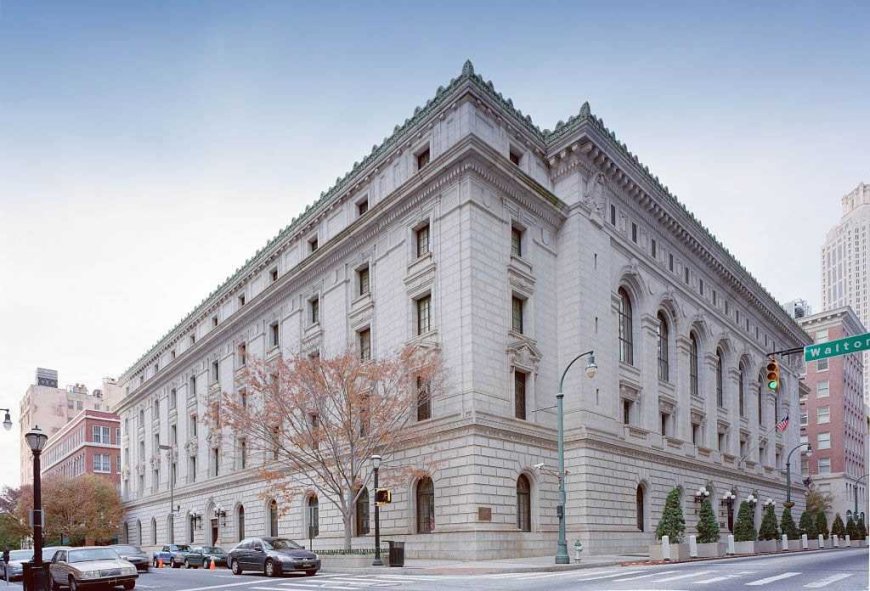
By an 8-5 vote, the full bench (plus one) of the U.S. 11th Circuit Court of Appeals reversed a Florida federal district court judge’s preliminary injunction against the enforcement of a 2023 Florida statute that was intended by the governor and legislative leaders to put an end to minors attending drag shows. The 12 active judges of the circuit court were joined by a senior judge who asked to participate and voted with the majority. The vote was a clear political spit, with eight Republican appointees in the majority and five Democratic appointees dissenting.
The lawsuit was brought by HM Florida-ORL, LLC, a corporation that owns Hamburger Mary’s (HM), a restaurant that presents drag show entertainment. Although most of their productions were presented as adult entertainment, they also presented drag shows intended for family attendance at which they specifically encouraged parents to bring their children. Drag specifically presented to children was the kind of activity that predictably drew the outrage of conservative Republicans, who dominate Florida state politics. Even though there was already a statute on the books placing restrictions on sexually explicit entertainment presented to children, the legislature got caught up in the moral panic generated by conservative media that swept the nation at that time and caused the passage of numerous state laws intended to restrict drag.
What made the Florida law so draconian was that the penalty for letting minors (persons under 18) attend an “adult live performance” as defined in the statute was severe: potential jail time for the owner, as well as a stiff fine and possible loss of their license to do business. To make things worse, the statute’s definition of an “adult live performance” was at once verbose and yet vague enough that potential drag show presenters would have to guess at whether their presentations would come within the statute’s prohibitions.
Hamburger Mary’s was not specifically threatened with enforcement action but reacted to passage of the law by restricting attendance to all their drag shows to adults, thus incurring a 20% drop-off in attendance, because their family drag shows had been popular. The stiff penalty for violating the law alarmed HM’s owners. They were not taking any chances that an overzealous local prosecutor might try to shut them down amid the “moral panic” about drag.
Their lawsuit was assigned to Senior District Judge Gregory Presnell, a Clinton appointee, who agreed with HM’s contention that the law was likely to be found unconstitutional, and granted them a preliminary injunction to block enforcement while the case was pending. Presnell’s injunction was a “universal injunction” barring enforcement against anyone, not just HM. A three-judge 11th Circuit panel responded to the state’s appeal by narrowing the injunction so it would shelter only HM while the case was pending, but the state obtained “en banc” review, with the resulting opinion issued on Aug. 4.
Writing for the majority, Trump appointee Andrew Brasher first explained the court’s view that a universal injunction was inappropriate for this case, especially because of the Supreme Court’s decision last year in Trump v. CASA, Inc, which sharply restricted the ability of federal trial judges to award “universal preliminary injunctions” against the government while cases challenging government actions were pending. The Supreme Court held in the CASA case that normally only the plaintiff would be entitled to interim relief while a case is pending.
After getting this issue out of the way, the court ruled that even HM as plaintiff should not have been awarded an injunction because, under the court’s view of the statutory language, HM was unlikely to win its argument that the law was unconstitutional. Two members of the majority wrote separately to point out that it was not necessary for the court to address the issue of “universal injunctions” because once it found that HM was likely to lose on the merits, there would be no need to provide any injunctive relief.
Florida’s Protection of Children Act never mentions drag explicitly, instead using the term “adult live performance,” which it defines as a live show that “depicts or simulates nudity, sexual conduct, sexual excitement, or specific sexual activities,” as well as “lewd conduct” or the “lewd exposure of prosthetic or imitation genitals or breasts.” The definition goes on to incorporate the elements specified by the Supreme Court for determining whether something is “obscene,” but modified to focus on whether the performance was “suitable material or conduct for the age of the child present.”
Since HM’s drag shows for family attendance did not involve any of the sexual aspects singled out by the statute, the legal argument focused on whether the word “lewd” in combination with the “age of the child present” factor rendered the statute sufficiently vague or ambiguous that an ordinary person could not reasonably predict whether a particular production, such as HM’s family drag shows, was constitutionally protected under First Amendment freedom of speech or fell within the parameters of “lewdness” regarding some children who might be attending. The idea of a standard depending on the age of the children attending also drew fire on the ground that it resulted in a sliding or shifting standard forcing people to guess at whether a particular show ran afoul of the statute.
The majority rejected this argument, claiming that past court decisions, including a Florida Supreme Court decision defining “lewd” and “lewdness,” eliminated any vagueness, and defending the right of the state to protect “children” by modifying the obscenity formulation of the Supreme Court. The majority of the court stated that juries or judges could make a decision about whether particular material was appropriate to show to children.
Writing a dissenting opinion joined by all five Democratic appointees, Circuit Judge Robin Rosenbaum ridiculed the law, asserting, “Today our Court embraces mess-around-and-find-out (MAFO) jurisprudence. Under this form of jurisprudence, a citizen can learn whether a law prohibits their speech only by taking a wild guess, presenting their speech, and then seeing if they get arrested and face imprisonment, thousands of dollars in fines, and loss of their business license.” Numerous court opinions have held that drag shows are not necessarily obscene, and many courts have granted injunctions against anti-drag laws by finding that they enjoy free speech protection.
In a separate dissenting opinion, Circuit Judge Nancy Abudu argued that the court had failed to take adequate account of the legislative history of this statute and the context in which it was enacted. Instead of focusing on the specific language of the statute, which could produce the kind of rationalizations offered by Brasher’s opinion, she pointed to Governor DeSantis’s signing message and statements by a leading legislative sponsor, suggesting that the motivation behind the law was to get rid of drag story hours and other presentations that were not sexually explicit or likely to corrupt or shock young minds, but that the legislators considered to be “lewd.”
The heavily split en banc court sets up the possibility that the U.S. Supreme Court might take this case if HM wants to push the issue to a national level by filing a petition for review. HM is represented by Adam W. Hanson of Apollo Law LLC, Minneapolis, Gary Steven Israel of Orlando, and Melissa Stewart of Berwyn, Pennsylvania. The ACLU is actively involved as amicus in the case. Florida’s Attorney General’s office is defending the statute for the state.