DignityUSA’s Marianne Duddy-Burke, longtime LGBTQ Catholic leader, to retire
Marianne Duddy-Burke, who has spent more than four decades advocating on behalf of LGBTQ Catholics in multiple leadership roles at DignityUSA, announced she plans to retire from her post as executive director once the organization hires a successor. “This has been a while in coming,” Duddy-Burke said in an interview with Gay City News on … Read More
 Mark
Mark
0
27
Marianne Duddy-Burke, who has spent more than four decades advocating on behalf of LGBTQ Catholics in multiple leadership roles at DignityUSA, announced she plans to retire from her post as executive director once the organization hires a successor.
“This has been a while in coming,” Duddy-Burke said in an interview with Gay City News on Sept. 18, one day after publicly announcing her forthcoming departure from the national organization. “We’re constantly scanning the environment in which DignityUSA operates, our chapters, our members, and what we are facing, and I have believed for a long time that the changes in the queer community — in religious affiliation, in the Catholic Church — call for a different generation of leadership.”
Duddy-Burke, a married lesbian with adopted children, one of whom is trans, has steered DignityUSA through some of the most critical moments in recent history for LGBTQ Catholics, often serving as the top spokesperson for the organization in commenting on major developments tied to LGBTQ people and the church.
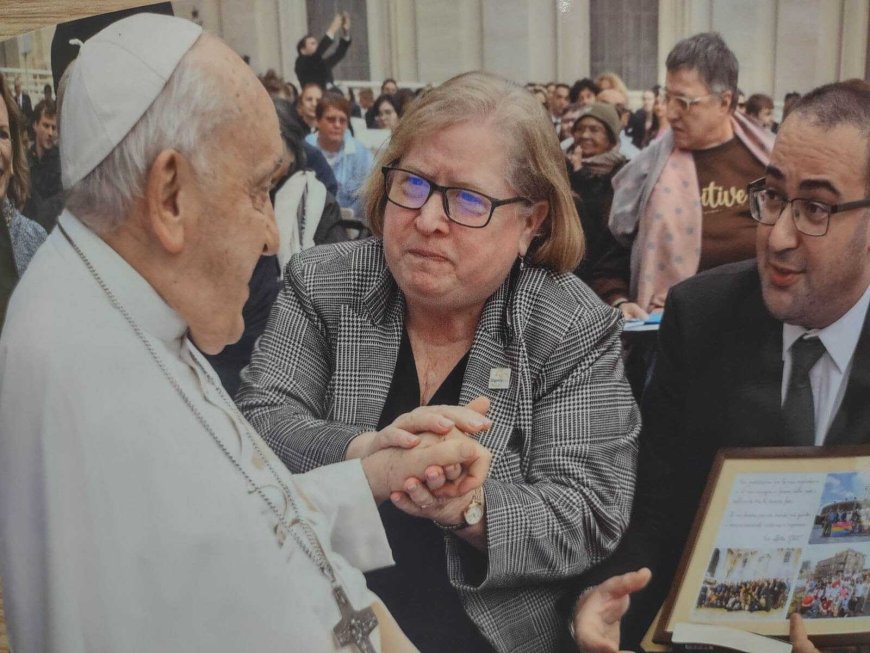
The organization has often criticized the Catholic Church’s policies and its treatment of the LGBTQ community — the Catholic Church still maintains the position that “homosexual acts are intrinsically disordered” — but Duddy-Burke also found ways over the years to engage with church leadership where possible in an effort to improve the landscape for queer people. One of the most memorable moments of her tenure came in 2023 when she was part of a group of LGBTQ Catholics who met Pope Francis.
“The day I got to sit down with Pope Francis and the Vatican, and to take a picture, gave so much hope to queer people around the world,” she said, noting that the church knew “that I was from Dignity and knew I was a married lesbian Catholic, with adopted kids, one of whom is trans.”
“Being able to speak with him as another member of the church and remind him of our responsibility for the lives of our people was an unimaginable moment that came from decades of advocacy by so many people,” Duddy-Burke recalled.
[caption id="attachment_45690" align="aligncenter" width="700"] DignityUSA's executive director, Marianne Duddy-Burke, and board president Meli Barber, at Dignity's 50th anniversary event in 2022.Donna Aceto[/caption]
From 1993 to 1997, Duddy-Burke was the first woman to be elected president of DignityUSA, and before that she worked in different leadership capacities within the organization, including as vice president, as a member of the board of directors, as director of the New England region, as president of the Boston chapter, and as a member of the national coordinating team for the Committee for Women's Concerns.
“When I first started with Dignity and national leadership, we were still in an era when the names of people arrested in gay bars were published in newspapers and teachers would lose their jobs and parents would lose their access to their children,” Duddy-Burke said. “And many gay and lesbian people were in opposite-sex marriages either because they didn't know they were gay at the time because there just wasn't the visibility of the community that we have now, or they were afraid of the legal ramifications or the ability to get employment.”
“We are in such a different culture now than when I got started in this movement,” Duddy-Burke added.
One of the most pivotal moments of Duddy-Burke’s tenure was during the HIV/AIDS crisis, she recalled, describing it as a “long painful moment.” She said the crisis represented the collective failure of multiple institutions, including in the government, religion, and culture.
Duddy-Burke remembers DignityUSA's work in stepping up to make sure people had access to care and treatment and to work with family members. On many occasions, she said she would sit with family members who learned their kids were gay and dying — all in the same sentence.
"It's almost unimaginable," she said. "The advocacy and the care that was provided is something I am really proud of."
On a broader level, Duddy-Burke is thankful that DignityUSA has helped foster awareness about LGBTQ Catholics, and, in turn, showed others that queer people could be just as dedicated to their faith as anyone else.
Duddy-Burke and other Catholic leaders had expressed a sense of cautious optimism when Pope Leo rose to power early last year, though they were also concerned about some comments he made in 2012 when he criticized the west for fostering “sympathy for beliefs and practices that are at odds with the gospel,” pointing to the “homosexual lifestyle” and “alternative families comprised of same-sex partners and their adopted children.”
Duddy-Burke, when asked about how she feels about Pope Leo now, said he “seems to be taking a broadly Catholic social justice agenda.”
“And I think that that is necessary in this world we are living in, and I think it is our job as queer activists, family members, people of faith, and people who want our church to be as good as it can be to remind [the pope] that nobody is less than anybody else,” she siad. “You can’t put aside the injustices that remain being done against queer people while we are working toward peace and a lack of exploitation."
Meli Barber, president of DignityUSA, heaped praise on Duddy-Burke in a statement about her retirement.
“It is almost impossible to sum up the scope and depth of Marianne’s achievements and contributions to DignityUSA over her more than four decades of service," Barber said. "Under her wisdom and leadership, DignityUSA has only grown in stature as an advocate for LGBTQIA+ Catholics and as a visionary thought leader for LGBTQIA+ ministry and spirituality. Marianne has been more than an extremely able executive director. Her care for and ministry to chapters, her deep personal relationships with countless Dignity members, her connections to LGBTQIA+ Catholics around the world, the relationships she has built with other progressive Catholic organizations, her skill as a public representative, the respect with which she is universally regarded, and her tireless devotion to service all leave an indelible mark. It is not an exaggeration to say that she has shaped not only Dignity but a generation of LGBTQIA+ Catholics.”
Duddy-Burke plans to assist in the process of onboarding a new executive director for DignityUSA, and she will formally leave her role following the transition.
“I don’t know what the timeline is,” Duddy-Burke said. “I still plan to work for several more years, but I don’t know in what capacity. I would love to get a book contract and write a memoir. There are not a lot of married lesbian moms in church leadership these days. I know I want to continue doing justice work, but I feel very peaceful that the right work for me will be clear at the right time.”
DignityUSA's executive director, Marianne Duddy-Burke, and board president Meli Barber, at Dignity's 50th anniversary event in 2022.Donna Aceto[/caption]
From 1993 to 1997, Duddy-Burke was the first woman to be elected president of DignityUSA, and before that she worked in different leadership capacities within the organization, including as vice president, as a member of the board of directors, as director of the New England region, as president of the Boston chapter, and as a member of the national coordinating team for the Committee for Women's Concerns.
“When I first started with Dignity and national leadership, we were still in an era when the names of people arrested in gay bars were published in newspapers and teachers would lose their jobs and parents would lose their access to their children,” Duddy-Burke said. “And many gay and lesbian people were in opposite-sex marriages either because they didn't know they were gay at the time because there just wasn't the visibility of the community that we have now, or they were afraid of the legal ramifications or the ability to get employment.”
“We are in such a different culture now than when I got started in this movement,” Duddy-Burke added.
One of the most pivotal moments of Duddy-Burke’s tenure was during the HIV/AIDS crisis, she recalled, describing it as a “long painful moment.” She said the crisis represented the collective failure of multiple institutions, including in the government, religion, and culture.
Duddy-Burke remembers DignityUSA's work in stepping up to make sure people had access to care and treatment and to work with family members. On many occasions, she said she would sit with family members who learned their kids were gay and dying — all in the same sentence.
"It's almost unimaginable," she said. "The advocacy and the care that was provided is something I am really proud of."
On a broader level, Duddy-Burke is thankful that DignityUSA has helped foster awareness about LGBTQ Catholics, and, in turn, showed others that queer people could be just as dedicated to their faith as anyone else.
Duddy-Burke and other Catholic leaders had expressed a sense of cautious optimism when Pope Leo rose to power early last year, though they were also concerned about some comments he made in 2012 when he criticized the west for fostering “sympathy for beliefs and practices that are at odds with the gospel,” pointing to the “homosexual lifestyle” and “alternative families comprised of same-sex partners and their adopted children.”
Duddy-Burke, when asked about how she feels about Pope Leo now, said he “seems to be taking a broadly Catholic social justice agenda.”
“And I think that that is necessary in this world we are living in, and I think it is our job as queer activists, family members, people of faith, and people who want our church to be as good as it can be to remind [the pope] that nobody is less than anybody else,” she siad. “You can’t put aside the injustices that remain being done against queer people while we are working toward peace and a lack of exploitation."
Meli Barber, president of DignityUSA, heaped praise on Duddy-Burke in a statement about her retirement.
“It is almost impossible to sum up the scope and depth of Marianne’s achievements and contributions to DignityUSA over her more than four decades of service," Barber said. "Under her wisdom and leadership, DignityUSA has only grown in stature as an advocate for LGBTQIA+ Catholics and as a visionary thought leader for LGBTQIA+ ministry and spirituality. Marianne has been more than an extremely able executive director. Her care for and ministry to chapters, her deep personal relationships with countless Dignity members, her connections to LGBTQIA+ Catholics around the world, the relationships she has built with other progressive Catholic organizations, her skill as a public representative, the respect with which she is universally regarded, and her tireless devotion to service all leave an indelible mark. It is not an exaggeration to say that she has shaped not only Dignity but a generation of LGBTQIA+ Catholics.”
Duddy-Burke plans to assist in the process of onboarding a new executive director for DignityUSA, and she will formally leave her role following the transition.
“I don’t know what the timeline is,” Duddy-Burke said. “I still plan to work for several more years, but I don’t know in what capacity. I would love to get a book contract and write a memoir. There are not a lot of married lesbian moms in church leadership these days. I know I want to continue doing justice work, but I feel very peaceful that the right work for me will be clear at the right time.”
DignityUSA's executive director, Marianne Duddy-Burke, and board president Meli Barber, at Dignity's 50th anniversary event in 2022.Donna Aceto[/caption]
From 1993 to 1997, Duddy-Burke was the first woman to be elected president of DignityUSA, and before that she worked in different leadership capacities within the organization, including as vice president, as a member of the board of directors, as director of the New England region, as president of the Boston chapter, and as a member of the national coordinating team for the Committee for Women's Concerns.
“When I first started with Dignity and national leadership, we were still in an era when the names of people arrested in gay bars were published in newspapers and teachers would lose their jobs and parents would lose their access to their children,” Duddy-Burke said. “And many gay and lesbian people were in opposite-sex marriages either because they didn't know they were gay at the time because there just wasn't the visibility of the community that we have now, or they were afraid of the legal ramifications or the ability to get employment.”
“We are in such a different culture now than when I got started in this movement,” Duddy-Burke added.
One of the most pivotal moments of Duddy-Burke’s tenure was during the HIV/AIDS crisis, she recalled, describing it as a “long painful moment.” She said the crisis represented the collective failure of multiple institutions, including in the government, religion, and culture.
Duddy-Burke remembers DignityUSA's work in stepping up to make sure people had access to care and treatment and to work with family members. On many occasions, she said she would sit with family members who learned their kids were gay and dying — all in the same sentence.
"It's almost unimaginable," she said. "The advocacy and the care that was provided is something I am really proud of."
On a broader level, Duddy-Burke is thankful that DignityUSA has helped foster awareness about LGBTQ Catholics, and, in turn, showed others that queer people could be just as dedicated to their faith as anyone else.
Duddy-Burke and other Catholic leaders had expressed a sense of cautious optimism when Pope Leo rose to power early last year, though they were also concerned about some comments he made in 2012 when he criticized the west for fostering “sympathy for beliefs and practices that are at odds with the gospel,” pointing to the “homosexual lifestyle” and “alternative families comprised of same-sex partners and their adopted children.”
Duddy-Burke, when asked about how she feels about Pope Leo now, said he “seems to be taking a broadly Catholic social justice agenda.”
“And I think that that is necessary in this world we are living in, and I think it is our job as queer activists, family members, people of faith, and people who want our church to be as good as it can be to remind [the pope] that nobody is less than anybody else,” she siad. “You can’t put aside the injustices that remain being done against queer people while we are working toward peace and a lack of exploitation."
Meli Barber, president of DignityUSA, heaped praise on Duddy-Burke in a statement about her retirement.
“It is almost impossible to sum up the scope and depth of Marianne’s achievements and contributions to DignityUSA over her more than four decades of service," Barber said. "Under her wisdom and leadership, DignityUSA has only grown in stature as an advocate for LGBTQIA+ Catholics and as a visionary thought leader for LGBTQIA+ ministry and spirituality. Marianne has been more than an extremely able executive director. Her care for and ministry to chapters, her deep personal relationships with countless Dignity members, her connections to LGBTQIA+ Catholics around the world, the relationships she has built with other progressive Catholic organizations, her skill as a public representative, the respect with which she is universally regarded, and her tireless devotion to service all leave an indelible mark. It is not an exaggeration to say that she has shaped not only Dignity but a generation of LGBTQIA+ Catholics.”
Duddy-Burke plans to assist in the process of onboarding a new executive director for DignityUSA, and she will formally leave her role following the transition.
“I don’t know what the timeline is,” Duddy-Burke said. “I still plan to work for several more years, but I don’t know in what capacity. I would love to get a book contract and write a memoir. There are not a lot of married lesbian moms in church leadership these days. I know I want to continue doing justice work, but I feel very peaceful that the right work for me will be clear at the right time.”