I’ve been photographing men around the world for eleven years. Here are my lessons.
Elska Magazine celebrates eleven years. Editor Liam Campbell shares some of the challenges and surprises on running an independent gay magazine.
 Mark
Mark

I thought I’d be doing this for a few years. Eleven years later, I’m still doing it.

Ever since I was a teenager, I wanted to be a photographer, but I never pursued it in any real way. Then in 2014, when I’d already hit my thirties, I started a career as a flight attendant. This job reignited my passion for photography. At every layover — Seoul, Singapore, Kuwait City, Cape Town, whatever — I’d get out my camera and shoot. Sometimes I’d shoot the cities, but most of the time I also shot local men. I’d basically arrive in some city after our flight, open Grindr or some such app, and find me a subject.
Pack your bags, we’re going on an adventure
Subscribe to our weekly newsletter for the best LGBTQ+ travel guides, stories, and more.
Subscribe to our Newsletter today
Within a year, I decided to turn this hobby into something concrete. That was the birth of Elska Magazine. Each issue would be made in one city and would include the photos I took there — of the city and of the men I met. Then I had the idea to pair the photography with stories — some written by myself about my experiences and some written by the men themselves.
The debut issue, made in Lviv, Ukraine, took off much better than I expected. I decided to ride the wave for as long as I could, but I really expected it to wane within a couple of years. But it didn’t. Elska eventually became my full-time job. It’s what many would call a ‘dream job’ — travelling the world, meeting men, taking photographs, writing stories. They’re not wrong. No way did I ever imagine that I’d still be doing it after eleven years. That’s sixty issues and 915 men so far. And I’m not stopping yet.
I thought Instagram was important. Maybe it was, but I can survive without it.

Back in the summer of 2016 when we released our sixth issue, Elska Istanbul, we posted an image of two men from that issue on Instagram. They were Ekin and Emrullah, then locally famous as the first couple to have a public, same-sex wedding celebration of its kind in Turkey (which wasn’t recognised by the government). And the image I chose was of them shirtless in a tender embrace. That image was promptly taken down by Instagram because of some violation of their ‘Community Standards’.
I was astonished at the decision. Nothing about the photo suggested any such infraction — there was no contact, no full nudity — yet someone flagged it and ruled that it didn’t belong on Instagram. It caused me so much stress and also heartache over what seemed to be blatant homophobia.
Over the years, Instagram would repeatedly take down various posts, usually with photos just as innocuous, until in August 2025, Meta permanently deleted our account. By that point, we’d amassed over 17,000 followers. It was devastating. I felt like Elska would be ruined. I tried to appeal, but the appeal was denied. I had to start over, and in the year that followed, we’ve only been able to gain a small fraction of the original count.
That loss of what was essentially a kind of free marketing channel has had a negative effect. Sales since then are down 24%. This is tough for sure, but it hasn’t destroyed Elska. Despite the fact that I’ve long been sceptical about how important Instagram was, I learned that I was wrong. Nevertheless, I also learned that I shouldn’t let some app hold too much power over me. The loss of 24% of sales was nothing compared to the stress the ban caused me personally.
I thought there would be a market for showcasing men who didn’t fit conventional standards of beauty. There is, but it’s still too small.

Another thing I learned about Instagram is how skewed it is towards prioritising the mainstream, including men who fit conventional standards of beauty. Whether this is the algorithm or Instagram’s users, or a bit of both, the fact is that I could post an image of a scantily-clad, muscular, white man in his twenties and it could get over a thousand likes; but if I posted a photo of someone older or thicker or more clothed or non-white and it would struggle to get more than thirty.
I suppose this was to be expected, even if it always hurt to see it happen. But the fortunate thing is that Elska isn’t about clicks. It is a real publication that survives because people buy each issue, especially in print, and the correlation between clicks on social media and purchases of the magazine was barely noticeable.
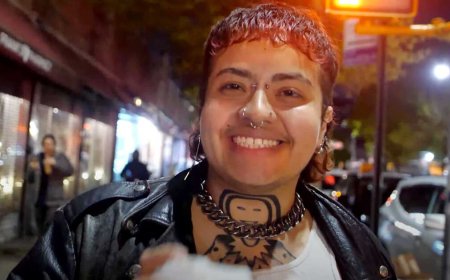
Well, that’s not strictly true. Our biggest selling issue of all time was Elska San Francisco, whose cover has a fully-nude, fit, white man in his twenties on it. That could have had an impact on sales. But also, it’s San Francisco, a city that was probably always going to draw a big audience. That said, our third biggest seller is Elska Yokohama, which has a fully-clothed Asian man on the cover. And then there’s the fact that some of the photos I’ve published that are the least ‘conventional’ get the most personal attention. For example, I got so many emails and DMs from people who loved Teagan G from Elska Regina, even though photos of him did nothing on social media, that it proves his value. Such genuine love is worth more than any like or comment.
I thought certain cities would be huge. They weren’t.

Whether the success of Elska San Francisco was about its sexy cover or its having been made in such a famous, iconic, queer city, I can’t say for sure. But what I do know is that cities I thought would be huge weren’t. In fact, even after all this time, I still am clueless about what cities will sell better than others. For example, when I released Elska Chicago, made in another super-famous US city, it sold pretty low. But do you know what sold double that? Elska Tbilisi. So did Elska Guadalajara. Even Elska Akureyri, made in a town of just 18,000 people in northern Iceland, sold more than Elska Chicago.
I have no clue what people want. Everything feels totally random. But the fact that the big, famous, global queer behemoths don’t always make the biggest hits has been to my advantage. The truth is that the favourite issues I’ve ever made were made in places that don’t fit this category, places like Dhaka (Bangladesh), Odesa (Ukraine), Regina (Saskatchewan), and Almaty (Kazakhstan). These are the types of cities that excite me, precisely because I don’t know what to expect. What will these cities feel like? What will the lives of the local queer men I photograph there be like? In what ways are we different; in what ways are we the same? These are the questions that I love to use Elska to answer.
I thought nudity would sell magazines. It wasn’t that simple.

Is it really true that ‘sex sells’? I’m not so sure.
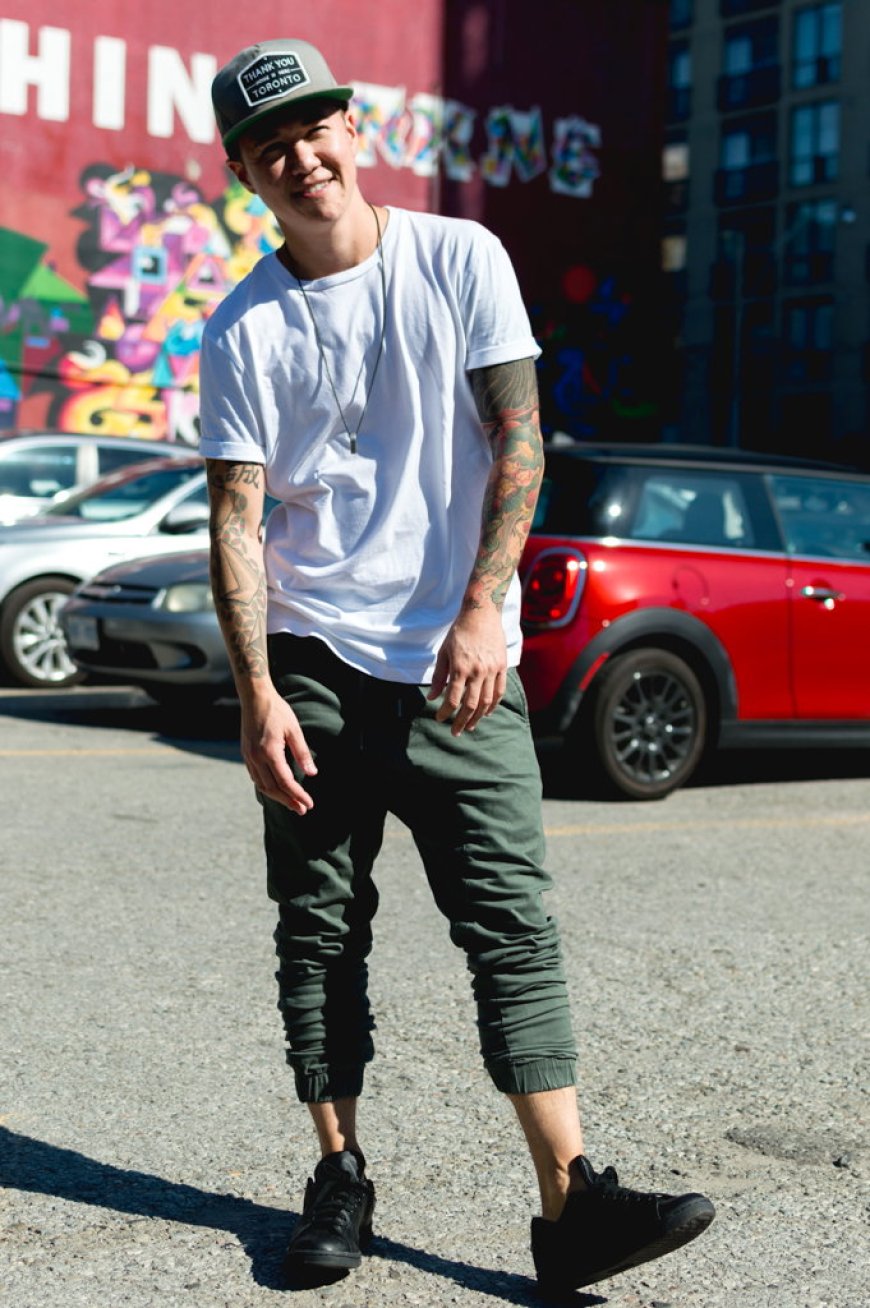
One example I have to illustrate the effect of nudity on sales is Elska Toronto. In November 2016, I released the first edition of this issue with a shirtless trans man on the cover. At the time, it was the lowest-selling issue ever, and some shops that sold Elska even complained that the cover put off customers who ordinarily would be interested in Elska. At first I felt like being defiant as a show of solidarity with the cover boy. But then I decided to test the weight of that cover by printing a second edition, this time with a cis man on the cover. This new edition sold over double what the first did. That sounds conclusive, but how can you separate the nudity factor with the gender factor? Or with race? The first cover featured an Asian man and the second a Black man.
Perhaps a better example would be to look at how Elska covers are selected in general. For the past several years, I’ve mocked up four or five different cover designs for each issue and then let our annual subscribers and Patreon supporters vote for their favourite. Whenever that selection of designs includes options featuring nudity, they get more votes. Always. However, in terms of the sales of actual magazines, the effect isn’t so clear. Our top-selling issue of all time, Elska San Francisco, had a cover. But the rest of the Top 5 don’t — Elska Perth, Elska Yokohama, Elska Tbilisi, Elska Mexico City (though the latter has a stray testicle visible poking out of the cover boy’s shorts!)
Again, even after eleven years, I don’t really have a good clue what sells. What do people really want? I guess the best answer is that they want variety, they want diversity, and they want Elska to keep doing what it’s doing. A little aimlessly, but faithfully and with heart.
I thought making the magazine would be the hard part. It wasn’t.

Those parts of Elska that people consider a ‘dream job’ — the travel, the photography, the writing, the editing, the design, the production of a physical book — are supposed to be the hard part of this project, but they’re not. The real hard part is the economics of making an indie gay magazine that is profitable. Elska is not a vanity project, self-funded by inherited wealth; nor does it have corporate sponsorship or any advertising whatsoever. I’m incredibly proud that Elska has been able to survive on its own terms, but it’s been far from easy.
The reality is that even in 2015, the idea of making a physical magazine, or ‘bookazine’ as I like to call it, was already niche. Despite a decade of persisting #PrintIsNotDead sentiments, the truth is that the share of people who buy Elska in a print format compared to a digital one has diminished. At the same time, more and more of the legacy LGBTQ+ bookshops around the world have shuttered for good. Places like GinGin in Taipei or The Bookshop Darlinghurst in Sydney used to faithfully stock Elska when we started, giving us visibility when we were new, but now they’re gone. It means it’s harder for new readers to discover Elska or any other queer titles, which impacts new creators even more. Then there’s the problem with Instagram and their ‘Community Guidelines’, which has impacted many queer artists, not just Elska. And then there’s boring yet monumental impacts from things like a rise in shipping costs, printing costs, and the ‘Trump tariffs’.
I often say that I wish I could just focus on the art and ignore the business. In large part, I’ve done that. Or certainly I know I’ve spent much less time on business and marketing than I should. Yet Elska has been successful anyway. Unfortunately, my ability to focus on the art is less possible than ever now, but the pain is still worth it!
I thought I’d have a highlight from making Elska. But I don’t — I have many.

One of the questions people most often ask is what my highlight has been. After such a long career, this is very hard to answer, but there definitely have been some unforgettable moments. The first that springs to mind comes from Elska Atlanta with the couple Devlin and TeeJ. After shooting a sultry scene of them in bed, Devlin asked me to come into their kitchen and photograph him as he uncorked a bottle of champagne. Teej must have assumed that this was just Devlin’s way to commemorate a memorable afternoon, and that he wanted me to document it, but then instead of opening the bottle, he took a little box out of his pocket, and kneeled down. I snapped my camera as he opened the little box and proposed marriage; then as they embraced and finally opened that champagne bottle. Oh, and TeeJ said “yes” by the way.
The second memory that comes to mind would have to be my trip to Odesa in general. Since the first issue of Elska was made in Ukraine, I thought it would be too perfect to make the landmark fiftieth issue in the same country. Yet when it came time to make that issue, Ukraine was involved in a full-scale invasion by Russia. I can’t express just how terrifying it was when I first heard the air-raid sirens go off, something that would happen over and over during my trip. But I took strength from the fact that this is what ordinary Ukrainians deal with every single day. I wanted to show their strength, their resilience, their desire to carry on through Elska. I also wanted to just give the men I photographed there a distraction, just something fun to do, like a naked photoshoot!

All sixty issues of Elska Magazine are available now either in a limited-edition print version or in a digital version. In addition, a companion zine featuring outtakes, behind the scenes tales, and more men called Ekstra is available.
Join the GayCities newsletter for weekly updates on the best LGBTQ+ destinations and events—nearby and around the world.