
LGBTQ+ Students Say School Doesn’t Feel Safe, New Survey Reveals Stark Reality
New data shows LGBTQ+ students face high harassment and rising school safety concerns nationwide.
 Mark
Mark
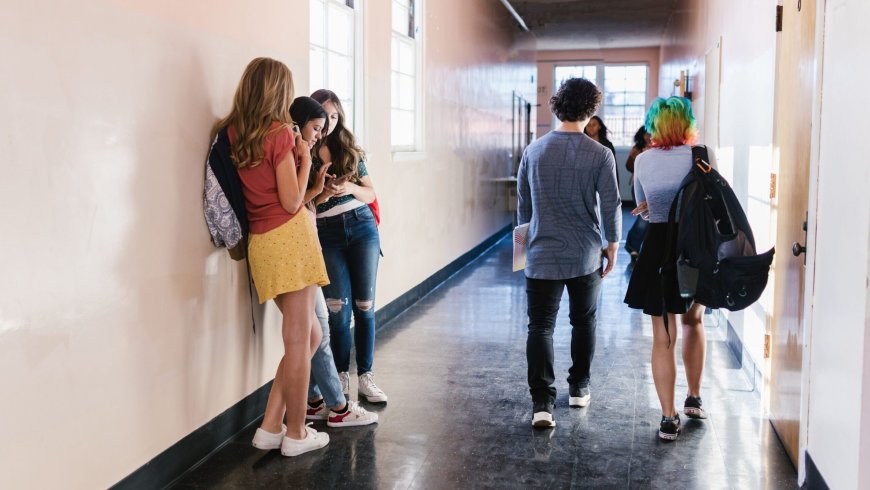
Across U.S. classrooms, many LGBTQ+ students are not just thinking about grades or graduation. They are calculating risk, where to walk, when to speak, and how visible they can afford to be. A new national survey from Glisten shows that those daily calculations are shaping the school experience for the majority of queer and trans students.
The organization’s 13th National School Climate Survey paints a stark picture: two-thirds of LGBTQ+ students report feeling unsafe at school because of their sexual orientation, gender identity, or gender expression. Only one in three say they frequently or often look forward to going to school.
Those numbers are not just abstract data points. They reflect routines built around avoidance, caution, and self-protection. Harassment Shapes Daily School Life
The survey found that 62% of LGBTQ+ students experienced harassment tied to sexual orientation, while 69% reported harassment related to gender identity or expression. Nearly half of BIPOC LGBTQ+ students said they also faced harassment based on race or ethnicity, underscoring how identity-based targeting often overlaps.
For many students, that harassment is not isolated. It shows up in hallways, locker rooms, online spaces, and classrooms, creating an environment where belonging can feel conditional.
More than half of respondents (53%) said they experienced discrimination such as being blocked from using facilities aligned with their gender identity. Forty-one percent reported punishment for using bathrooms consistent with their gender, while 64% said they avoid school bathrooms entirely.
Among trans and gender-expansive students, 86% said they actively avoid certain school spaces, a figure that reflects how safety concerns reshape movement through school buildings. Feeling Unsafe, Planning Around Risk
Beyond specific incidents, the survey highlights a broader emotional climate. Most LGBTQ+ students reported feeling unsafe because of who they are, and that sense of uncertainty influences everyday decisions.
One of the most consistent findings is how deeply that feeling is embedded in routine school life. For many students, simply getting through the day requires constant awareness of how they might be perceived or targeted.
That sense of vigilance is not evenly distributed across campuses. It is more pronounced in environments where policies or cultural attitudes offer limited protection. Connection Still Emerges in Unexpected Ways
Even within those conditions, the report identifies a quieter pattern: connection.
Roughly 73% of LGBTQ+ students said they feel somewhat or very connected to other LGBTQ+ peers at their school. That number stands out against the backdrop of higher harassment rates, suggesting that peer networks often serve as informal support systems.
As Shweta Moorthy, Glisten’s Director of Research and Best Practices, put it: “Research is about storytelling. The way to tell meaningful stories is to ensure that both the quantitative and qualitative data are moving hand in hand.”
In focus groups conducted for the survey, students described moments that helped reshape how they saw themselves, from discovering shared identity with a classmate to simply witnessing another student living openly. Policies Matter More Than Intentions
The report reinforces a consistent conclusion across years of research: school climate improves when institutions take active steps toward inclusion.
Students in schools with LGBTQ+-inclusive curricula, clear anti-bullying protections, supportive staff, and student-led organizations reported stronger academic engagement and higher levels of belonging.
Yet the report also pushes beyond policy checklists. As Moorthy noted, “Safety is not just the absence of harm. It is active affirmation.”
That framing shifts responsibility from preventing only negative experiences to building environments where students feel recognized and supported. Research Designed to Be Used, Not Just Read
This year’s survey also reflects a change in how findings are presented. Glisten shortened its executive report to make it more accessible for educators, students, and advocates — moving away from a dense academic format that previously stretched beyond 200 pages.
Yu-Chi Wang, Glisten’s School Climate Research Manager, said, “The previous report was over 200 pages. This time, we wanted something people can actually use.”
The goal is clear: research that informs action, not just documentation. A System Still In Question
Despite consistent data showing the benefits of inclusive policies, implementation remains uneven across states and districts. That gap is where the report lands its sharpest critique.
If inclusive environments improve outcomes, why aren’t they universal? If connection reduces harm, why do so many students still feel isolated? And if safety requirements are known, why do they remain inconsistent?
The report does not attempt to resolve those contradictions. Instead, it centers the students living inside them — young people navigating school with what the report describes as “courage, creativity, exhaustion, and joy.” Call for Participation
Students interested in participating in future research can learn more about Glisten’s upcoming 2027 survey at http://glisten.org/nscs27/. The survey opens April 15 and is open to LGBTQIA+, questioning, and Two Spirit individuals ages 13 and older attending U.S. K–12 schools during the 2025–2026 academic year.