New York State lawmakers propose bill to fully legalize bathhouses again
Following similar moves in cities like San Francisco and Minneapolis, two out gay state lawmakers are introducing legislation to lift AIDS-era restrictions on gay bathhouses in New York State and make them legal once again — a move that could pave the way for a massive, “world-class” venue spanning more than 10,000 square feet. State … Read More
 Mark
Mark
0
23
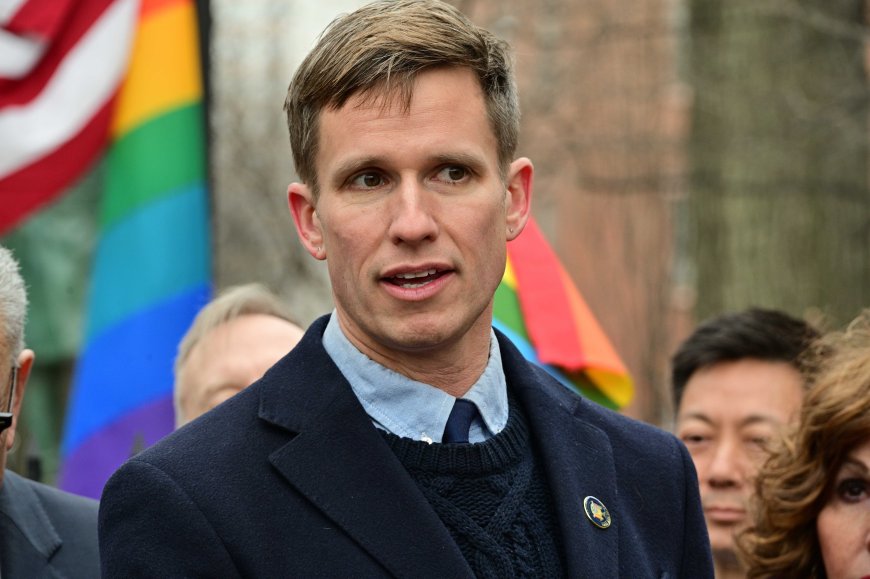
Following similar moves in cities like San Francisco and Minneapolis, two out gay state lawmakers are introducing legislation to lift AIDS-era restrictions on gay bathhouses in New York State and make them legal once again — a move that could pave the way for a massive, “world-class” venue spanning more than 10,000 square feet.
State Senator Erik Bottcher of the 47th District and Assemblymember Tony Simone of the 75th District, who represent overlapping parts of the west side of Manhattan, are teaming up on the legislative effort to bring queer bathhouses back to New York in the near future. The lawmakers are making the case that the public health landscape has changed since the state and city moved to shut down many of New York’s bathhouses in the mid-1980s during the HIV/AIDS crisis.
“Many people have been talking about this for a long time, and now we're seeing municipalities around the country change their policies to catch up with science,” Bottcher said in an interview with Gay City News. “New York State still hasn't done so. Now's the time.”
In the four decades since the restrictions shut down New York City’s sprawling gay bathhouse scene, there have been major advances in prevention and treatment, including the emergence of HIV prevention medication known as PrEP and the STI prevention medication Doxy PEP, as well as injectable options.
"It's 2026, not 1986," Simone told Gay City News in an interview. "Evidence-based practices informed by the last 30 years of public health research make it clear we need to repeal the ban." Simone further pointed out that many cities in more conservative states — including Fort Lauderdale and Miami, Florida — feature gay bathhouses or saunas.
[caption id="attachment_60900" align="aligncenter" width="700"]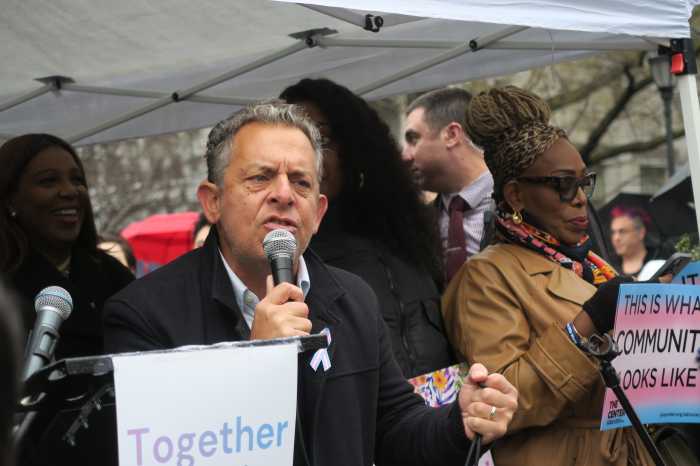 State Assemblymember Tony Simone.Donna Aceto[/caption]
Dubbed the Public Health Modernization Act, the proposed law would specifically direct the New York State Department of Health to repeal a state law stipulating that "no establishment shall make facilities available for the purpose of sexual activities where anal intercourse, vaginal intercourse, or fellatio take place. Such facilities shall constitute a threat to the public health."
Furthermore, the legislation would require the New York State Department of Health to create, within six months, rules and regulations governing the licensing and operation of such facilities.
Alex Gabriel, the co-founder and CEO of Rally AI and the former co-chair of Out for Biden, has been quietly working with other businesspeople on an idea to launch a sprawling gay bathhouse in New York City — Flatiron, Chelsea, or somewhere in Brooklyn are the potential locations, he said — assuming the legislation passes.
“What we’re doing is trying to model what Copenhagen, Amsterdam, or Berlin have — a world-class bathhouse,” Gabriel said in an interview with Gay City News.
The proposed gay bathhouse would feature the typical amenities one would expect — steam room, sauna, and more — as well as an LED light room, Gabriel said.
“Kind of a dark place with world-class spa amenities,” he explained.
Gabriel hopes the legislation passes this year so the potential bathhouse venue can begin construction early next year — possibly as early as February, he said.
[caption id="attachment_64519" align="aligncenter" width="374"]
State Assemblymember Tony Simone.Donna Aceto[/caption]
Dubbed the Public Health Modernization Act, the proposed law would specifically direct the New York State Department of Health to repeal a state law stipulating that "no establishment shall make facilities available for the purpose of sexual activities where anal intercourse, vaginal intercourse, or fellatio take place. Such facilities shall constitute a threat to the public health."
Furthermore, the legislation would require the New York State Department of Health to create, within six months, rules and regulations governing the licensing and operation of such facilities.
Alex Gabriel, the co-founder and CEO of Rally AI and the former co-chair of Out for Biden, has been quietly working with other businesspeople on an idea to launch a sprawling gay bathhouse in New York City — Flatiron, Chelsea, or somewhere in Brooklyn are the potential locations, he said — assuming the legislation passes.
“What we’re doing is trying to model what Copenhagen, Amsterdam, or Berlin have — a world-class bathhouse,” Gabriel said in an interview with Gay City News.
The proposed gay bathhouse would feature the typical amenities one would expect — steam room, sauna, and more — as well as an LED light room, Gabriel said.
“Kind of a dark place with world-class spa amenities,” he explained.
Gabriel hopes the legislation passes this year so the potential bathhouse venue can begin construction early next year — possibly as early as February, he said.
[caption id="attachment_64519" align="aligncenter" width="374"] The Everard Baths, located at 28 West 28th Street in Manhattan, in 1905.Collection of The New York Historical[/caption]
"It's well past time to leave Koch-era laws where they belong: in the past,” Gabriel said. “New York has always led the world by reimagining what a great city can be, and our approach to LGBTQ+ community spaces should be no different... Imagine beautifully designed, professionally operated spaces that bring people together, strengthen community, support local businesses, and become global destinations in their own right.”
The proposed bathhouse, Gabriel said, would look to gain the necessary approval to serve alcohol, but that’s just one of many regulatory hurdles that could be on the horizon. The construction and approval processes are where any future bathhouse could face the most trouble, according to out gay attorney Thomas Shanahan, who is representing the business owners behind the potential new gay bathhouse in New York City and has long represented such spaces, including East Side Club — perhaps the only remaining gay bathhouse in the five boroughs — and West Side Club, which has since shuttered.
“At West Side Club in 2014-15, a Department of Buildings inspector just walked in, saw HIV testing materials from GMHC, looked around, and gave us a violation for being a brothel,” said Shanahan, who also represents River Street Club, a long-running gay bathhouse in Troy, New York, just outside of Albany.
The violations were later thrown out after Shanahan said he challenged the government in court, but that was not the first time he faced resistance from the city on that front. Shanahan also tried working with businesspeople two decades ago who sought to open a large gay bathhouse near Grand Central Station, but he said the investors lost their money after the city issued a stop-work order.
Even if the state approves the legislation, he said, there are forthcoming questions to address at the city level, including potential policy changes.
“The bill will open the door to an environment that is welcoming and allow potential investors to build things out,” Shanahan said. “However, there is a lot of nuance here that has to change, because under New York City's building code, there is no use that would allow for this.”
In San Francisco, where restrictions on bathhouses were also relaxed, an effort to launch a gay bathhouse has been bogged down by permitting issues, according to the Bay Area Reporter.
“We really need to come up with a list of building codes, fire codes, and health codes that need to be amended that would then allow us to do a build-up that would actually comply," Shanahan said. "A lot of issues that would have to be resolved.”
Bottcher, notably, acknowledged that the repealed law would need to be replaced by clear regulations governing such bathhouses.
“There's not a clearly defined use group for this kind of facility,” Bottcher said. “So our legislation both orders the state to eliminate the prohibition and create the regulatory framework that would be necessary for new businesses to open.”
New York City has a long history of gay bathhouses dating back more than a century, but that all changed in the 1980s — first, in 1985, when the state moved to allow the city to shut down bathhouses in an effort to combat HIV/AIDS, and further in 1986 and in subsequent years when many bathhouses closed around the city.
In interviews with Gay City News, both Bottcher and Simone emphasized that a regulated bathhouse environment is far more preferable than unregulated, underground spaces. In a 2008 interview with Gay City News, Dr. Demetre C. Daskalakis, who now serves as the chief medical officer at Callen-Lorde, argued in favor of keeping bathhouses open at a time when he was visiting those spaces to conduct HIV tests among patrons. He said he would not have otherwise been able to reach those individuals.
Gov. Kathy Hochul and Mayor Zohran Mamdani did not respond to Gay City News’ request for comment about their position on the legislation on Aug. 4. Shanahan said the mayor's support would send a welcoming message to the community.
“I think it would be great for mayor of the City of New York to band with our community, cut the first ribbon, and bring back this part of the culture,” he said.
The Everard Baths, located at 28 West 28th Street in Manhattan, in 1905.Collection of The New York Historical[/caption]
"It's well past time to leave Koch-era laws where they belong: in the past,” Gabriel said. “New York has always led the world by reimagining what a great city can be, and our approach to LGBTQ+ community spaces should be no different... Imagine beautifully designed, professionally operated spaces that bring people together, strengthen community, support local businesses, and become global destinations in their own right.”
The proposed bathhouse, Gabriel said, would look to gain the necessary approval to serve alcohol, but that’s just one of many regulatory hurdles that could be on the horizon. The construction and approval processes are where any future bathhouse could face the most trouble, according to out gay attorney Thomas Shanahan, who is representing the business owners behind the potential new gay bathhouse in New York City and has long represented such spaces, including East Side Club — perhaps the only remaining gay bathhouse in the five boroughs — and West Side Club, which has since shuttered.
“At West Side Club in 2014-15, a Department of Buildings inspector just walked in, saw HIV testing materials from GMHC, looked around, and gave us a violation for being a brothel,” said Shanahan, who also represents River Street Club, a long-running gay bathhouse in Troy, New York, just outside of Albany.
The violations were later thrown out after Shanahan said he challenged the government in court, but that was not the first time he faced resistance from the city on that front. Shanahan also tried working with businesspeople two decades ago who sought to open a large gay bathhouse near Grand Central Station, but he said the investors lost their money after the city issued a stop-work order.
Even if the state approves the legislation, he said, there are forthcoming questions to address at the city level, including potential policy changes.
“The bill will open the door to an environment that is welcoming and allow potential investors to build things out,” Shanahan said. “However, there is a lot of nuance here that has to change, because under New York City's building code, there is no use that would allow for this.”
In San Francisco, where restrictions on bathhouses were also relaxed, an effort to launch a gay bathhouse has been bogged down by permitting issues, according to the Bay Area Reporter.
“We really need to come up with a list of building codes, fire codes, and health codes that need to be amended that would then allow us to do a build-up that would actually comply," Shanahan said. "A lot of issues that would have to be resolved.”
Bottcher, notably, acknowledged that the repealed law would need to be replaced by clear regulations governing such bathhouses.
“There's not a clearly defined use group for this kind of facility,” Bottcher said. “So our legislation both orders the state to eliminate the prohibition and create the regulatory framework that would be necessary for new businesses to open.”
New York City has a long history of gay bathhouses dating back more than a century, but that all changed in the 1980s — first, in 1985, when the state moved to allow the city to shut down bathhouses in an effort to combat HIV/AIDS, and further in 1986 and in subsequent years when many bathhouses closed around the city.
In interviews with Gay City News, both Bottcher and Simone emphasized that a regulated bathhouse environment is far more preferable than unregulated, underground spaces. In a 2008 interview with Gay City News, Dr. Demetre C. Daskalakis, who now serves as the chief medical officer at Callen-Lorde, argued in favor of keeping bathhouses open at a time when he was visiting those spaces to conduct HIV tests among patrons. He said he would not have otherwise been able to reach those individuals.
Gov. Kathy Hochul and Mayor Zohran Mamdani did not respond to Gay City News’ request for comment about their position on the legislation on Aug. 4. Shanahan said the mayor's support would send a welcoming message to the community.
“I think it would be great for mayor of the City of New York to band with our community, cut the first ribbon, and bring back this part of the culture,” he said.
State Assemblymember Tony Simone.Donna Aceto[/caption]
Dubbed the Public Health Modernization Act, the proposed law would specifically direct the New York State Department of Health to repeal a state law stipulating that "no establishment shall make facilities available for the purpose of sexual activities where anal intercourse, vaginal intercourse, or fellatio take place. Such facilities shall constitute a threat to the public health."
Furthermore, the legislation would require the New York State Department of Health to create, within six months, rules and regulations governing the licensing and operation of such facilities.
Alex Gabriel, the co-founder and CEO of Rally AI and the former co-chair of Out for Biden, has been quietly working with other businesspeople on an idea to launch a sprawling gay bathhouse in New York City — Flatiron, Chelsea, or somewhere in Brooklyn are the potential locations, he said — assuming the legislation passes.
“What we’re doing is trying to model what Copenhagen, Amsterdam, or Berlin have — a world-class bathhouse,” Gabriel said in an interview with Gay City News.
The proposed gay bathhouse would feature the typical amenities one would expect — steam room, sauna, and more — as well as an LED light room, Gabriel said.
“Kind of a dark place with world-class spa amenities,” he explained.
Gabriel hopes the legislation passes this year so the potential bathhouse venue can begin construction early next year — possibly as early as February, he said.
[caption id="attachment_64519" align="aligncenter" width="374"] The Everard Baths, located at 28 West 28th Street in Manhattan, in 1905.Collection of The New York Historical[/caption]
"It's well past time to leave Koch-era laws where they belong: in the past,” Gabriel said. “New York has always led the world by reimagining what a great city can be, and our approach to LGBTQ+ community spaces should be no different... Imagine beautifully designed, professionally operated spaces that bring people together, strengthen community, support local businesses, and become global destinations in their own right.”
The proposed bathhouse, Gabriel said, would look to gain the necessary approval to serve alcohol, but that’s just one of many regulatory hurdles that could be on the horizon. The construction and approval processes are where any future bathhouse could face the most trouble, according to out gay attorney Thomas Shanahan, who is representing the business owners behind the potential new gay bathhouse in New York City and has long represented such spaces, including East Side Club — perhaps the only remaining gay bathhouse in the five boroughs — and West Side Club, which has since shuttered.
“At West Side Club in 2014-15, a Department of Buildings inspector just walked in, saw HIV testing materials from GMHC, looked around, and gave us a violation for being a brothel,” said Shanahan, who also represents River Street Club, a long-running gay bathhouse in Troy, New York, just outside of Albany.
The violations were later thrown out after Shanahan said he challenged the government in court, but that was not the first time he faced resistance from the city on that front. Shanahan also tried working with businesspeople two decades ago who sought to open a large gay bathhouse near Grand Central Station, but he said the investors lost their money after the city issued a stop-work order.
Even if the state approves the legislation, he said, there are forthcoming questions to address at the city level, including potential policy changes.
“The bill will open the door to an environment that is welcoming and allow potential investors to build things out,” Shanahan said. “However, there is a lot of nuance here that has to change, because under New York City's building code, there is no use that would allow for this.”
In San Francisco, where restrictions on bathhouses were also relaxed, an effort to launch a gay bathhouse has been bogged down by permitting issues, according to the Bay Area Reporter.
“We really need to come up with a list of building codes, fire codes, and health codes that need to be amended that would then allow us to do a build-up that would actually comply," Shanahan said. "A lot of issues that would have to be resolved.”
Bottcher, notably, acknowledged that the repealed law would need to be replaced by clear regulations governing such bathhouses.
“There's not a clearly defined use group for this kind of facility,” Bottcher said. “So our legislation both orders the state to eliminate the prohibition and create the regulatory framework that would be necessary for new businesses to open.”
New York City has a long history of gay bathhouses dating back more than a century, but that all changed in the 1980s — first, in 1985, when the state moved to allow the city to shut down bathhouses in an effort to combat HIV/AIDS, and further in 1986 and in subsequent years when many bathhouses closed around the city.
In interviews with Gay City News, both Bottcher and Simone emphasized that a regulated bathhouse environment is far more preferable than unregulated, underground spaces. In a 2008 interview with Gay City News, Dr. Demetre C. Daskalakis, who now serves as the chief medical officer at Callen-Lorde, argued in favor of keeping bathhouses open at a time when he was visiting those spaces to conduct HIV tests among patrons. He said he would not have otherwise been able to reach those individuals.
Gov. Kathy Hochul and Mayor Zohran Mamdani did not respond to Gay City News’ request for comment about their position on the legislation on Aug. 4. Shanahan said the mayor's support would send a welcoming message to the community.
“I think it would be great for mayor of the City of New York to band with our community, cut the first ribbon, and bring back this part of the culture,” he said.