Restored films ‘Paris Was a Woman’ and ‘Virginia’ screening at Metrograph
Two newly restored films from the 1990s with queer subjects will be screening at the Metrograph this month. The 1996 documentary “Paris Was a Woman” maps the personal and professional lives of a handful of American lesbian literary and cultural figures who lived in the Left Bank in the 1920s until World War II. Director … Read More
 Mark
Mark
0
1
Two newly restored films from the 1990s with queer subjects will be screening at the Metrograph this month.
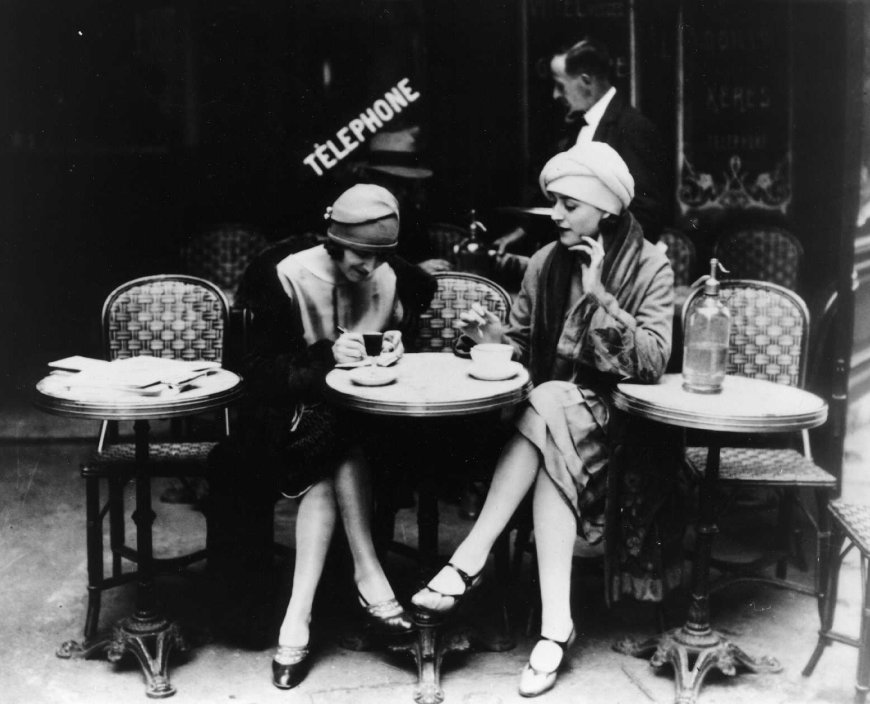
The 1996 documentary “Paris Was a Woman” maps the personal and professional lives of a handful of American lesbian literary and cultural figures who lived in the Left Bank in the 1920s until World War II. Director Greta Schiller’s film, a love letter to these creative women, has now been remastered and is being reissued in a 4K print for its 30th anniversary.
Schiller uses photographs, film clips, talking heads and archival footage of some of her subjects to recount the lives and loves of these influential women. The film opens by showcasing the most famous Left Bank residents, Gertude Stein and Alice B. Toklas, who developed a community first by hosting cultural salons that showcased Picasso’s paintings that Stein and her family collected, and then through their own writing and publishing of “The Autobiography of Alice B. Toklas.”
Equally fascinating are the stories about Sylvia Beach, who opened the bookstore Shakespeare and Company. Her lover, Adrienne Monnier, had a bookshop, La Maison des Amis des Livres, across the street, which included a lending library for women who did not have access to books or could not afford them. As the film recounts, Beach published James Joyce’s “Ulysses,” but the author later sold the rights to Random House — and at a time where her store was in financial trouble.
Such nuggets make “Paris Is a Woman” catnip for literati, who will also appreciate the segment on heiress Natalie Barney who moved to the city to live freely as a lesbian. Barney loved to entertain and hosted a literary salon that was “virtually an institution,” where women, including the famous writer, Colette, could read and perform their work.
Djuna Barnes, who was published privately by Barney, is also profiled. Her modernist novel, “Nightwood,” was inspired by her relationship with the American artist Thelma Wood, and excerpts from the book are included in the film.
“Paris Was a Woman” also features segments on painter Romaine Brooks, interviews with photographer Gisele Freund, and with the journalist Janet Flanner (aka “Genêt”), who wrote the column “Letter from Paris” for “The New Yorker.” A sidebar on Josephine Baker includes a fun clip of the celebrated singer/dancer preforming.
Schiller’s film is a terrific history of a special time and place in lesbian life and culture.
Director Greta Schiller and producer Andrea Weiss, who authored the book, “Paris Was a Woman,” will participate in Q&As on October 16-17, and Weiss will sign copies of her book at the film’s weekend screenings.
“Virginia” made in 1991, is writer/director Srdan Karanović’s compelling drama about a 19th century Serbian family. The film will have its first theatrical release in America in a new 2K print.
[caption id="attachment_65433" align="aligncenter" width="700"] “Virginia," directed by Srdan Karanović, opens Oct. 23 at the Metrograph.Altered Innocence[/caption]
Timotije (Miodrag Krivokapic) is frustrated that his wife, Dostana (Ina Gogalova), has only given birth to daughters. It signifies a cursed life. He prays to his patron saint, Djurdje for a boy, but when his wife has another girl, Timotije almost kills his newborn daughter in a fit of anger. Instead, he agrees to raise her as a boy — a “Virginia” — and names his daughter Stevan (Marta Keler). Timotije and Dostana exchange concerned glances as they hope this will break the curse.
The film shows Stevan as a teen binding her breasts and having her hair cut short to keep up masculine appearances. Timotije teaches his “son” how to spit, use an ax, and smoke tobacco, while her mother advises, “It is better to be a man,” suggesting how poorly women are treated in society.
But things get expectedly complicated when Stevan bests another teen, Mijat (Igor Bjelan), in a strength contest, but then refuses to go pee with him and the other boys to see who has the biggest penis. Stevan develops an attraction to Mijat, which prompts him to spend more time together. Stevan also has to fend off the advances of a young girl in the village who claims Timotije promised Stevan to her as a future husband.
“Virginia” shows the harm of conforming to gender roles. Timotije tries to control Stevan’s behavior, but Dostana will let her “son” secretly play with a doll. There are also some concerns when Stevan menstruates for the first time or learns about sex when out with Mijat one afternoon.
The film builds its dramatic tension (as all films about hiding one’s gender do), waiting for Stevan’s truth to be revealed and the consequences of that event to play out. But Karanović makes this all satisfying by providing some clever narrative developments that emphasize the power of living one’s truth.
“Viriginia” is well acted by the entire cast, and the film’s sense of time and place is palpable. The landscape is stark and life for Timotije and his family is difficult, but Karanović’s sensitivity with the subject matter makes this film worthwhile.
“Paris Was a Woman” | Directed by Greta Schiller | Opening October 16 at the Metrograph | Distributed by Zeitgeist Films
“Virginia” | Directed by Srdan Karanović | Opening October 23 at the Metrograph | Distributed by Altered Innocence
“Virginia," directed by Srdan Karanović, opens Oct. 23 at the Metrograph.Altered Innocence[/caption]
Timotije (Miodrag Krivokapic) is frustrated that his wife, Dostana (Ina Gogalova), has only given birth to daughters. It signifies a cursed life. He prays to his patron saint, Djurdje for a boy, but when his wife has another girl, Timotije almost kills his newborn daughter in a fit of anger. Instead, he agrees to raise her as a boy — a “Virginia” — and names his daughter Stevan (Marta Keler). Timotije and Dostana exchange concerned glances as they hope this will break the curse.
The film shows Stevan as a teen binding her breasts and having her hair cut short to keep up masculine appearances. Timotije teaches his “son” how to spit, use an ax, and smoke tobacco, while her mother advises, “It is better to be a man,” suggesting how poorly women are treated in society.
But things get expectedly complicated when Stevan bests another teen, Mijat (Igor Bjelan), in a strength contest, but then refuses to go pee with him and the other boys to see who has the biggest penis. Stevan develops an attraction to Mijat, which prompts him to spend more time together. Stevan also has to fend off the advances of a young girl in the village who claims Timotije promised Stevan to her as a future husband.
“Virginia” shows the harm of conforming to gender roles. Timotije tries to control Stevan’s behavior, but Dostana will let her “son” secretly play with a doll. There are also some concerns when Stevan menstruates for the first time or learns about sex when out with Mijat one afternoon.
The film builds its dramatic tension (as all films about hiding one’s gender do), waiting for Stevan’s truth to be revealed and the consequences of that event to play out. But Karanović makes this all satisfying by providing some clever narrative developments that emphasize the power of living one’s truth.
“Viriginia” is well acted by the entire cast, and the film’s sense of time and place is palpable. The landscape is stark and life for Timotije and his family is difficult, but Karanović’s sensitivity with the subject matter makes this film worthwhile.
“Paris Was a Woman” | Directed by Greta Schiller | Opening October 16 at the Metrograph | Distributed by Zeitgeist Films
“Virginia” | Directed by Srdan Karanović | Opening October 23 at the Metrograph | Distributed by Altered Innocence
“Virginia," directed by Srdan Karanović, opens Oct. 23 at the Metrograph.Altered Innocence[/caption]
Timotije (Miodrag Krivokapic) is frustrated that his wife, Dostana (Ina Gogalova), has only given birth to daughters. It signifies a cursed life. He prays to his patron saint, Djurdje for a boy, but when his wife has another girl, Timotije almost kills his newborn daughter in a fit of anger. Instead, he agrees to raise her as a boy — a “Virginia” — and names his daughter Stevan (Marta Keler). Timotije and Dostana exchange concerned glances as they hope this will break the curse.
The film shows Stevan as a teen binding her breasts and having her hair cut short to keep up masculine appearances. Timotije teaches his “son” how to spit, use an ax, and smoke tobacco, while her mother advises, “It is better to be a man,” suggesting how poorly women are treated in society.
But things get expectedly complicated when Stevan bests another teen, Mijat (Igor Bjelan), in a strength contest, but then refuses to go pee with him and the other boys to see who has the biggest penis. Stevan develops an attraction to Mijat, which prompts him to spend more time together. Stevan also has to fend off the advances of a young girl in the village who claims Timotije promised Stevan to her as a future husband.
“Virginia” shows the harm of conforming to gender roles. Timotije tries to control Stevan’s behavior, but Dostana will let her “son” secretly play with a doll. There are also some concerns when Stevan menstruates for the first time or learns about sex when out with Mijat one afternoon.
The film builds its dramatic tension (as all films about hiding one’s gender do), waiting for Stevan’s truth to be revealed and the consequences of that event to play out. But Karanović makes this all satisfying by providing some clever narrative developments that emphasize the power of living one’s truth.
“Viriginia” is well acted by the entire cast, and the film’s sense of time and place is palpable. The landscape is stark and life for Timotije and his family is difficult, but Karanović’s sensitivity with the subject matter makes this film worthwhile.
“Paris Was a Woman” | Directed by Greta Schiller | Opening October 16 at the Metrograph | Distributed by Zeitgeist Films
“Virginia” | Directed by Srdan Karanović | Opening October 23 at the Metrograph | Distributed by Altered Innocence