Shakira Draws 2 Million to Rio Beach in Career-Defining Mega Show
Shakira’s free Rio concert pulls 2 million fans and major Brazilian icons.
 Mark
Mark
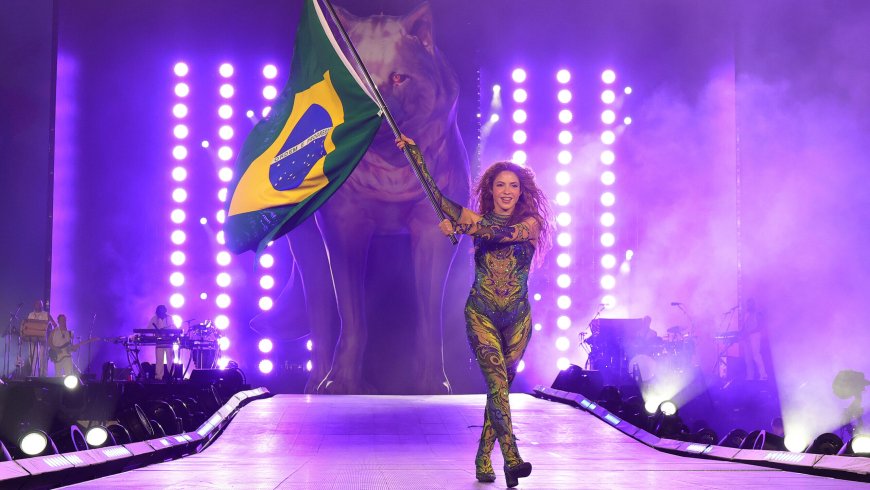
Shakira didn’t just perform in Brazil this weekend, she reshaped the scale of what a live pop concert can look like.
An estimated 2 million people flooded Copacabana Beach on May 2 for a free show that city officials say is now the largest of her career. The performance, part of Rio’s “Todo Mundo no Rio” initiative, turned the shoreline into a massive celebration of Latin music, Brazilian pride and global pop spectacle. A Beach, a City, a Moment
Before the first note, the atmosphere already felt cinematic. A fleet of drones lit up the night sky, forming a wolf’s head, an unmistakable nod to Shakira’s “She Wolf” era, before spelling out “Te Amo Brasil.” The message landed and the crowd roared loudly.
When she finally took the stage just after 11 p.m., dressed in Brazil’s signature green and yellow, the delay didn’t matter. The opening beats of “La Fuerte” flipped the switch. In seconds, Rio de Janeiro felt less like a single destination and more like a crossroads of Latin America. A Setlist Built for the Masses
The show moved fast, pulling from across her catalog without lingering too long in one era. “Girl Like Me,” “Las de la Intuición” and “Estoy Aquí” sparked early sing-alongs, while “Empire” and “Inevitable” slowed things down just enough to let her vocals cut through the ocean air.
Shakira addressed the crowd in Portuguese throughout the night, reflecting a connection that dates back decades. Brazil was one of the first countries outside the Spanish-speaking world to embrace her music, a fact she acknowledged onstage, recalling her first visit at 18.
Later, the tone shifted again. “Te Felicito,” “TQG” and “Don’t Bother” leaned into themes of independence, while “Acróstico,” featuring her children’s recorded voices, added a quieter moment in an otherwise high-energy set. Surprise Guests and Brazilian Royalty
The guest list elevated the night from major concert to cultural event.
Anitta joined Shakira for “Chantaje” and “Choka Choka,” sending the crowd into a frenzy. But the deeper emotional beats came from Brazil’s musical legends.
Caetano Veloso took the stage for “Leãozinho,” a song Shakira said she sings to her children. Maria Bethânia followed, performing alongside a samba drum section, while Ivete Sangalo helped close out the collaborative run with “País Tropical.”
The message was clear: this wasn’t just a visiting artist, it was a shared stage. From Barranquilla to the World
Throughout the night, Shakira moved between sounds that define her career: salsa, reggaetón, and pop-rock, while weaving in visual callbacks to earlier eras. Screens flashed archival footage during “Pies Descalzos,” grounding the spectacle in her origins.
Then came the global hits.
“Hips Don’t Lie” had the entire beach moving, while “Waka Waka (This Time for Africa)” closed the show just after 1 a.m., turning the final moments into communal bliss that left a warm feeling in the air. A Tourism Power Play
The concert wasn’t just a cultural milestone, it was an economic one. Local officials estimate the event generated roughly 800 million reais (about $161 million), benefiting hotels, restaurants and travel services across the city.
Rio has leaned into these large-scale performances in recent years, with artists like Madonna and Lady Gaga also drawing massive crowds to the same beachfront. The strategy is working: global attention, packed hotels and a renewed spotlight on the city as a destination.
Organizers say “Todo Mundo no Rio” is expected to continue through at least 2028. More Than a Concert
At one point, Shakira paused to take in the view, millions of fans stretching across the sand, and called it “magical.” And when you look out into a sea of people that massive, it really was a magical sight to see.
For one night, borders blurred. Languages mixed. A Colombian pop star stood at the center of it all, backed by Brazilian icons, performing for a crowd that represented far more than one country.
And for a few hours, Copacabana wasn’t just a beach. It was the loudest, most unified dance floor on the planet.