
Supreme Court Rejects Trump’s Bid to Cut Trans Prison Care
The Supreme Court denied Trump’s emergency request to halt care. The injunction stays in place, but the case remains unresolved.
 Mark
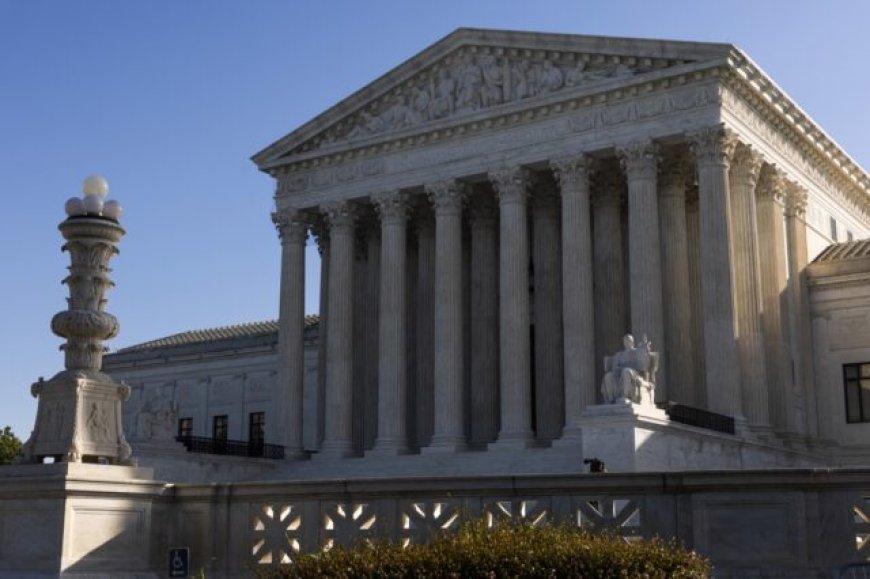
Two sentences, no explanation. The Supreme Court has rejected Trump’s latest bid to stop gender-affirming care in federal prisons.
The Oct. 21 order in Trump v. Kingdom leaves the lower court’s injunction intact. Justices Clarence Thomas and Samuel Alito would have granted the administration’s emergency request. No other justice publicly dissented.
Almost 1,000 people in federal custody faced losing treatment under the policy, according to the ACLU. Their care remains protected by the injunction. Whether the government’s policy is legal is still an open question.
Here is the ruling in full:
“Application (26A416) for stay presented to The Chief Justice and by him referred to the Court is denied. Justice Thomas and Justice Alito would grant the application for stay.” The Federal Prison Policy the Courts Blocked
Trump’s Jan. 20, 2025, executive order told federal prisons to stop funding transition-related medical care. The Bureau of Prisons, or BOP, issued two memos the following month to carry that out.
A judge blocked those memos in June 2025. BOP came back with Program Statement 5260.01, “Management of Inmates with Gender Dysphoria,” on Feb. 19, 2026. According to the policy quoted in court filings, BOP would:
- Stop providing surgeries, which the policy calls “sex trait modification surgeries.”
- Refuse to start anyone on hormones for gender dysphoria, and put everyone already on them on an individual “tapering plan.”
- Stop providing what it calls “social accommodations,” such as wigs, makeup, chest binders and padding, and “when practicable,” confiscate them.
- Treat gender dysphoria with psychotherapy, counseling and psychiatric medication instead.
BOP said it reached this decision independently of Trump’s order. The Justice Department’s application criticized the evidence supporting the old policy and claimed the care posed prison security risks. Why Judge Royce Lamberth Ruled Against the Prison Policy
The case, Kingdom v. Trump, was filed in March 2025 by three people in federal custody, two trans men and a trans woman held in Florida, Minnesota and New Jersey. Their lawyers are from the ACLU, the ACLU of the District of Columbia and the Transgender Law Center. In June 2025, U.S. District Judge Royce C. Lamberth certified a nationwide class covering everyone in BOP custody who has, or later gets, a gender dysphoria diagnosis.
On June 17, 2026, Lamberth blocked the new Program Statement too. He opened by saying he had “no intention of wading into the culture war being waged against transgender individuals.” The question in front of him, he wrote, was whether BOP followed the Administrative Procedure Act, the federal law that requires agencies to reasonably explain major policy changes.
He found three likely problems:
- BOP ignored its own track record. The agency had provided this care “to inmates in its custody for years,” Lamberth wrote, yet the policy cites “zero evidence from its own medical or mental health professionals” to support its conclusions. He also found the government didn’t show the care had been harmful to patients or caused security problems in its prisons.
- The policy doesn’t follow from the evidence. He noted that the doctor the government retained as its expert admitted there’s no evidence psychotherapy works as a treatment for gender dysphoria. He also noted that BOP’s medical director acknowledged psychiatric medication treats co-occurring conditions, not gender dysphoria itself.
- The stated reasons look like a pretext. The policy’s goal matches the executive order’s language, and Lamberth found the policy was likely “pretextual and reverse engineered to implement” it.
He called the Program Statement “a near total ban on gender-affirming care.” He ordered BOP to keep providing care under the policy in place before Jan. 20, 2025. What the Appeals Court Said
On Sept. 18, a divided panel of the U.S. Court of Appeals for the D.C. Circuit refused to pause Lamberth’s order. Judges Robert Wilkins and Bradley Garcia said the government hadn’t shown a strong likelihood that it would win. “BOP makes claims about the security impact of providing gender-affirming care without addressing whether such issues have occurred,” the unsigned order said. Judge Justin Walker dissented. He argued that the Prison Litigation Reform Act doesn’t let a judge keep renewing 90-day orders.
The ACLU answered that BOP had provided hormone therapy since at least 1992 without pointing to “a single security incident” tied to it. The ACLU also said cutting off treatment would put people at serious risk of worsening gender dysphoria, depression, anxiety, self-harm and suicidality. Lamberth’s ruling cites sworn statements from class members describing those effects when BOP previously took away their hormone therapy.
Human Rights Campaign President Kelley Robinson said in a statement that denying care to incarcerated people “simply because they are trans is discriminatory, cruel” and at odds with the Eighth Amendment. She added that “the fight to uphold the dignity and respect our community deserves is far from over.”
How This Fits Other Supreme Court Decisions
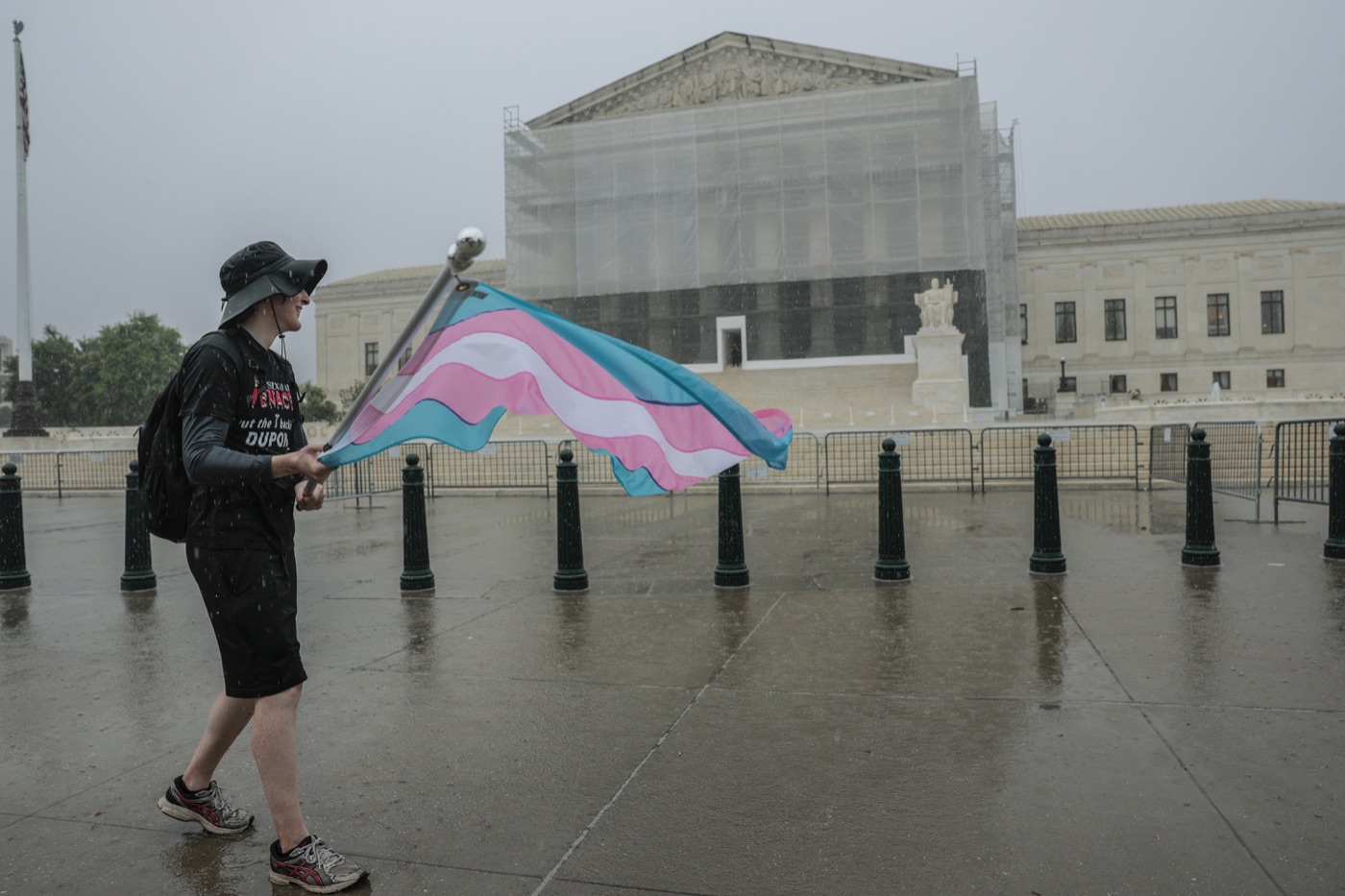 A protester waves a transgender pride flag outside the Supreme Court. The June 18, 2025, rally followed the Skrmetti ruling. Photo: Anna Moneymaker/Getty Images.
This one stands out because of how the last two years have gone. In June 2025, the court upheld Tennessee’s ban on gender-affirming care for minors in United States v. Skrmetti. In November 2025, it let the administration enforce its passport policy for trans and nonbinary people. And in June 2026, it upheld state bans on trans girls in school sports in a 6-3 ruling. What Happens Next in the Federal Prison Care Lawsuit
The government’s appeal remains pending in the D.C. Circuit. The district court case continues, too. The plaintiffs’ constitutional claims, including their Eighth Amendment challenge, haven’t been decided.
Lamberth’s Aug. 26 injunction runs on a 90-day clock under the Prison Litigation Reform Act. The dispute over whether courts can renew those orders remains unresolved.
I’m relieved that this order keeps care in place. I’m also watching the next deadline. The Supreme Court has bought people time, and the courts still have to decide what comes after it.