As a queer reverend and cantor, here’s what we wish people knew about religion
We had just finished co-officiating the wedding when a guest approached us with a comment. Prior to the ceremony, we spent hours carefully crafting a ceremony that wove rituals to honor both brides’ religious heritages and their unique journeys. We came out from under the chuppah to join the crowd, hoping we’d made it all … Read More
 Mark
Mark
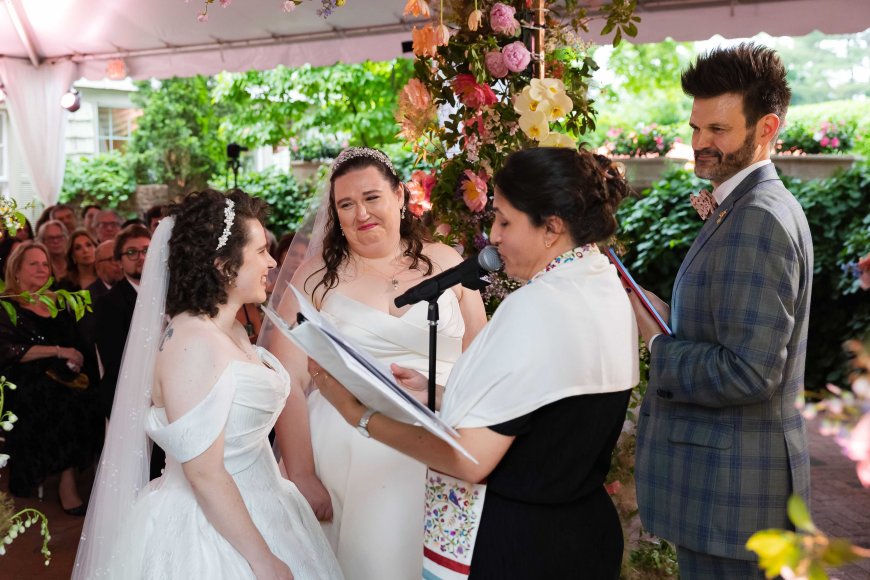
We had just finished co-officiating the wedding when a guest approached us with a comment. Prior to the ceremony, we spent hours carefully crafting a ceremony that wove rituals to honor both brides’ religious heritages and their unique journeys. We came out from under the chuppah to join the crowd, hoping we’d made it all “land.”
As the Jewish clergyperson, Cantor Laura chanted the traditional Seven Blessings in Hebrew as the couple stood beneath a chuppah whose “roof” was made from a tablecloth belonging to one bride’s late father, a beloved cook known for bringing people together. Under this symbol of a home, the canopy a reminder that the women will always be protected by those who came before them, Reverend Micah acknowledged that vows and rings are more than rote words and fool-proof symbols, but rather promises and signifiers of continuing commitments that need to be regularly embodied and re-chosen by a couple every day.
But the guest didn’t have feedback on the liturgy itself, nor on how we blended the two religions’ themes and values. Rather, she marveled at the very fact that the wedding took place at all.
“I didn’t know that queer love could be celebrated within a religious context,” she remarked.
Responses like these always take us by surprise. After all, we are both ordained clergy in our respective faith traditions and openly queer ourselves. But the truth is, more often than not, this is the kind of reaction we get.
Despite progress made by some faith denominations, including our own progressive religious communities, the prevailing perception isn’t just that religion rejects queer love, but any LGBTQIA+ person who lives openly and proudly. And yet, despite an expanding, and expansive, range of religious participation from people of all identities, the assumption persists that declarations of queer love and faithful devotion are incompatible.
This narrative is not only wrong, but dangerous. And while we can’t change what is said by homophobic and transphobic religious leaders, it’s never been more important for us, as queer faith leaders, to share a different perspective — not only by proclaiming our opinions, but by demonstrating what is really happening in practice.
First — how did we get here?
One clue lies in the way religious rhetoric has for decades been co-opted by some on the right, who’ve weaponized it to attack LGBTQIA+ rights and promote traditional gender roles and practices.
Too often we see the depiction of acceptable marriage as taking place between a cisgender man and a cisgender woman, with the woman's promise to “honor and obey” and the expectation that she will subsume her identity into her husband’s as she takes his name. Maintaining that status quo not only retains the gendered, power structure of marriage, but perpetuates the false notion that partnership cannot have different meanings outside of the normative hierarchy.
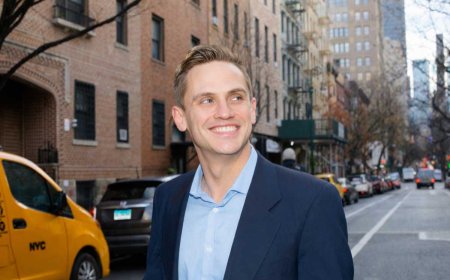
[caption id="attachment_65083" align="aligncenter" width="700"] Cantor Laura Stein and Rev. Micah Bucey.Sarah Merians[/caption]
These arguments are happening at the federal and community level as well. Take the recent US Supreme Court decision that overturned Colorado’s ban on conversion therapy for kids, or the launch earlier this year of a campaign whose goal is to overturn marriage equality, spearheaded by a number of conservative faith-based advocacy groups.
These are just a few examples of a wider trend, and it is leading queer people to leave their religious communities behind.
As faith leaders “of the alphabet,” we see this firsthand, too. Both of us are often approached by people who question whether there is a home for them in religious spaces after having been rejected by one.
For example, while working at a Jewish summer camp, an adolescent confided in Cantor Laura that constantly being asked by other campers, “which boy do you like?” left her wondering whether being accepted into Jewish community depended on being straight.
Reverend Micah regularly has drop-in visitors at his church office who challenge whether its stated queer-affirming stance is actually real, revealing that they have been misled before by religious communities who talk a good game but can’t actually live up to their own promises.
We find these misconceptions tragic, for religion and sexual orientation/gender identity are not only compatible, but mutually affirming. And changing the narrative isn’t just a theological good — it can have a real impact on the lives of queer people.
Alarmingly, we know that more than 90% of queer youth say that recent anti-LGBTQ+ laws, policies and debates cause them stress or anxiety, and more than a third seriously considered attempting suicide in the past year.
Yet, research also shows that queer people of all ages have lower rates of attempting suicide and better mental health when their communities, including religious communities, are accepting. Taken together, the research suggests that supportive faith communities can serve as an important buffer against the isolation and depression that can follow religious rejection.
This is why we felt so privileged to officiate for these two brides, and why we fielded questions about our philosophies, theologies, and convictions with a deep sense of responsibility. When people see queer clergy, affirming liturgy, and blessed weddings — among other inclusive rituals — they can begin to see that the door isn't shut forever. This in itself is an act of both resistance and insistence, as well as a way of redefining what being a member of a faith community can look like. It’s not about pressuring people to be part of faith communities, but about ensuring they have the option.
It’s also the reason we continue to share loudly about ourselves and this sacred work on social media, in our congregations, and in broader communal settings. Every act of queer celebration — be it a wedding, prayer service, or community gathering — serves as a counter-fact the public rarely sees but needs to recognize as legitimate.
This isn’t just important for queer people’s inclusion into welcoming spiritual spaces, but for everyone. Queer religious joy needs to be visible, loud, and present, as proof that the story people think they know about religion and queerness is incomplete.
Although we were honored when the wedding guest told us we helped expand her understanding of religion, our ultimate goal is to get to a point where the comments we hear at queer weddings are the same as those we hear at straight weddings, because both are seen as equally normal rather than one as the exception. We’ll know we’ve reached that point when queer belonging is no longer something religious communities need to proclaim, prove, or defend, but is simply part of the fabric of joyous and meaningful religious life. --
Cantor Laura Stein was ordained at Hebrew Union College-Jewish Institute for Religion and is a current doctoral candidate in the psychology of religion at Boston University. Rev. Micah Bucey serves as Senior Minister at Judson Memorial Church in Greenwich Village and is the author of The Book of Tiny Prayer.