Documentary filmmakers go behind the scenes of a Florida college’s anti-DEI takeover
“First They Came for My College” is guaranteed to make queer viewers’ blood boil. Director Patrick Bresnan’s galvanizing documentary chronicles the hostile (crypto-fascist) takeover of New College of Florida in Sarasota from January 2023 to the senior class graduation in 2024. This liberal arts honors college, once a community of radical acceptance, was targeted by Florida … Read More
 Mark
Mark
0
47
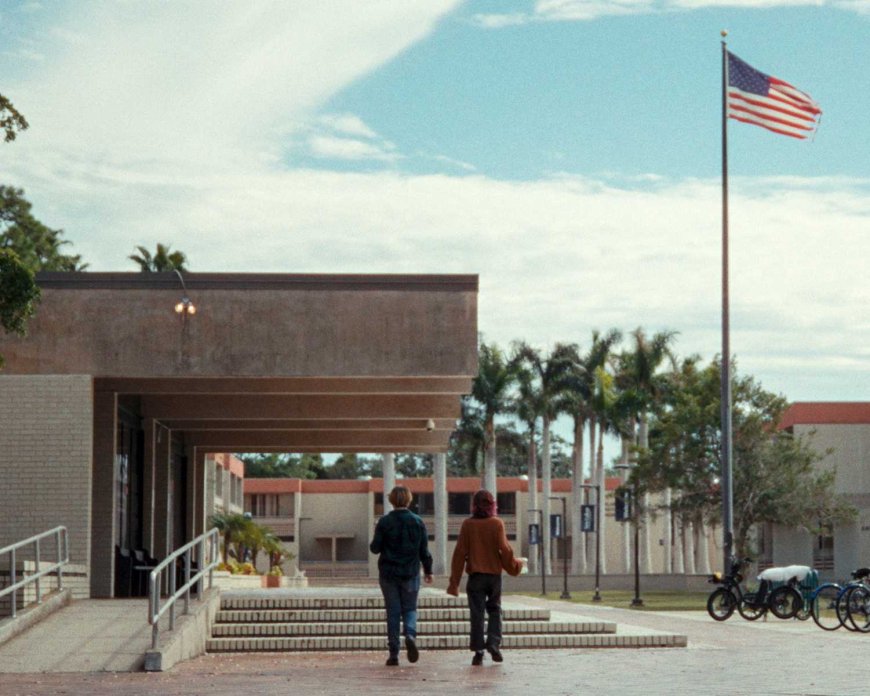
“First They Came for My College” is guaranteed to make queer viewers’ blood boil. Director Patrick Bresnan’s galvanizing documentary chronicles the hostile (crypto-fascist) takeover of New College of Florida in Sarasota from January 2023 to the senior class graduation in 2024.
This liberal arts honors college, once a community of radical acceptance, was targeted by Florida Gov. Ron DeSantis’ campaign to eliminate DEI. The campus’ institutional reform made the school more conservative. New student athletes were given scholarships to be on a baseball team — much to the dismay and despair of existing (and in some cases exiting) students, parents, and professors.
Bresnan sits in on infuriating board meetings where decisions are made to fire the college president, deny tenure to faculty, and terminate the Gender Studies program. Students and parents and faculty are seen protesting and the campus’ queer students engage in efforts of resistance — such as hosting a screening of “The Rocky Horror Picture Show.”
“First They Came for My College” ends with a title card that says since the re-election of Donald Trump, the hostile takeover of New College serves as a blueprint for attacks on higher education.
Bresnan, along with out gay producer Harry Hanbury, spoke with Gay City News about making their sobering documentary.
How did you learn about this story and decide to make a film about it?
Harry Hanbury: I was a 1993 graduate. I came to New College out of a Catholic all-boys miliary school. I was deeply closeted and I found an incredibly welcoming environment. Before the takeover, over 50% of students identified as LGBTQ and 10% as trans. It was one of the most welcoming schools for LGBTQ students, and this is why DeSantis and company decided to attack it.
[caption id="attachment_65077" align="aligncenter" width="569"] Harry Hanbury.Four Winds LLC[/caption]
When I saw the headlines from the January 6, 2023 event, when DeSantis appointed six far-right trustees to my alma mater, I started researching them and talking to other alums. It was clear these were extreme far right education reformers, and they wanted to make an example of our school. We started to organize. Patrick and I went down in April 2003 to film a board of trustees meeting where five faculty members were denied tenure. It was a chaotic scene.
When you started shooting, did you anticipate things evolving — or devolving — as they did?
Patrick Bresnan: We filmed for 2 ½ years. I wanted to get the inside story of the administration. About a year into filming, I was able to get permission from this new crony president [of New College] to film him and the baseball players. We needed to do interviews then and there with students and professors and activists. We put energy into documenting the story which was so full of emotion.
[caption id="attachment_65076" align="aligncenter" width="655"]
Harry Hanbury.Four Winds LLC[/caption]
When I saw the headlines from the January 6, 2023 event, when DeSantis appointed six far-right trustees to my alma mater, I started researching them and talking to other alums. It was clear these were extreme far right education reformers, and they wanted to make an example of our school. We started to organize. Patrick and I went down in April 2003 to film a board of trustees meeting where five faculty members were denied tenure. It was a chaotic scene.
When you started shooting, did you anticipate things evolving — or devolving — as they did?
Patrick Bresnan: We filmed for 2 ½ years. I wanted to get the inside story of the administration. About a year into filming, I was able to get permission from this new crony president [of New College] to film him and the baseball players. We needed to do interviews then and there with students and professors and activists. We put energy into documenting the story which was so full of emotion.
[caption id="attachment_65076" align="aligncenter" width="655"] Patrick Bresnan.Four Winds LLC[/caption]
Harry Hanbury: It became clear early on after January 6, 2023, that the new junta’s ambitions were huge. They called it a hostile takeover. On January 31, they fired first female President of New College and then in April they fired five faculty members who were approved for tenure. To Patrck’s great credit, he set up underground film school on campus and encouraged them to film their own stories. It took work to win people’s trust. Patrick’s decision to give our protagonists iPhones did a lot to convince the students that we trusted them to tell the story honestly. We worked for many months without the administration’s knowledge. Patrick [eventually] befriended the communications director, and we were able to film on campus with permission. It was a big community effort. We had a lot of momentum and drive as it was increasingly clear that New College was a microcosm of American society and a harbinger of must worse things to come.
What is inspiring is seeing the students and parents and faculty reacting to the situations they face. What observations do you have about capturing those moments?
Patrick Bresnan: The parents were remarkable. They had been through the gay civil rights movement, and they never thought this would happen to their kids. One parent never dreamed she would be fighting with the governor and [trustee] Christopher Rufo. The film has incredible tension because these older white men thrive on conflict and gaslighting people and dehumanizing people. What we see in the film is that it doesn’t work. It’s a difficult watch at times, but what I think resonates so powerfully is that when these people tried to crush the students and take away their spaces, the students are constantly adapting and trying to create joy and fight through this.
Can you talk about choosing the subjects you followed in the film?
Patrick Bresnan: I select people to film based on emotions and trust. I knew when I saw Josh, who is our conservative student, that he was extremely compelling. He had a Tom Selleck mustache and looked like someone out of “The X-Files.” He visited the college and wrote a piece for a conservative online magazine called “American Reformer” where he talks about New College being “a liberal wasteland of barefoot students and woke teachers.” He was excited to be on front lines of DeSantis’ war. And Josh is African American. You can’t write a character like this. He was always smoking and alone. I said “Hi” to him and he has the softest voice. I told him I read his op-ed and that his perspective is very important to the film. When Josh agreed to participate, we had a film that had more complexity than just students who chose to go to New College for the academic environment, or because it was a safe place for queer and trans kids.
Harry Hanbury: We never followed an athlete because they would lose their scholarships if they talked to media.
What observations do you have about the queer students who are seeing their safe space(s) threatened — and resisting?
Harry Hanbury: In the year we started filming, the state passed a bathroom bill that made it illegal to use bathrooms that diverged from the sex assigned at birth. It was acutely hostile on campus. Students were aware they were under attack. The Gender and Diversity center was a drop-in space with old ratty sofas and hundreds of donated books. At the end of the summer of 2023, cleaning crews swept everything away. It was a devastating loss. There was a real determination to keep queerness and transness alive and that culminated in the joyous production of “Rocky Horror Picture Show.”
Patrick Bresnan: It was very important to show how queer students were under attack. It was very important not to overwhelm them with cameras because it was such a stressful time. One student, who is transitioning, says, “My field of study has been erased from the school. I can’t get my hormones in Florida. I don’t have money to go to schools outside of state, but I have no choice. I have to leave.” Seeing students who are so profoundly thoughtful experiencing things that you would think only happen in 1940s Alabama, is shocking and it is very real. What we are seeing right now is not Jim Crow, or segregation, but it is a very similar mentality. People are being told “You’re not welcome, you don’t belong here, and these are not your spaces anymore.” It’s terrifying. As a country, we should be very ashamed.
A student in the film cries walking through the destroyed campus garden she has cared for. A professor bemoans that the gender studies books have all been removed. There are strong metaphors for the devastation happening at New College. Can you talk about these painful moments?
Harry Hanbury: The [administration] claimed the books were destroyed by water damage, but we have evidence the shelves are not under leaky parts of the roof. Chris Rufo tweeted “We eliminated Gender Studies and now we are taking out trash.” It sent a signal that we are going to be cruel to you, and you are not safe here. If you don’t conform to the student we are looking for — goodbye. Find another school. In the case of the garden, the [administration] came in after a hurricane, and whether through carelessness or intention, used chainsaws to destroy a lot of the garden the students had built over generations. The symbolic contrast of the garden that was cultivated and lovingly tender was a tranquil space with the natural flora of Florida. The grass was replaced with astroturf, which was very symbolic of the overall changes they made to the curriculum — putting something artificial and sterile and corporate over something natural and beautiful.
Your film advocates for speaking out and speaking truth to power, but it is also clear the parents, students, and professors may be fighting a war of attrition. What are your thoughts on that and the lessons we can learn from “First They Came for My College?”
Patrick Bresnan: I told the students, these people who have taken over your college go home at five o’clock and then the campus is yours again. They are not going to win because they are in this to make money. You are pursuing truth, and your identity, and who you are in this world. This fight will only make you stronger. These students have been radicalized in a good way. Libby, who was kicked out and went to Hampshire, is now in law school. I guarantee you, they will work for the ALCU or some organization where they spend the rest of their life fighting oppression. These students just wanted an education. They will be marked by this experience and many of them will fight for other people. The people who did this to them are looking for a quick buck to live in their illusionary luxury world.
Harry Hanbury: I was a member of ACT UP and the slogan under the Silence=Death poster was, “Turn your grief, anger, and fear into action.” That’s something I did in the process of making this film. The New College alumni did this with few exceptions. We saw this is an outrage. There is a saying in protest, “When we fight, we win, but we never win if we don’t fight.” It is essential to push back and forge bonds in solidarity. There is a wonderful collective joy in resisting together.
“First They Came for My College” | Directed by Patrick Bresnan | Opening September 25 at the DCTV Firehouse Cinema | Distributed by Fourth Act Films and Four Winds, LLC
Patrick Bresnan.Four Winds LLC[/caption]
Harry Hanbury: It became clear early on after January 6, 2023, that the new junta’s ambitions were huge. They called it a hostile takeover. On January 31, they fired first female President of New College and then in April they fired five faculty members who were approved for tenure. To Patrck’s great credit, he set up underground film school on campus and encouraged them to film their own stories. It took work to win people’s trust. Patrick’s decision to give our protagonists iPhones did a lot to convince the students that we trusted them to tell the story honestly. We worked for many months without the administration’s knowledge. Patrick [eventually] befriended the communications director, and we were able to film on campus with permission. It was a big community effort. We had a lot of momentum and drive as it was increasingly clear that New College was a microcosm of American society and a harbinger of must worse things to come.
What is inspiring is seeing the students and parents and faculty reacting to the situations they face. What observations do you have about capturing those moments?
Patrick Bresnan: The parents were remarkable. They had been through the gay civil rights movement, and they never thought this would happen to their kids. One parent never dreamed she would be fighting with the governor and [trustee] Christopher Rufo. The film has incredible tension because these older white men thrive on conflict and gaslighting people and dehumanizing people. What we see in the film is that it doesn’t work. It’s a difficult watch at times, but what I think resonates so powerfully is that when these people tried to crush the students and take away their spaces, the students are constantly adapting and trying to create joy and fight through this.
Can you talk about choosing the subjects you followed in the film?
Patrick Bresnan: I select people to film based on emotions and trust. I knew when I saw Josh, who is our conservative student, that he was extremely compelling. He had a Tom Selleck mustache and looked like someone out of “The X-Files.” He visited the college and wrote a piece for a conservative online magazine called “American Reformer” where he talks about New College being “a liberal wasteland of barefoot students and woke teachers.” He was excited to be on front lines of DeSantis’ war. And Josh is African American. You can’t write a character like this. He was always smoking and alone. I said “Hi” to him and he has the softest voice. I told him I read his op-ed and that his perspective is very important to the film. When Josh agreed to participate, we had a film that had more complexity than just students who chose to go to New College for the academic environment, or because it was a safe place for queer and trans kids.
Harry Hanbury: We never followed an athlete because they would lose their scholarships if they talked to media.
What observations do you have about the queer students who are seeing their safe space(s) threatened — and resisting?
Harry Hanbury: In the year we started filming, the state passed a bathroom bill that made it illegal to use bathrooms that diverged from the sex assigned at birth. It was acutely hostile on campus. Students were aware they were under attack. The Gender and Diversity center was a drop-in space with old ratty sofas and hundreds of donated books. At the end of the summer of 2023, cleaning crews swept everything away. It was a devastating loss. There was a real determination to keep queerness and transness alive and that culminated in the joyous production of “Rocky Horror Picture Show.”
Patrick Bresnan: It was very important to show how queer students were under attack. It was very important not to overwhelm them with cameras because it was such a stressful time. One student, who is transitioning, says, “My field of study has been erased from the school. I can’t get my hormones in Florida. I don’t have money to go to schools outside of state, but I have no choice. I have to leave.” Seeing students who are so profoundly thoughtful experiencing things that you would think only happen in 1940s Alabama, is shocking and it is very real. What we are seeing right now is not Jim Crow, or segregation, but it is a very similar mentality. People are being told “You’re not welcome, you don’t belong here, and these are not your spaces anymore.” It’s terrifying. As a country, we should be very ashamed.
A student in the film cries walking through the destroyed campus garden she has cared for. A professor bemoans that the gender studies books have all been removed. There are strong metaphors for the devastation happening at New College. Can you talk about these painful moments?
Harry Hanbury: The [administration] claimed the books were destroyed by water damage, but we have evidence the shelves are not under leaky parts of the roof. Chris Rufo tweeted “We eliminated Gender Studies and now we are taking out trash.” It sent a signal that we are going to be cruel to you, and you are not safe here. If you don’t conform to the student we are looking for — goodbye. Find another school. In the case of the garden, the [administration] came in after a hurricane, and whether through carelessness or intention, used chainsaws to destroy a lot of the garden the students had built over generations. The symbolic contrast of the garden that was cultivated and lovingly tender was a tranquil space with the natural flora of Florida. The grass was replaced with astroturf, which was very symbolic of the overall changes they made to the curriculum — putting something artificial and sterile and corporate over something natural and beautiful.
Your film advocates for speaking out and speaking truth to power, but it is also clear the parents, students, and professors may be fighting a war of attrition. What are your thoughts on that and the lessons we can learn from “First They Came for My College?”
Patrick Bresnan: I told the students, these people who have taken over your college go home at five o’clock and then the campus is yours again. They are not going to win because they are in this to make money. You are pursuing truth, and your identity, and who you are in this world. This fight will only make you stronger. These students have been radicalized in a good way. Libby, who was kicked out and went to Hampshire, is now in law school. I guarantee you, they will work for the ALCU or some organization where they spend the rest of their life fighting oppression. These students just wanted an education. They will be marked by this experience and many of them will fight for other people. The people who did this to them are looking for a quick buck to live in their illusionary luxury world.
Harry Hanbury: I was a member of ACT UP and the slogan under the Silence=Death poster was, “Turn your grief, anger, and fear into action.” That’s something I did in the process of making this film. The New College alumni did this with few exceptions. We saw this is an outrage. There is a saying in protest, “When we fight, we win, but we never win if we don’t fight.” It is essential to push back and forge bonds in solidarity. There is a wonderful collective joy in resisting together.
“First They Came for My College” | Directed by Patrick Bresnan | Opening September 25 at the DCTV Firehouse Cinema | Distributed by Fourth Act Films and Four Winds, LLC
Harry Hanbury.Four Winds LLC[/caption]
When I saw the headlines from the January 6, 2023 event, when DeSantis appointed six far-right trustees to my alma mater, I started researching them and talking to other alums. It was clear these were extreme far right education reformers, and they wanted to make an example of our school. We started to organize. Patrick and I went down in April 2003 to film a board of trustees meeting where five faculty members were denied tenure. It was a chaotic scene.
When you started shooting, did you anticipate things evolving — or devolving — as they did?
Patrick Bresnan: We filmed for 2 ½ years. I wanted to get the inside story of the administration. About a year into filming, I was able to get permission from this new crony president [of New College] to film him and the baseball players. We needed to do interviews then and there with students and professors and activists. We put energy into documenting the story which was so full of emotion.
[caption id="attachment_65076" align="aligncenter" width="655"] Patrick Bresnan.Four Winds LLC[/caption]
Harry Hanbury: It became clear early on after January 6, 2023, that the new junta’s ambitions were huge. They called it a hostile takeover. On January 31, they fired first female President of New College and then in April they fired five faculty members who were approved for tenure. To Patrck’s great credit, he set up underground film school on campus and encouraged them to film their own stories. It took work to win people’s trust. Patrick’s decision to give our protagonists iPhones did a lot to convince the students that we trusted them to tell the story honestly. We worked for many months without the administration’s knowledge. Patrick [eventually] befriended the communications director, and we were able to film on campus with permission. It was a big community effort. We had a lot of momentum and drive as it was increasingly clear that New College was a microcosm of American society and a harbinger of must worse things to come.
What is inspiring is seeing the students and parents and faculty reacting to the situations they face. What observations do you have about capturing those moments?
Patrick Bresnan: The parents were remarkable. They had been through the gay civil rights movement, and they never thought this would happen to their kids. One parent never dreamed she would be fighting with the governor and [trustee] Christopher Rufo. The film has incredible tension because these older white men thrive on conflict and gaslighting people and dehumanizing people. What we see in the film is that it doesn’t work. It’s a difficult watch at times, but what I think resonates so powerfully is that when these people tried to crush the students and take away their spaces, the students are constantly adapting and trying to create joy and fight through this.
Can you talk about choosing the subjects you followed in the film?
Patrick Bresnan: I select people to film based on emotions and trust. I knew when I saw Josh, who is our conservative student, that he was extremely compelling. He had a Tom Selleck mustache and looked like someone out of “The X-Files.” He visited the college and wrote a piece for a conservative online magazine called “American Reformer” where he talks about New College being “a liberal wasteland of barefoot students and woke teachers.” He was excited to be on front lines of DeSantis’ war. And Josh is African American. You can’t write a character like this. He was always smoking and alone. I said “Hi” to him and he has the softest voice. I told him I read his op-ed and that his perspective is very important to the film. When Josh agreed to participate, we had a film that had more complexity than just students who chose to go to New College for the academic environment, or because it was a safe place for queer and trans kids.
Harry Hanbury: We never followed an athlete because they would lose their scholarships if they talked to media.
What observations do you have about the queer students who are seeing their safe space(s) threatened — and resisting?
Harry Hanbury: In the year we started filming, the state passed a bathroom bill that made it illegal to use bathrooms that diverged from the sex assigned at birth. It was acutely hostile on campus. Students were aware they were under attack. The Gender and Diversity center was a drop-in space with old ratty sofas and hundreds of donated books. At the end of the summer of 2023, cleaning crews swept everything away. It was a devastating loss. There was a real determination to keep queerness and transness alive and that culminated in the joyous production of “Rocky Horror Picture Show.”
Patrick Bresnan: It was very important to show how queer students were under attack. It was very important not to overwhelm them with cameras because it was such a stressful time. One student, who is transitioning, says, “My field of study has been erased from the school. I can’t get my hormones in Florida. I don’t have money to go to schools outside of state, but I have no choice. I have to leave.” Seeing students who are so profoundly thoughtful experiencing things that you would think only happen in 1940s Alabama, is shocking and it is very real. What we are seeing right now is not Jim Crow, or segregation, but it is a very similar mentality. People are being told “You’re not welcome, you don’t belong here, and these are not your spaces anymore.” It’s terrifying. As a country, we should be very ashamed.
A student in the film cries walking through the destroyed campus garden she has cared for. A professor bemoans that the gender studies books have all been removed. There are strong metaphors for the devastation happening at New College. Can you talk about these painful moments?
Harry Hanbury: The [administration] claimed the books were destroyed by water damage, but we have evidence the shelves are not under leaky parts of the roof. Chris Rufo tweeted “We eliminated Gender Studies and now we are taking out trash.” It sent a signal that we are going to be cruel to you, and you are not safe here. If you don’t conform to the student we are looking for — goodbye. Find another school. In the case of the garden, the [administration] came in after a hurricane, and whether through carelessness or intention, used chainsaws to destroy a lot of the garden the students had built over generations. The symbolic contrast of the garden that was cultivated and lovingly tender was a tranquil space with the natural flora of Florida. The grass was replaced with astroturf, which was very symbolic of the overall changes they made to the curriculum — putting something artificial and sterile and corporate over something natural and beautiful.
Your film advocates for speaking out and speaking truth to power, but it is also clear the parents, students, and professors may be fighting a war of attrition. What are your thoughts on that and the lessons we can learn from “First They Came for My College?”
Patrick Bresnan: I told the students, these people who have taken over your college go home at five o’clock and then the campus is yours again. They are not going to win because they are in this to make money. You are pursuing truth, and your identity, and who you are in this world. This fight will only make you stronger. These students have been radicalized in a good way. Libby, who was kicked out and went to Hampshire, is now in law school. I guarantee you, they will work for the ALCU or some organization where they spend the rest of their life fighting oppression. These students just wanted an education. They will be marked by this experience and many of them will fight for other people. The people who did this to them are looking for a quick buck to live in their illusionary luxury world.
Harry Hanbury: I was a member of ACT UP and the slogan under the Silence=Death poster was, “Turn your grief, anger, and fear into action.” That’s something I did in the process of making this film. The New College alumni did this with few exceptions. We saw this is an outrage. There is a saying in protest, “When we fight, we win, but we never win if we don’t fight.” It is essential to push back and forge bonds in solidarity. There is a wonderful collective joy in resisting together.
“First They Came for My College” | Directed by Patrick Bresnan | Opening September 25 at the DCTV Firehouse Cinema | Distributed by Fourth Act Films and Four Winds, LLC