
Playwright Martin Moran on his new solo show, ‘Other Bodies’
I first talked to playwright and actor Martin Moran more than 20 years ago amidst the debut of his first solo play, “The Tricky Part,” based on his book of the same name. It was a coming of age story about the sexual abuse he experienced between ages 12 and 15, but even with the … Read More
 Mark
0
1
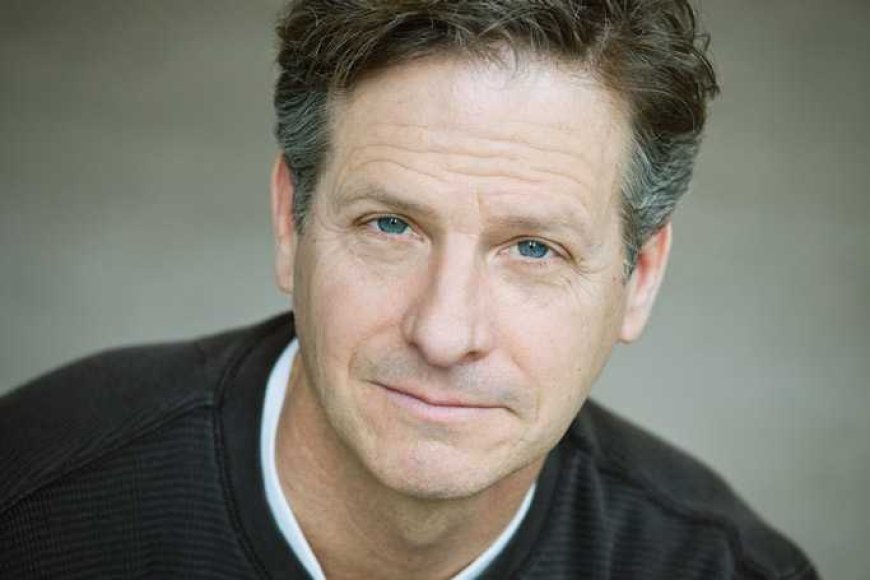
I first talked to playwright and actor Martin Moran more than 20 years ago amidst the debut of his first solo play, “The Tricky Part,” based on his book of the same name. It was a coming of age story about the sexual abuse he experienced between ages 12 and 15, but even with the serious subject matter, it was full of Moran’s mordant observation and humor about discovering himself as a gay man and his journey into forgiveness as spiritually liberating. It was the first play in what would ultimately be a trilogy, though he hadn’t considered that at the time.
The second play, “All the Rage,” was essentially about finding compassion for others, and the question of whether one could feel both anger and compassion at the same time. There, too, though, Moran found the comedy in the situation.
The final play of the three, “Other Bodies,” is beginning performances at The Barrow Group, and Moran talked with me about the play and his journey as a writer and performer.
“The play is born out of being much older,” Moran said in our conversation. “Feeling my baby elderhood as a queer person, as a human being. When I say ‘older,’ it’s hopefully in a way that is more filled with wonderment than dread.”
Moran is also very frank about the ways in which the new piece is more “kaleidoscopic” as opposed to the more traditional, linear narratives of the first two. The piece, he says, was born out of the pandemic.
In 2020, Moran had been about to open in the Broadway show “Sing Street” when the pandemic shut all the theaters — abruptly one late winter afternoon. He says that he was much older than most of the rest of the cast, and that he was very conscious that they were about to make their Broadway debuts and what they would lose when the entire world shut down.
“We were suddenly isolated during the pandemic — all of us in different shapes, forms, and space. I became aware of the ways in which we profoundly relied on one another and then also profoundly had to isolate from one another, where other bodies suddenly became a passing threat. There as a sense of loss and fragility in the air.
“Another one of the events that impacted me — and I think so many of us — was the murder of George Floyd and the stopping of so much of the engine of our daily lives. In that time, I tripped into some deep pace of memory and looking and reflecting about what’s made me who I am — an older, queer, white man from middle America. I always felt like an outsider as a queer man, and I began to awaken to other kinds of ‘otherness.’”
Moran says he began writing as a way to find compassion for himself and to wake up to others at the same time. As he wrote, he says, the play became more theatrical and essayistic. Though he’s performed often with casts of various sizes, he said that he really is a solo performer. While the play is set in June of 2020, it’s also very much reflecting today’s world, where there is so much divisiveness in the culture, and, as before, he wrestles with how he — and by extension we — can resolve that.
Moran referenced his two earlier plays when he said, “So here we are back again in the land of utter complexity.” Yet, he says, in the process he realized how interdependent we all really are, and he hopes that the play will “provoke or summon a deep remembrance of how much more we share than in what divides us."
The process of his exploration led Moran to contemplate his own life, and he spoke of a "wondrous sense of mortality." He said he finds solace in the old axiom "to dust, to earth, ye shall return." As he described it, though, he wasn’t morbid. Instead, he expressed a kind of relief, an acknowledgment that we belong to something larger and that our time inside it is borrowed.
Part of the play was inevitably informed by Moran’s Catholic childhood. He studied with Jesuits after all, and today finds comfort in the thinkers and mystics such as Terese of Avila, Thomas Aquinas, and others. At the same time, Moran is a practicing Buddhist, and as he explains, the “illusion of separateness” is an integral part of the play. Moreover, he notes that the two faith traditions aren’t opposite and have much in common — at least in terms of thinking.
It is also what Moran describes as “a sense of mercy and a sense of grace that we need to keep finding as human beings if, in fact, we are to survive together.”
“Other Bodies” is the culmination of 20 years of thinking, writing, and wrestling with life’s biggest questions — all done with Moran’s deft and heartfelt humor. It’s the next chapter in his journey that we all need right now.
"Other Bodies" | The Barrow Group | 520 8th Ave, 9th Floor | Weds., Sat. 7:30 p.m.; Sun. 3 p.m. through December 22 | $49 at The Barrow Group | 75 mins, no intermission