When Iran played Egypt in the World Cup ‘Pride Match,’ even Iran’s captain showed respect for gay people
The Iran-Egypt World Cup ‘Pride Match’ showed that love won, even among Iran’s captain, a great sports moment from 2026.
 Mark
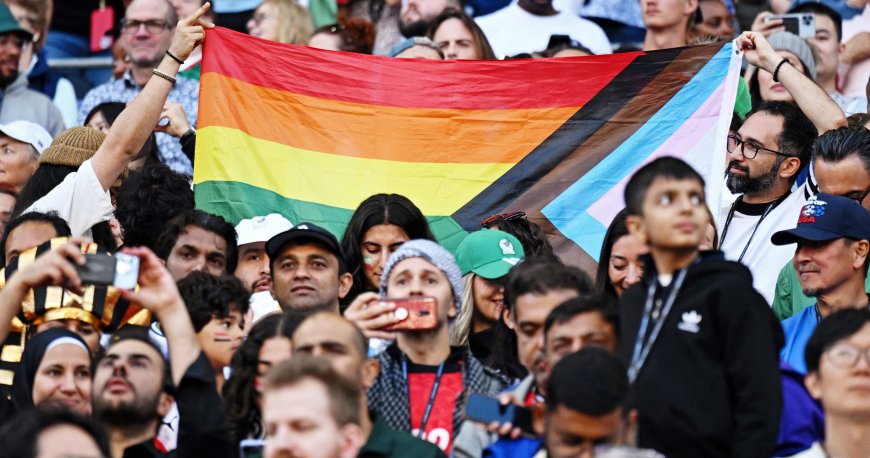

Seattle’s local World Cup organizers originally designated their June 26 match, an early-round group game where teams play in small pools to advance, as a “Pride Match” to coincide with the city’s annual Pride weekend.
However, the random FIFA draw created an unforeseen political dilemma — the matchup ended up pitting Egypt against Iran, two nations where homosexuality is criminalized.
The announcement, of course, instantly transformed the rainbow flag into one of the definitive symbols of the 2026 World Cup’s special moments. Both Egypt and Iran rank among the most hostile nations globally for LGBTQ+ rights, with homosexuality severely prosecuted and criminalized. The game and its aftermath are reasons it made Outsports’ top moments in 2026 in our Year in Review section.
Unsurprisingly, both the Iranian and Egyptian football federations immediately pushed back against the “Pride Match” designation, formally demanding that FIFA cancel all surrounding LGBTQ+ promotional activities and explicitly ban rainbow symbols and flags from the stadium.
Related
‘We respect all of the LGBT people,’ Iran World Cup captain says amid Pride Match controversy
Mehdi Taremi, Iran’s World Cup captain, made a rare and positive comment about LGBTQ people after Friday’s Pride Match with Egypt in Seattle.
Get off the sidelines and into the game
Our weekly playbook is packed with everything from locker room chatter to pressing LGBTQ sports issues.
Subscribe to our Newsletter today
Historically, soccer fans had every reason to fear that FIFA would capitulate to the demands of countries with state-sponsored homophobia. During the 2022 World Cup in Qatar, football’s governing body orchestrated a notorious Pride crackdown, threatening team captains with immediate yellow cards for wearing the “OneLove” armbands and letting security confiscate rainbow apparel from fans.
However, bringing the tournament to North America in 2026 forced a crucial pivot. Unlike in Qatar, FIFA was now operating in host cities with strong LGBTQ+ protections and vocal local organizers, making a total stadium ban on rainbow gear politically and legally impossible.
When Seattle’s local organizing committee designated its June 26 game as a “Pride Match,” FIFA decided to try an uneven compromise. FIFA distanced itself from the event’s official branding to appease objections from Egypt and Iran, while still confirming that fans could wear Pride shirts and wave rainbow flags inside Lumen Field.
Seattle said no dice. The host committee stood firmly behind their inclusive vision. “Our efforts around Pride match day reflect what makes Seattle special,” asserted Hedda McLendon, Senior Vice President of Legacy for Seattle FWC26. “As we welcome the world, we have an opportunity to showcase not only our passion for sport, but also our commitment to creating communities where everyone feels seen, valued, and welcome.”
Leo Flor, Chief Legacy Officer for Seattle FWC26, echoed this sentiment ahead of the match: “Once the teams were drawn for this match, no change to our approach… When folks come here, they’re going to see folks celebrating pride.”
What happened next was exhilarating. On Friday, June 26, thousands of fans flooded Lumen Field brandishing a sea of rainbow flags and wearing Pride T-shirts. What resulted on the pitch was a dramatic 1-1 draw, but the true history unfolded in the post-match news conference room.
Related
Out and proud Olivia Miles captivated WNBA fans in her fabulous rookie season
Olivia Miles is one of the bright, young out LGBTQ stars in the WNBA. Her rookie season was one to remember.
Breaking the strict collective silence that both teams had heavily leaned on leading up to kickoff, Iran’s star captain Mehdi Taremi took the microphone. In a moment that completely shattered political taboos for active Iranian athletes, Taremi explicitly addressed the presence of the rainbow flags and the LGBTQ+ community.
“Our religion doesn’t accept that, but we respect all of the LGBT people,” Taremi stated directly to the press. “That’s their own idea. It’s not about us. We are here to play football. We respect all of those guys.”
Taremi’s words, while brief, marked a monumental ideological shift from the hostile rhetoric of government officials back home. By choosing respect over condemnation on a global broadcast, the Iranian captain matched the bravery of the fans waving flags in the stands.
Between the sea of rainbow flags in Seattle and an unprecedented message of respect from Iran’s captain, the Pride Match erased the dark cloud left by Qatar in 2022. It proved a simple truth: when local communities refuse to back down on inclusion, the world’s game has no choice but to let love play.
Subscribe to the Outsports newsletter to keep up with your favorite out athletes, inspiring LGBTQ sports stories, and more.